Home batteries are often sold with a simple promise: more control over when stored energy gets used. But some Enphase owners say that promise can look very different depending on where they live.
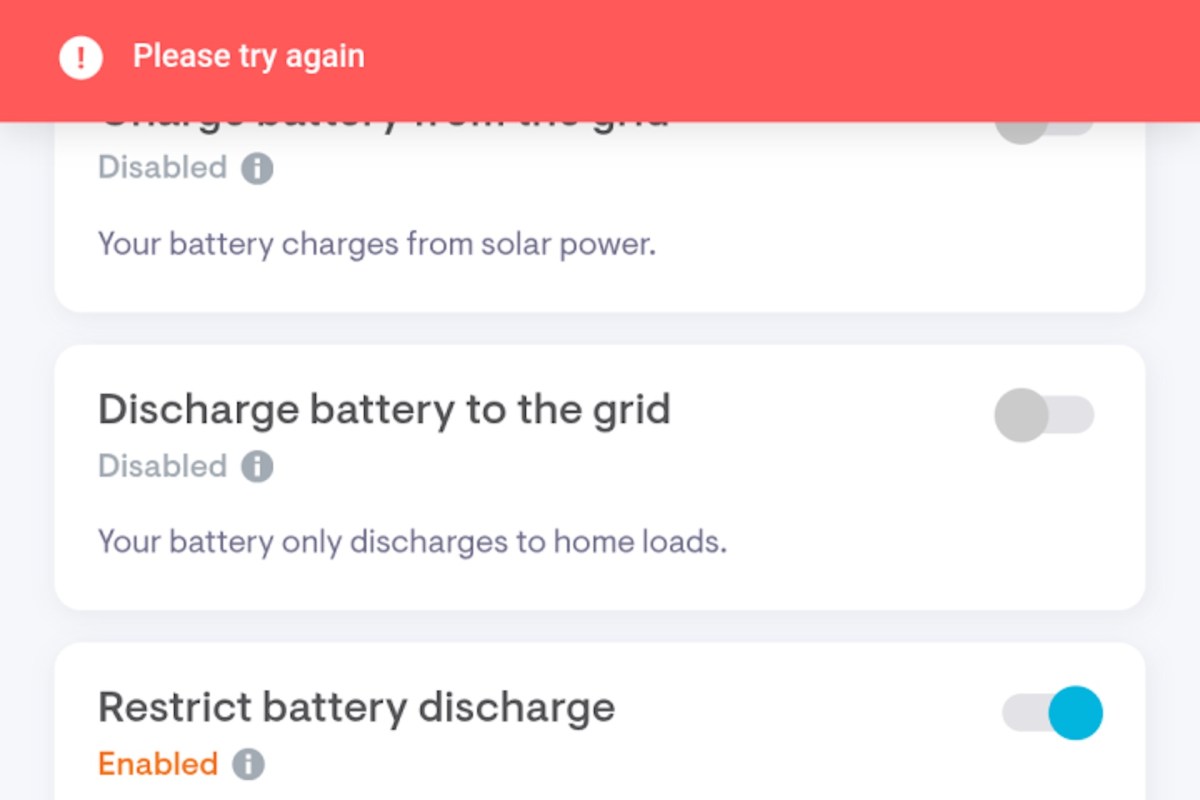
A discussion on Reddit highlighted an Enphase app feature called "Restrict Battery Discharge" that could affect how owners manage electric bills, electric vehicle charging, and backup reserves during outages.
Here's what to know
In the discussion on Reddit, one owner described discovering the setting.
They said, "Recently I learned that there is a way to control and schedule battery discharge to certain hours built into the Enphase app. It's called 'Restrict Battery Discharge.' However, for those in certain markets (which seems to be U.S.), it is not available."
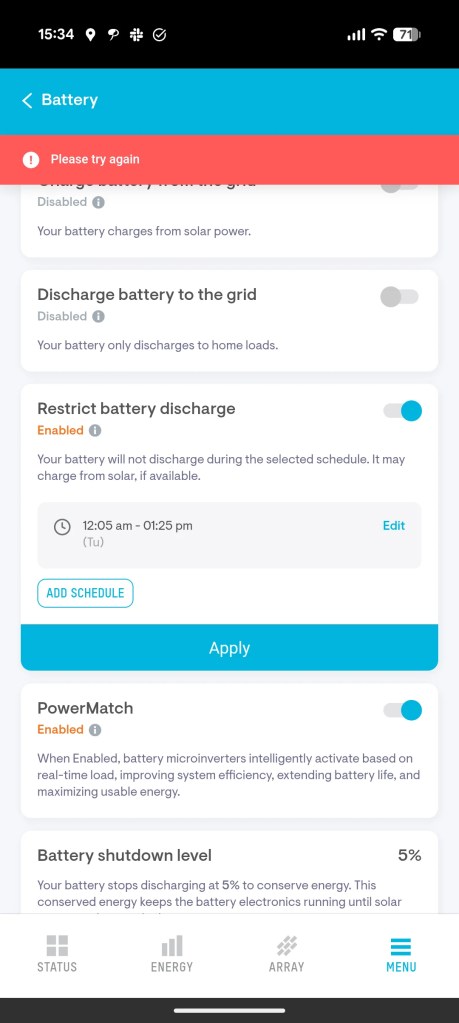
They said the option has been requested many times, but that some users are still limited to three preset profiles, while also pressing the company for an explanation.
The original poster asked, "What is the rationale behind hiding this feature from certain users, and to what benefit?"
TCD Picks » Quince Spotlight
💡These best-sellers from Quince deliver affordable, sustainable luxury for all




Other owners described a patchwork experience.
One user said, "Oh wow. They added a few new settings here in Australia! I can now control if my battery is used to charge my car or not, and at what battery percent to cut off battery discharge to the car too. That's awesome!"
But another user suggested that visibility does not always translate into usability.
They said, "Yeah, give it a try first before you start cheering… in EU I see the option too, but it doesn't work."
More background
A battery that can be told when to discharge may help a household save stored solar power for expensive evening hours, reserve more energy for emergencies, or avoid draining the battery into a vehicle when backup power is the higher priority.
Although the Reddit thread does not include a formal explanation from Enphase, it still offers a practical example for homeowners comparing battery brands before signing a contract.
In home energy tech, hardware is only part of the equation. App controls, software limits, and regional settings can determine whether a battery feels like a simple backup device or a more customizable money-saving tool.
What can be done?
Questions before installation may need to cover not just battery capacity and backup duration, but also degree of control.
If a desired feature is unavailable, documented user feedback can help show installers and manufacturers that customers want more transparent controls.
Even with those limitations, home batteries remain a resilience tool. They can keep essential devices running during blackouts, make better use of rooftop solar, and potentially reduce electricity costs when paired with the right rate plan and settings.
One user said, "Oh that's too bad. It has worked as described for the last two nights."
Another commented, "Set your mode to AI mode. To my surprise AI mode actually discharges at peak buyback rates. So it drains a tiny bit at 5, then recharges back up to 100%, then again at 6 p.m. Then dumps the battery at 7 p.m."

Get TCD's free newsletters for easy tips, smart advice, and a chance to earn $5,000 toward home upgrades. To see more stories like this one, change your Google preferences here.