


Buying seeds online can feel like a leap of faith, especially when a listing promises purple teddy bear sunflowers, rainbow roses, or corn cobs the length of your torso.
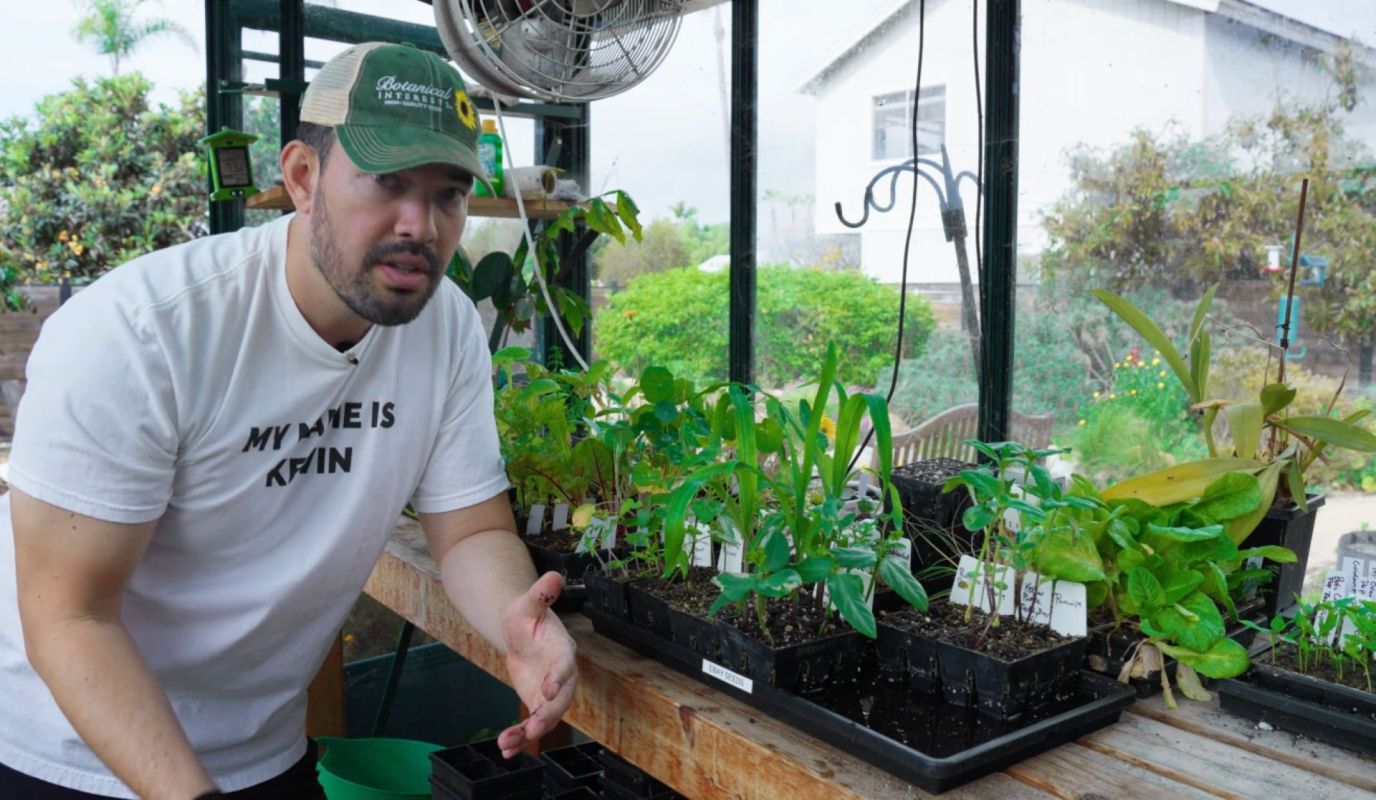
One creator from the Epic Gardening (@epicgardening) YouTube channel decided to test those claims by planting a batch of suspicious eBay seeds, and the results were exactly what many gardeners might expect: some legitimate plants, some duds, and at least one huge surprise.
Here's what to know
The test focused on a stack of attention-grabbing eBay listings.
After saying, "So, what I thought I would do is go on eBay and buy all of the suspicious seeds that I could find," the creator bought a range of seeds, including giant tomatoes, yardlong beans, rainbow roses, extra-long corn, and sunflowers advertised in unusual colors.
Early on, the seedlings mostly cleared the most basic check. The tomato starts resembled tomatoes, the beans appeared to be beans, and the corn at least looked like real corn.
As the season went on, though, the weaker listings became easier to spot. The rainbow rose never germinated, and both sunflower purchases failed to match the ads, leading the creator to say, "These are straight BS."
TCD Picks » Quince Spotlight
💡These best-sellers from Quince deliver affordable, sustainable luxury for all




Some of the seeds did better. The "waterfall cherry tomato" developed long hanging clusters that seemed consistent with the listing, while the corn turned into an "insanely vigorous" patch that looked likely to produce the oversized ears it was sold with.
More background
Bad seed listings can cost people more than a few dollars. A mislabeled packet can waste potting mix, water, garden space, and an entire growing season.
It also undermines one of the biggest benefits of gardening. Growing food at home can help households save money on produce, enjoy fresher, better-tasting fruits and vegetables, and spend more time on light physical activity outdoors. Many gardeners also find that tending plants supports mental health by lowering stress and creating a more restorative daily routine.
The experiment also illustrated why these listings can so easily fool buyers. Some use photos that seem believable, some appear heavily edited or AI-generated, and others may send seeds from the correct species but not the rare variety shown in the picture — a mismatch that may not become obvious for months.
One commenter wrote, "Omg this big Zac seeds are my friends!! And that is his daughter. The seeds from him are genuine and he is the most honest guy! We are competitive giant growers."
What can be done?
Ultra-rare seed listings warrant skepticism, especially when the color or shape seems biologically unlikely. Blue roses and oversized fantasy blooms may be fun to imagine, but realistic variety names, consistent photos, and seller specialization are better signs than flashy marketing.
Crops that are easy to verify and rewarding to grow include tomatoes, peppers, beans, and corn from trusted sellers. If you're interested in growing your own food, choosing dependable seeds is one of the simplest ways to set yourself up for a cheaper, tastier harvest.
In the video's comments, one commenter noted, "Maize (corn) needs to be planted in large blocks for good wind pollination. It would be interesting to repeat the experiment with a large block of maize."
The video's results suggested that buying seeds online is not automatically a scam, but it is still unpredictable enough that the harvest may be the only real proof.

Get TCD's free newsletters for easy tips, smart advice, and a chance to earn $5,000 toward home upgrades. To see more stories like this one, change your Google preferences here.







