


A massive stone "death jar" in Laos has given archaeologists some of their clearest evidence yet about one of Southeast Asia's most enduring mysteries.
According to a report from Live Science, new research uncovered the partly decomposed remains of multiple people placed inside the jar over generations roughly 1,200 years ago, suggesting it was used as part of a complex burial ritual rather than as a final resting place.
The discovery comes from Site 75 on Laos' Plain of Jars, a highland landscape dotted with more than 2,000 hollowed-out stone jars linked to ancient mortuary practices.
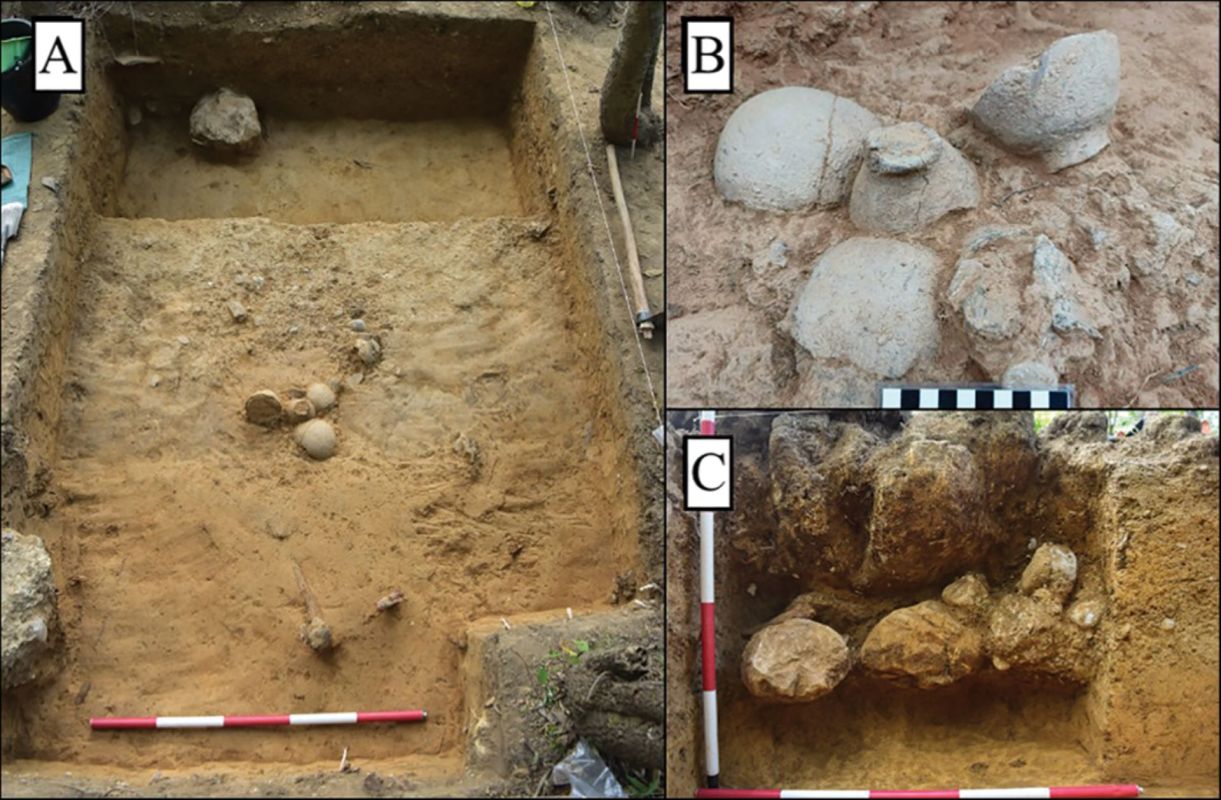
In a study published in Antiquity, researchers reported that one especially large vessel, known as Jar 1, is the first on record to contain undisturbed human remains.
The jar is about 6.7 feet wide, with thick walls, a broad base, and a bowl-like shape. Archaeologist Nicholas Skopal of James Cook University told Live Science it is "among the largest jars currently known in Laos."
Researchers were struck not just by the number of bones inside, but by how they were arranged.
TCD Picks » Quince Spotlight
💡These best-sellers from Quince deliver affordable, sustainable luxury for all




Skulls lined the jar's edges, while arm and leg bones were grouped together, indicating the dead were likely placed there after their bodies had already begun decomposing elsewhere.
Radiocarbon dating of teeth showed the remains were deposited at different times between about A.D. 890 and 1160.
The jar also held multicolored glass beads, many made in India, hinting at wider trade connections in the region.
For decades, archaeologists suspected the jars were tied to burial practices, but they lacked direct proof. This finding changes that.
The discovery helps confirm that at least some of the Plain of Jars vessels were used as mortuary containers for what experts call secondary burials, meaning people's remains were moved after an earlier stage of decomposition.
That offers a much more detailed picture of how communities in northern Laos treated their dead.
It also adds to what researchers know about a civilization that remains largely mysterious.
Researchers are now trying to learn more about the people buried in Jar 1, including whether they were related.
Ancient DNA analysis is a major next step and could reveal whether the remains belonged to extended family groups or a larger community that reused the jar over time.
The team's work also helps establish a scientific baseline for future excavation across the Plain of Jars, where many stone vessels have been documented but few have yielded such clear evidence.
Careful dating, mapping, and analysis may help explain how different jars were used and whether burial customs changed over centuries.
As more evidence emerges, Jar 1 may become a key reference point for understanding a unique burial practice.

Get TCD's free newsletters for easy tips, smart advice, and a chance to earn $5,000 toward home upgrades. To see more stories like this one, change your Google preferences here.






