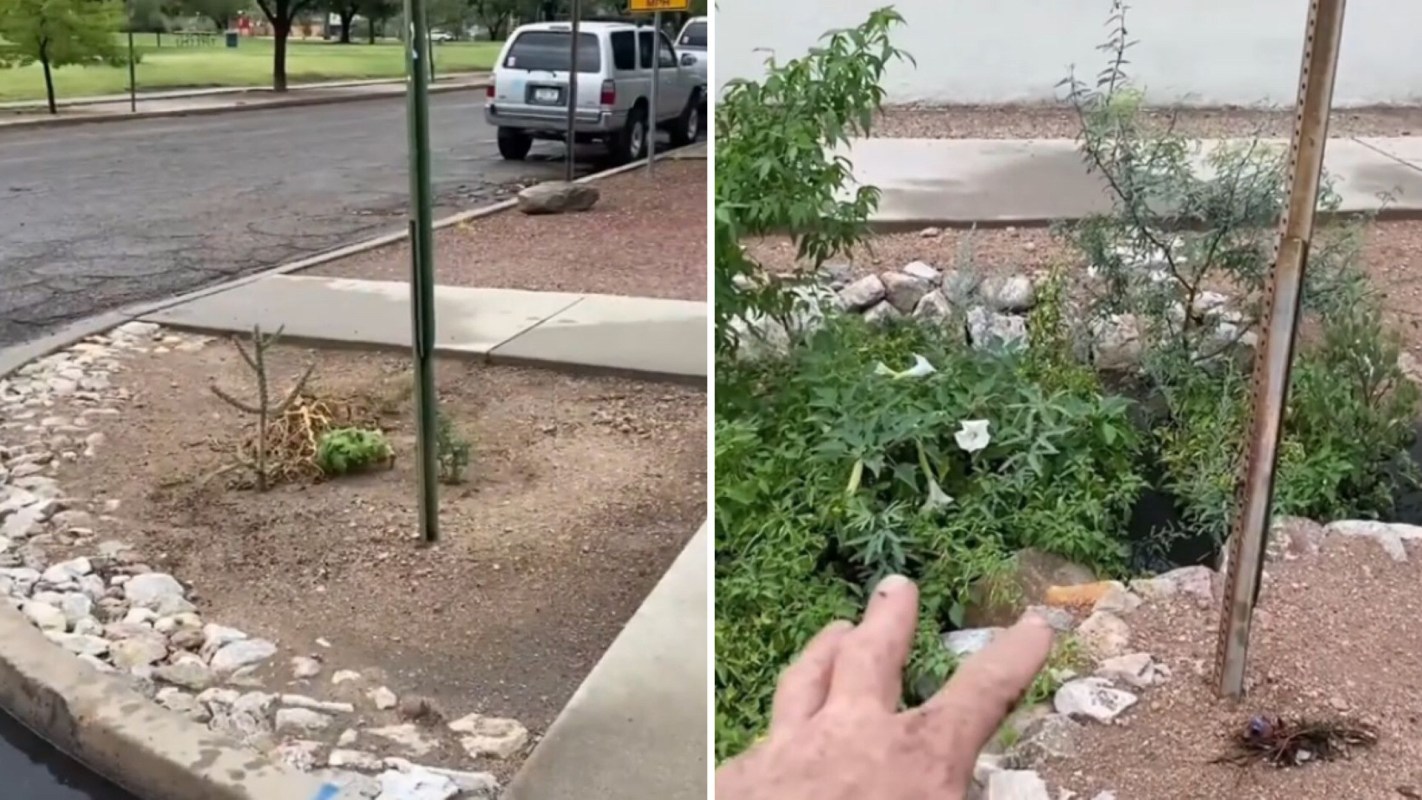
A TikToker's curb-cut rain garden turns street runoff into free irrigation, showing how neighborhoods can reduce flooding at a low cost. An account under the name Jessica (@santapmqece) recently shared a simple rainwater hack that, when practiced, could help reduce street flooding.
In the four-part set of videos, they guided viewers through their community's hybrid curb-and-basin system designed to capture the street runoff. They explained how the simple act of removing the debris blocking the openings helps irrigate the plants in the street basin.
@santapmqece How Rain Gardens Make Streets Greener _ Reduce Flo-1
♬ original sound - Jessica
@santapmqece How Rain Gardens Make Streets Greener _ Reduce Flo-2
♬ original sound - Jessica
The stormwater system uses a street-side basin or a small curb cut. Stormwater can enter rain gardens through curb cuts, and overflow is routed to drains, per Penn State Extension. The opening directs it into a shallow basin next to the street, where it helps water the plants the community has grown.
According to the original poster, creating the basins and turning them into a small native plant garden can slow and spread the flow of water. This approach also helps minimize flooding, recharge groundwater, create pockets of green that cool the street, and support pollinators. One TikToker commented: "This is genius."
These same benefits are consistent with the U.S. Environmental Protection Agency's guidance on rain gardens.
The solution showcases how to manage water more efficiently, and residents can apply the same idea at home. Planting clover, buffalo grass, or native plants, or adopting xeriscaping — even partial swap cuts runoff, reduces watering, saves money, and lowers upkeep. Native lawns can also create healthier ecosystems for pollinators, which is vital to the food supply.
The rain garden basins prompted online conversations. One viewer commented on the fix for its simplicity and innovation: "Wow, absolutely brilliant! Hoping more people get behind this and install these everywhere!"
Another user dismissed the approach as "such a waste of city resources, not able maintain etc," but others quickly pushed back.
As one commenter explained, "they are less maintenance than grass that needs to be mowed." Another added: "If they're native plants it would be a net profit to the city. Extremely little to no maintenance, recharges the water table more efficiently than standard grass … provides people with a better area to walk in so more ppl walking around means a better quality of life."
|
Would you install water-collecting hydropanels on your home?
Click your choice to see results and speak your mind. |
 Definitely 👍
Join our free newsletter for easy tips to save more and waste less, and don't miss this cool list of easy ways to help yourself while helping the planet.
TCD Picks » Upway Spotlight
💡Upway makes it easy to find discounts of up to 60% on premium e-bike brands





Cool Picks