


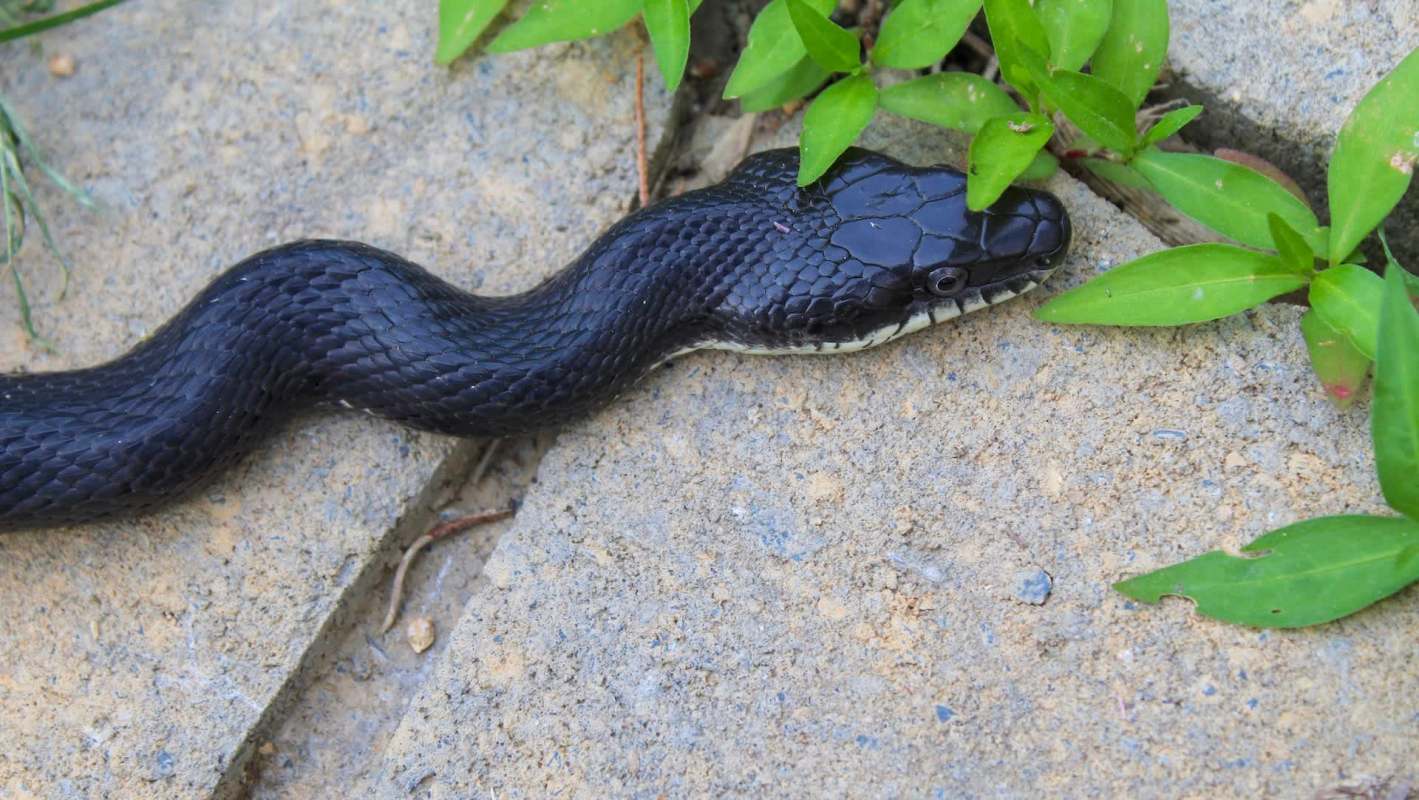
A Connecticut homeowner got an unwelcome surprise this week when an unusually large black rat snake was seen making its way onto his roof.
What happened?
On Tuesday, May 26, Bill Schwabe said he spotted the northern black rat snake in his yard and then watched it go up onto the roof, WFSB reported.
"I saw him in the backyard and then he slithered up the roof. I didn't realize he was going into my house," he said.
To figure out what the animal was doing, Schwabe installed motion cameras and reached out to Don Dandelski of D&D Wildlife Control. Dandelski, who has worked in wildlife control for 34 years, told WFSB that he has seen a rat snake this size only a handful of times.
After the snake came out of the roof, it was guided into a barrel with a snake grabber, WFSB reported. Once measured, it was about 6 feet long and roughly 3 inches thick.
Schwabe also said he found about eight snake skins in the attic, each around 6 feet long, suggesting the animal may have been using the home as shelter for some time.
TCD Picks » Quince Spotlight
💡These best-sellers from Quince deliver affordable, sustainable luxury for all




Why does it matter?
Northern black rat snakes are nonvenomous, and they help keep rodent populations in check.
Schwabe himself acknowledged that benefit, noting that smaller snakes have shown up in the house before and that "it keeps down [his] mice population."
Encounters like this can become more common when human development overlaps with wildlife habitat. Homes can offer warmth, cover, and reliable access to prey such as mice, especially when there are openings in roofs, attics, or siding.
Wildlife tends to follow food and shelter, and if rodents are getting into a home, predators may not be far behind.
What's being done?
The next step is to seal the hole in the roof so the snake cannot get back inside. Once that is done, Dandelski plans to move the animal farther back into Schwabe's yard, where it can continue hunting mice.
Rather than killing the snake, the homeowner and wildlife expert are focused on removing the attractants and blocking access to the house.
WFSB reported that state law bars relocating snakes, so keeping the animal on the property but out of the home is the most workable solution.
"If it was venomous, I probably would burn my house down. That's a joke. But if it was venomous, that would probably freak me out," Schwabe said.

Get TCD's free newsletters for easy tips, smart advice, and a chance to earn $5,000 toward home upgrades. To see more stories like this one, change your Google preferences here.






