


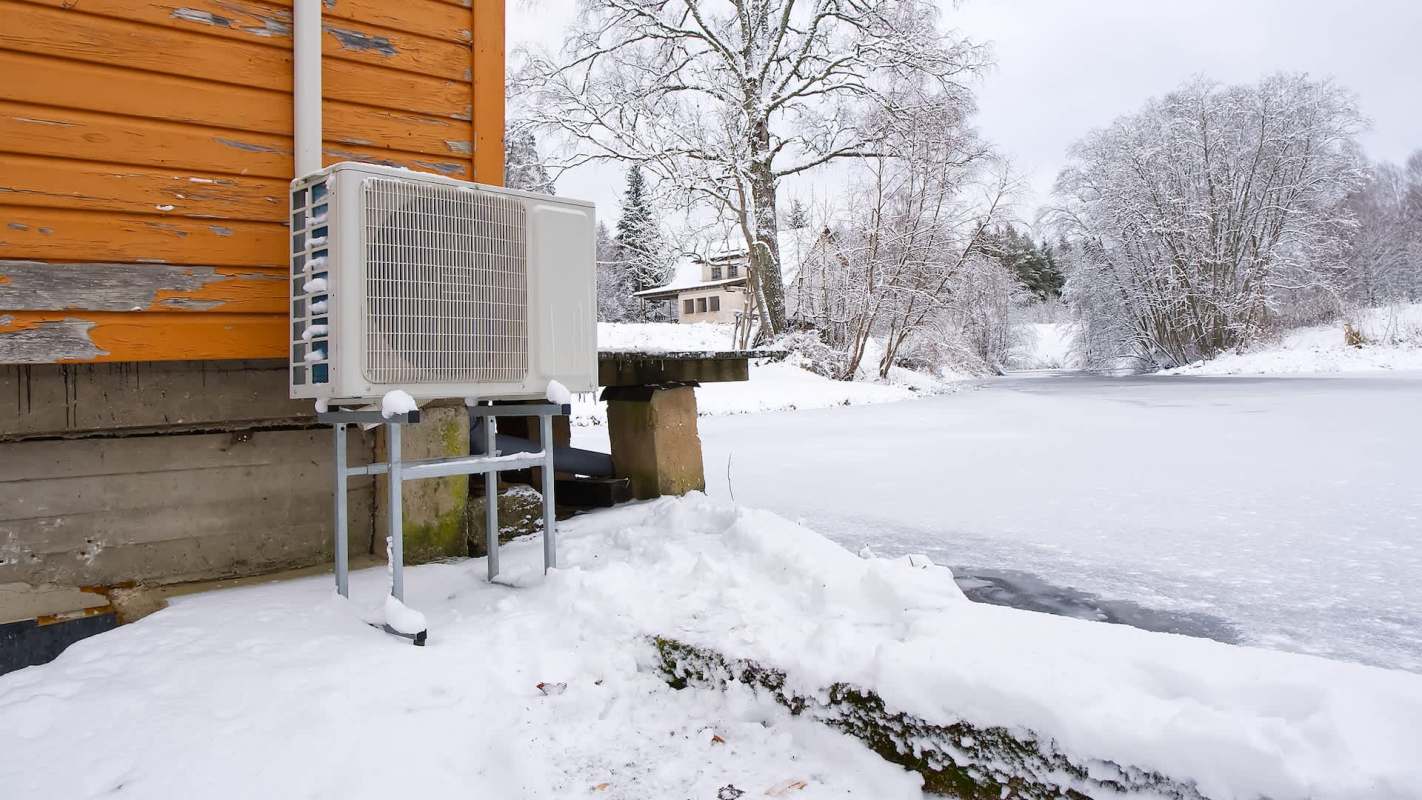
A Department of Energy competition proved that heat pumps can perform great in winter.
The scoop
The Residential Cold Climate Heat Pump Challenge invited manufacturers to come up with the best winter-ready heat pumps they could.
Bosch, Carrier, Daikin, Johnson Controls, Lennox, Midea, Rheem, and Trane Technologies all took a shot and successfully made working prototypes. Carrier said its unit could work in temperatures as low as minus-23 degrees Fahrenheit.
Twenty-three homes were kitted out with new heat pumps from eight of those manufacturers, and data was gathered on their performance for a year. All the cold-climate heat pumps that went through this field test are moving forward to production, some as soon as this fall.
Heat pumps work by shunting heat into or out of a home using a compressed gas that flows in a loop. It's the same thing as your fridge, except the loop can flow in reverse, depending whether you want to heat or cool the home.
Popular HVAC brands like Mitsubishi offer a range of heat pump options to meet the needs of any home — including cost-effective mini-split systems that maximize comfort and savings by targeting specific rooms or zones.
One of the key technologies at work in the competition was variable-speed compressors. Normally heat pumps only have single on and off settings for the gas compressor. Being able to dial that compressor speed up or down based on temperature helped improve efficiency.
How it's helping
"Cold-climate heat pumps can lower bills while maintaining comfort in very low temperatures, especially for people who use inefficient systems that rely on propane, oil or electric resistance," said Lacey Tan of energy think tank RMI, according to The Washington Post.
Save $10,000 on solar panels without even sharing your phone number Want to go solar but not sure who to trust? EnergySage has your back with free and transparent quotes from fully vetted providers in your area. To get started, just answer a few questions about your home — no phone number required. Within a day or two, EnergySage will email you the best options for your needs, and their expert advisers can help you compare quotes and pick a winner. Solar panels can save you more than $50k over their 25-year lifespan, and EnergySage can help you save as much as $10k on installation. Which begs the question — isn't that worth an email or two? |

Heat pumps use much less energy than other forms of home climate control, but that can be compromised when backup systems need to kick in at low temperatures. This competition shows that the technology is evolving to deal with that issue.
Besides bill savings, pollution from home energy use is high in America. Making heating and cooling more efficient can bring that down and help the environment in the long haul. Despite all that upside, the upfront cost of a heat pump can still be challenging.
|
Which of these factors would most effectively motivate you to buy a heat pump? Click your choice to see results and speak your mind. |
 Lower energy bills 💰
 For now, incentives exist to get over the financial hump of a heat pump purchase, but they expire at the end of 2025. Mitsubishi's free tool can help you find the best option at your price point by connecting you with trusted local installers for free quotes.
Heat pumps are just one way to improve your home's energy efficiency. Check out our weatherization guide to find out more ways you can save on your utility bills.
What everyone's saying
Redditors were impressed with the results of the competition.
"This is huge, it should be a big help in getting wider adoption here in Canada," the top commenter said.
"The units coming out of this challenge should be a meaningful, if incremental, improvement over what's currently on the market," another user wrote.

Join our free newsletter for easy tips to save more and waste less, and don't miss this cool list of easy ways to help yourself while helping the planet.
Cool Picks






