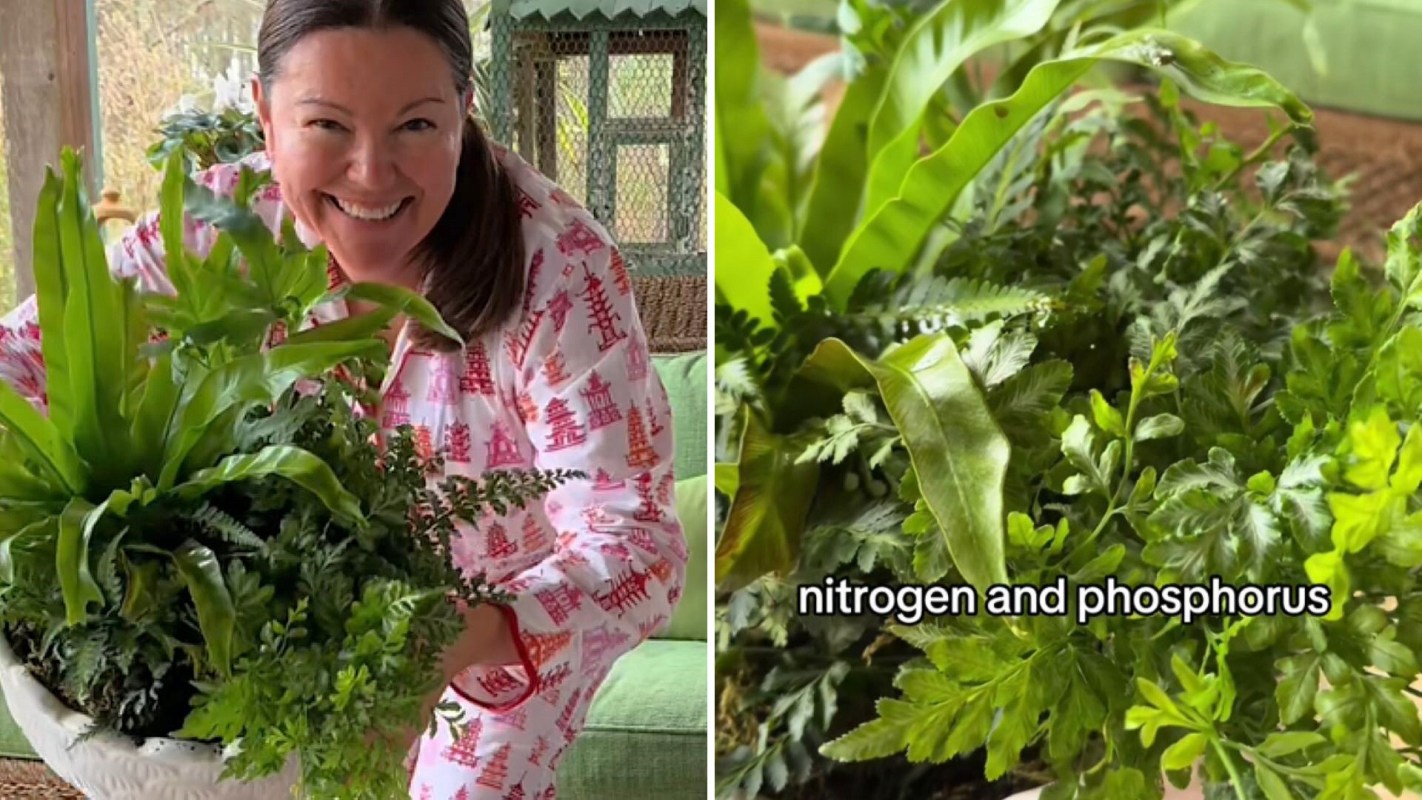
To reduce waste, improve soil and crop quality, and save money, home gardeners like TikToker Carmen Johnston (@carmenjohnstongardens) are opting for homemade organic fertilizers over synthetic blends.
The scoop
Johnston, an expert gardener, shared a one-ingredient organic fertilizer recipe on TikTok.
@carmenjohnstongardens Save you coffee! I do this once a month. Be sure to store your coffee in a container that can breath and keep the lid off. Make sure they are very dry before using and work into the soil.
♬ original sound - Carmen Johnston
"Don't throw away your coffee grounds, y'all," Johnston advises. "Give your plants a java jolt."
Rather than tossing used coffee grounds or leftover coffee from the pot, Johnston recommends consumers sprinkle or pour them in the dirt surrounding plants. She mentions this hack can be used both for potted plants and those in the ground.
The coffee grounds fertilizer, Johnston says, will not only promote healthy plant growth but will repel slugs and ants as a bonus.
For the proper outcome, save coffee grounds in a container with the lid removed, and make sure they are dry before use.
"I do this once a month," she says in the caption.
What makes coffee such an effective plant fertilizer is its nutrient properties. Coffee is packed with potassium, nitrogen, and phosphorus, Johnston informs.
How it's helping
Potassium, nitrogen, and phosphorus are the macronutrients necessary for plant growth, according to Oregon State University Extension Service.
These macronutrients are in all of your typical commercial fertilizers, but not in their natural forms.
TCD Picks » Upway Spotlight
💡Upway makes it easy to find discounts of up to 60% on premium e-bike brands





|
How much time do you spend taking care of your houseplants, garden, or yard each week? Click your choice to see results and speak your mind. |
 Less than 30 minutes 🌵
 Nitrogen, for example, is often replaced with its synthetic counterpart, urea, in commercial fertilizers, per the Illinois Farmdoc Daily.
When handled appropriately, urea is a viable nitrogen replacement, but overuse can lower soil pH. Acidification takes place because of the elevated production of ammonia from the urea. What results is poor plant health and decreased crop yields, according to Olimpum.
Additionally, when overused, urea in synthetic fertilizers can reach beyond plant roots and contaminate groundwater. When contaminated with high levels of nitrates, Olimpum says, drinking water can become hazardous to young children and infants.
High nitrate levels in the water can disrupt marine ecosystems by causing algal blooms as well.
Coffee grounds and other organic matter as fertilizer, on the other hand, do not pose such threats. Using homemade fertilizers from coffee grounds and other compost can save consumers $25 a year.
What everyone's saying
Commenters were grateful for Johnston's helpful tips.
One thanked her, "Nice to know, thank you!"
"Great idea," another commented.

Join our free newsletter for easy tips to save more and waste less, and don't miss this cool list of easy ways to help yourself while helping the planet.
Cool Picks