


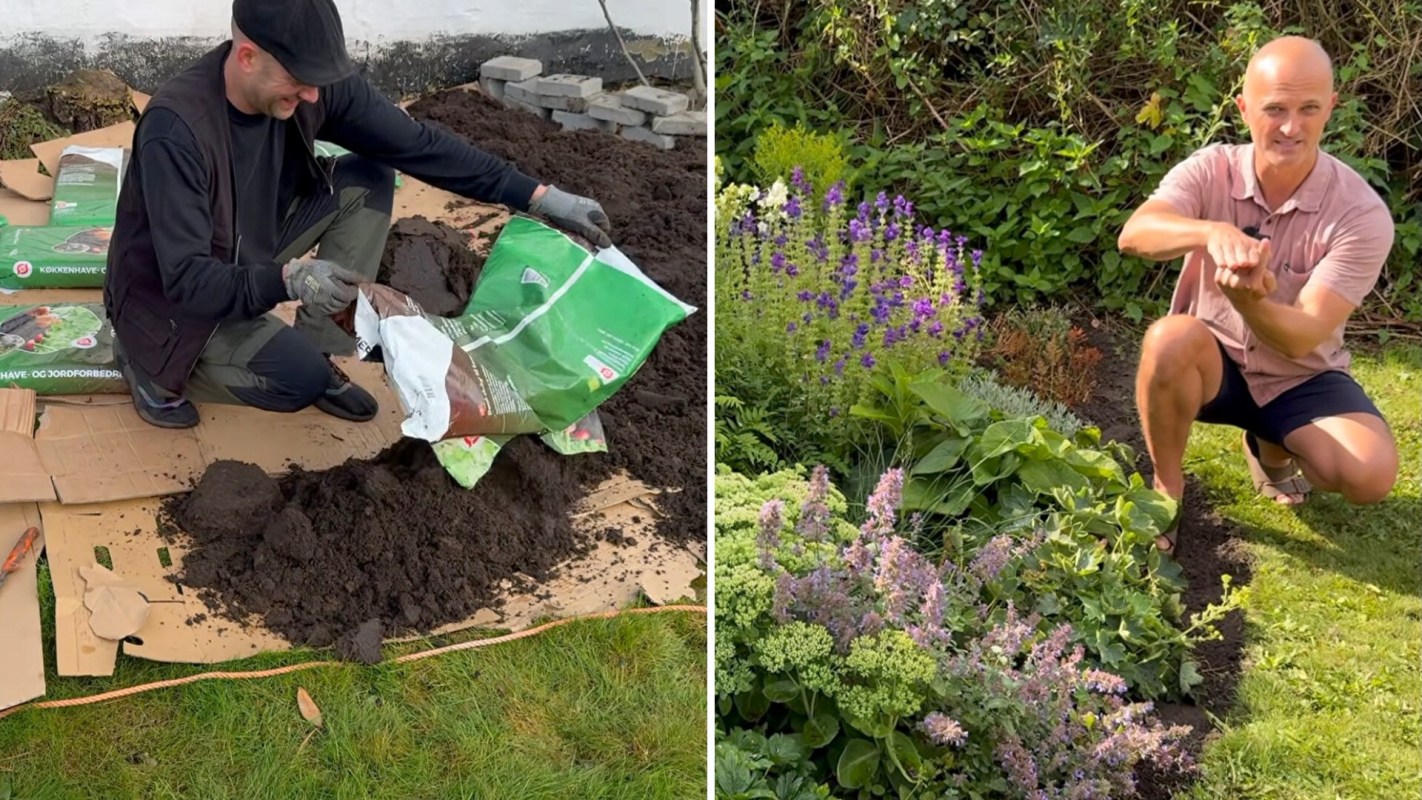
Over six months, two gardeners in Denmark turned a basic stretch of lawn into a colorful, textured perennial flower bed that was far friendlier to pollinators.
Their step-by-step YouTube video tracks the work beginning March 5 on a neighbor's yard, comparing two ways of building the beds: one using a cardboard-and-compost no-dig setup and another made by flipping the existing sod.
What happened?
Set on the east coast of Denmark's Jylland region, which the gardeners said is similar to USDA zone 8a, the project included a main bed of about 50 square meters (538 square feet) and a second bed of about 10 square meters (108 square feet).
Before planting, they used rope to mark out flowing shapes suited to the informal cottage-garden style they had in mind.
In one area, the gardeners smothered the lawn with cardboard and paper bags before adding roughly 10 to 15 centimeters (4 to 6 inches) of compost, aiming to block weeds while still letting perennial roots grow downward as the materials decomposed.
Elsewhere, they took a simpler approach by cutting under the grass with a spade, turning the turf over, and waiting for it to break down before planting.
TCD Picks » Quince Spotlight
💡These best-sellers from Quince deliver affordable, sustainable luxury for all




As the creators put it, "Just six months ago, this was an ordinary lawn, but today it's packed with color and texture and perennials that will keep coming back year after year."
One commenter wrote: "Wow, what a transformation in such a short time. So lovely of you guys to do this for your neighbour. A win-win for everyone, including pollinators."
Why does it matter?
This kind of lawn conversion can reduce mowing, create habitat for bees and other insects, and help homeowners rely less on chemical weed control.
In the video, the gardeners said both beds attracted far more beneficial insect life than the lawn they replaced.
The side-by-side comparison also highlighted tradeoffs. No-dig can require more upfront materials, since cardboard must be found and compost can add cost, and any gaps in the covering may still let weeds like dandelions emerge.
Turning over turf was cheaper in this case, but it was not maintenance-free either, because grass along the edges tried to grow back and needed early weeding.
Beyond the environmental benefits, gardening can also pay off at home. Even ornamental gardening supports mental and physical health by getting people outside and moving.
And once gardeners gain confidence transforming a yard, many go on to grow herbs, fruits, and vegetables, which can save money on produce and often taste better than store-bought versions.
What can I do?
Replacing part of a lawn does not require a huge budget. A no-dig bed may be useful if you want to avoid disturbing the soil, while flipping turf can be a more affordable option if you're willing to take on more hands-on maintenance.
Keeping plant costs down can matter just as much as the bed-building method. The gardeners said they relied heavily on divisions from their own garden, along with plants started from cuttings, seeds, and bare-root perennials, instead of filling the space with full-priced nursery pots.
Small changes — even converting one corner of a lawn — can make a yard more beautiful, more useful for wildlife, and easier to enjoy.
One commenter pointed out a significant factor: "It helps that you had so many good fresh divisions right out of your garden."

Get TCD's free newsletters for easy tips, smart advice, and a chance to earn $5,000 toward home upgrades. To see more stories like this one, change your Google preferences here.






