


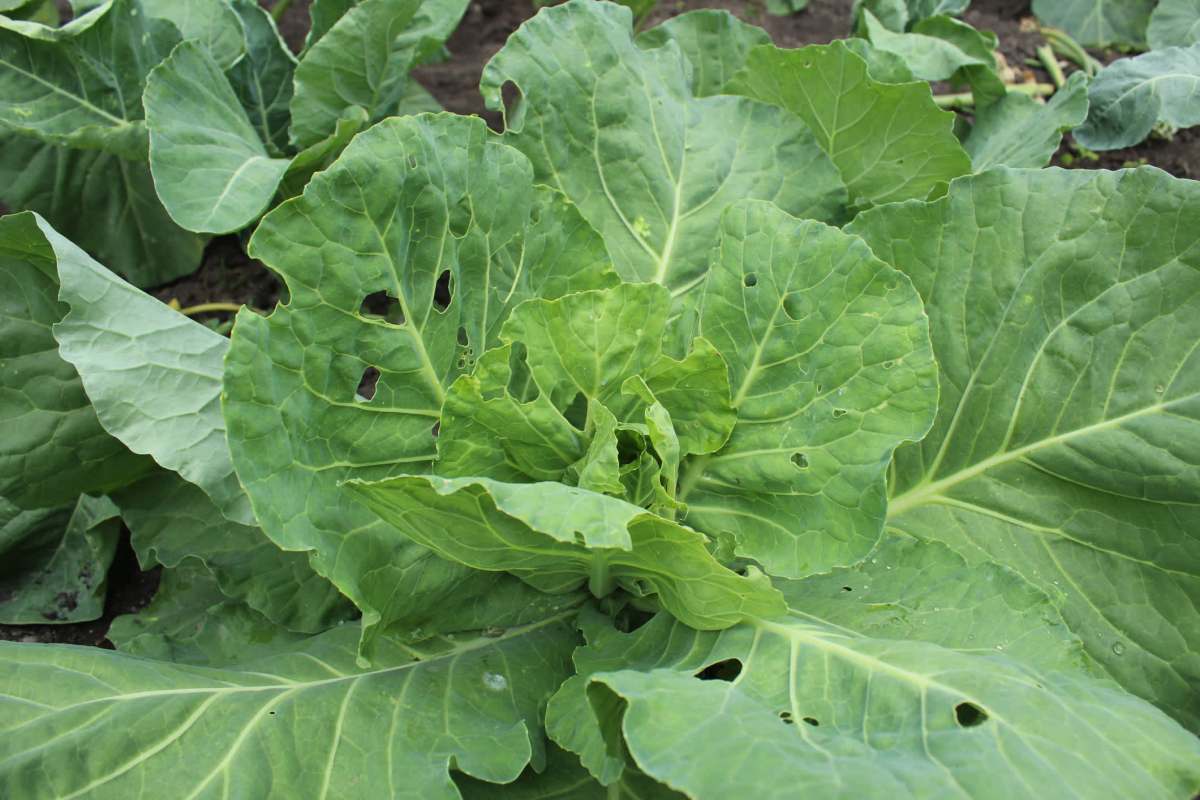
Gardeners who notice ragged holes in cabbage, kale, or broccoli leaves may want to take a closer look before assuming the damage is random.
A video from The Rusted Garden (@therustedgarden) on YouTube is getting attention for showing that the culprit is often still attached to the plant.
What happened?
Gardening creator Gary Pilarchik gave viewers a brief visual guide to green cabbage worms and cabbage loopers that feed on brassicas.
Pilarchik said the white butterfly many gardeners see around their yards "lays eggs" on brassicas. To show what that leads to, he pointed to a red cabbage leaf riddled with chewing damage and said that when leaves look like this, "you absolutely know you have a cabbage worm, cabbage looper."
His demonstration then moved from leaf damage to the pest itself. After turning over the leaf, he revealed what he called a "little green caterpillar."
"Usually you find them behind the leaf, along the stem," Pilarchik said, which helps explain why gardeners may miss them until they inspect the plant closely.
TCD Picks » Quince Spotlight
💡These best-sellers from Quince deliver affordable, sustainable luxury for all




He made the same broader point in the video description: "Before you treat a problem it is important to know what it is causing it."
Why does it matter?
This kind of pest damage can quickly ruin a promising harvest for anyone trying to grow their own food. Brassicas, such as cabbage, kale, and broccoli, are popular backyard crops because they can help shoppers save money on produce, offer a fresher taste than store-bought options, and make it easier to eat more vegetables at home.
Gardening can also support mental health by reducing stress and physical health by getting people outside and moving.
Because pests are one of the main reasons beginners get discouraged, spotting cabbage worms early can make a big difference before leaves are heavily damaged.
Pilarchik mentioned lower-toxicity treatment options, saying, "You can treat this by using a neem oil spray," and he also referred viewers to BT, a common organic garden treatment.
For home gardeners, identifying a plant problem before taking action is often a cheaper and easier path than spraying blindly or replacing damaged crops.
What are people saying?
Commenters were grateful for the tips, and some offered their pest-prevention process.
One wrote, "Thanks, I rotate spinosad, BT, and pyrethrin (all organic) added to Castile soap as a surfactant on a weekly basis, so every three weeks the plants get the same pesticide."
Another added that "netting helps too."

Get TCD's free newsletters for easy tips, smart advice, and a chance to earn $5,000 toward home upgrades. To see more stories like this one, change your Google preferences here.






