


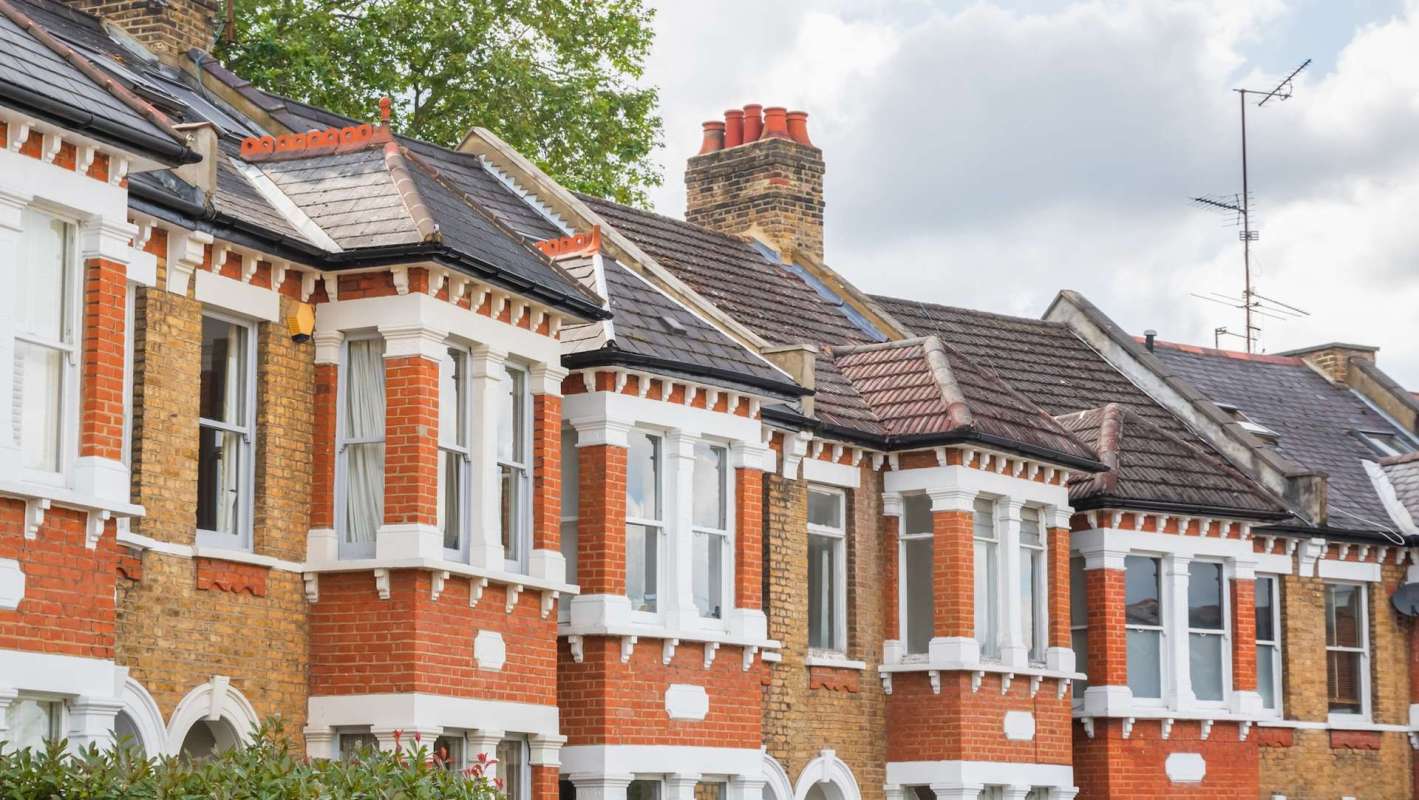
Britain's homes were built to hold in warmth — an advantage in the winter that is becoming a serious problem in summer heatwaves.
What's happening?
These homes' brick and concrete absorb heat during the day and radiate it back at night, which is now becoming particularly dangerous for vulnerable people who need cool air at night, BBC News reported.
One woman, Mandy Bourne, said, "I've got COPD and sometimes I can't breathe."
In cities, because of the urban heat island effect, nighttime temperatures can remain up to 12.6 degrees Fahrenheit warmer than in nearby rural areas.
Researchers examining an earlier West Midlands heatwave estimated that the heat-island effect contributed to about half of the 130 heat-related deaths, according to BBC News.
Only around 5% of English homes have air conditioning units. But experts are split: Air conditioning should be a last resort, considering reflective roofs and fans work better and are cheaper. But others point to how the cooling is inconsistent with how quickly Britain insulates for the winter to stay warm. Aren't these equal problems?
TCD Picks » Quince Spotlight
💡These best-sellers from Quince deliver affordable, sustainable luxury for all




Why does it matter?
When buildings retain heat, they can make it harder for people to sleep and keep the body from cooling down overnight, when it needs time to recover. Nighttime heat is especially dangerous for older adults and people with existing health conditions.
The burden is also not evenly shared. Baroness Brown — also known as engineer Julia King, who chairs the adaptation committee of the government's Climate Change Committee — told BBC News that the poorest neighborhoods face bad heat exposure at more than seven times the rate of others.
That means social housing tenants may be among those facing the hottest indoor conditions while also having the fewest options to improve them.
What's being done?
Experts increasingly say Britain will need both stronger heat adaptation and lower emissions, not one or the other.
Still, many researchers say passive cooling measures should come first. Shade, reflective roofs, ventilation, and ceiling fans can help lower indoor temperatures without putting as much strain on the electrical grid.
Some financial help is available. Since April, households in England and Wales have been able to apply for £2,500 ($3,360) toward a reversible air-to-air heat pump that provides cooling in summer and heating in winter, BBC News reported.
However, uptake has been low, and the program does not cover social housing or new builds, leaving many of the most vulnerable residents without access.

Get TCD's free newsletters for easy tips, smart advice, and a chance to earn $5,000 toward home upgrades. To see more stories like this one, change your Google preferences here.






