


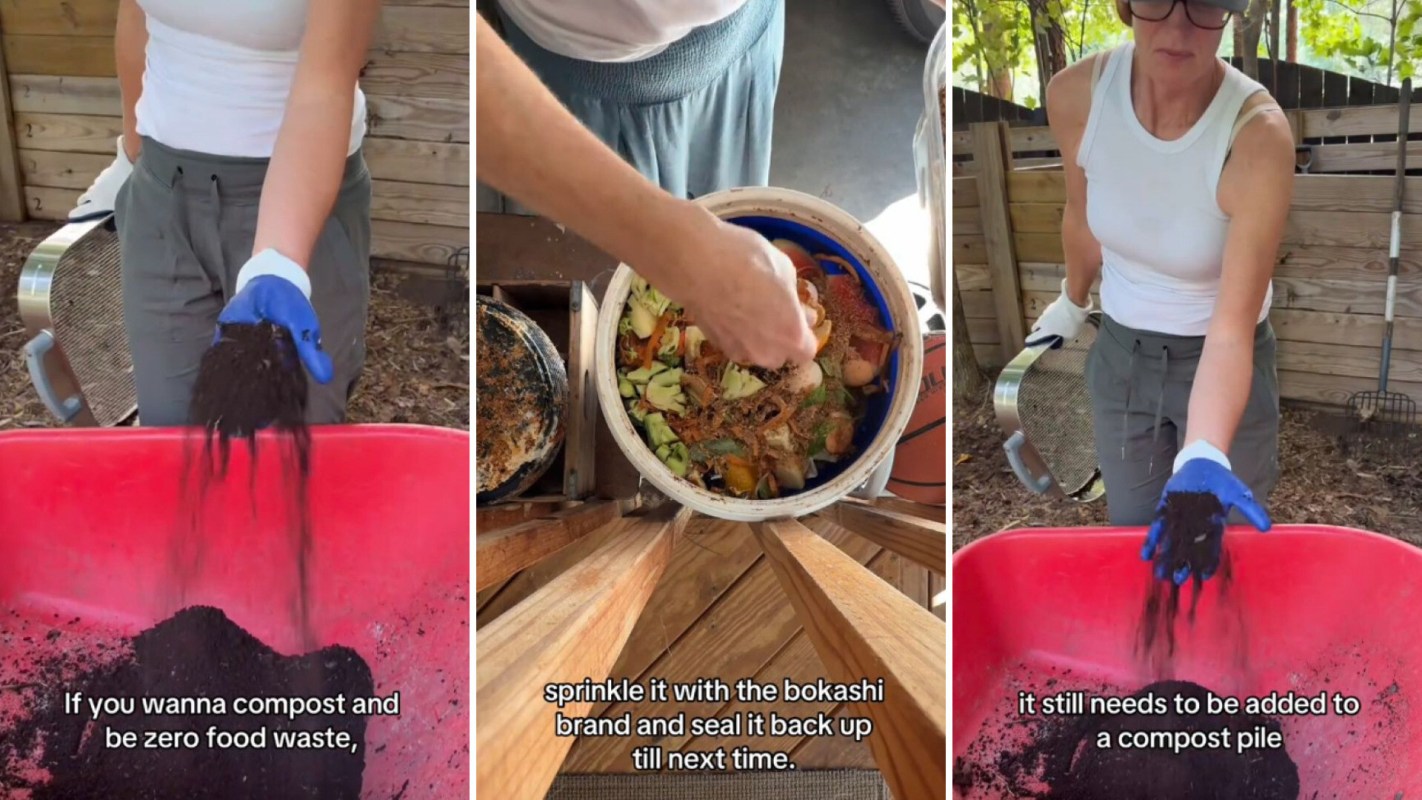
A gardening content creator is drawing attention to bokashi, a composting approach designed for food scraps that many standard backyard systems reject.
With bokashi, households can process items such as meat, dairy, cooked meals, and greasy leftovers instead of sending them to the landfill.
What's happening?
In a TikTok video, The Ever Hopeful Gardener (@theeverhopefulgardener) explained how bokashi works and why it can be a useful option for people trying to cut food waste at home.
As the creator put it: "If you wanna compost and be zero food waste, there is a way to do it that allows you to compost all the things you've been warned against."
According to the video, the key ingredient is bokashi bran, which the creator described as "microbe inoculated."
Food scraps are placed into sealed buckets with layers of the bran, where they ferment before being moved to a regular compost pile to complete aerobic decomposition.
TCD Picks » Quince Spotlight
💡These best-sellers from Quince deliver affordable, sustainable luxury for all




The creator also highlighted Garden of Oz, a Colorado small business, and said its bran is made from "100% diverted Colorado grown grain byproducts."
@theeverhopefulgardener I get my bokashi bran from a small business in CO called Garden of Oz. Garden of Oz has everything you need to get started with bokashi or to restock your bran. I love this company because they are passionate about composting and keeping food out of landfills. Their bran is made from 100% diverted Colorado grown grain byproducts. #learnontiktok #compost #composting #zerofoodwaste ♬ original sound - The Ever Hopeful Gardener
Why does it matter?
Food waste is a major landfill problem because it can release methane, a heat-trapping gas, as it breaks down without oxygen. Bokashi gives households another option, especially for scraps many people have long been told never to compost.
Composting is one of the simplest ways to turn waste into something useful. Healthier compost can support healthier soil, which can help people grow some of their own food at home.
Growing food can help families save money on produce, especially herbs, greens, and other frequently purchased items. Many home gardeners also say fresh-picked food tastes better than store-bought versions.
Gardening can also support mental and physical health by encouraging time outdoors, movement, and stress relief.
Bokashi may feel more approachable than a composting system that comes with a long list of prohibited scraps.
What can I do?
Getting started usually means having bokashi bran, a container for kitchen scraps, and a bucket with a tight-fitting lid.
The creator said the buckets stay in the garage and are resealed after each use, with another sprinkle of bran added for roughly every few inches of food waste.
After fermentation, the scraps still need to be buried in soil or added to a compost pile to finish breaking down.
That means the method can work especially well for people who already garden or want to start.
Even a small garden can help stretch grocery budgets, improve meals, and make better use of food scraps you are already producing.

Get TCD's free newsletters for easy tips, smart advice, and a chance to earn $5,000 toward home upgrades. To see more stories like this one, change your Google preferences here.






