


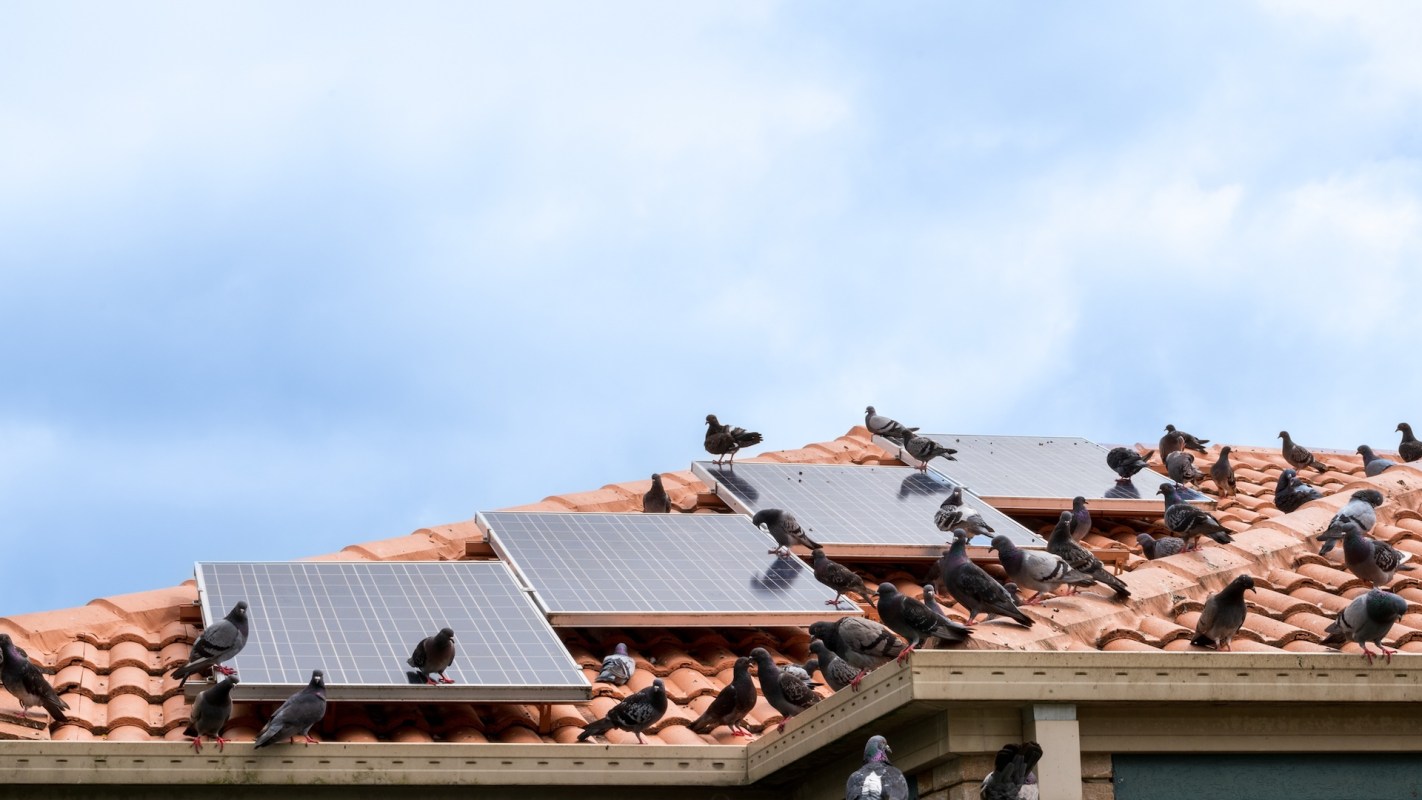
A homeowner in East Scotland turned to others for a gut check after a prospective solar installer claimed bird proofing was unnecessary on a roof pitched steeper than 45 degrees — and commenters warned that skipping the mesh could become a much more expensive mistake later.
Here's what to know
The homeowner said they live in a remote part of East Scotland where pigeons rarely show up, even though small garden birds are common and house martins nest under the eaves. In the Reddit thread, they said the installer argued that birds would not land or nest beneath panels on such a steep roof.
People in the comments said the pitch alone would not necessarily prevent problems. One person stressed how much more expensive it can be to wait, warning, "This now costs £1200 (~$1,583 USD), instead of £200 (~$263 USD) at the time of install, as you now need scaffolding for a second time."
Going solar is one of the best ways to save money on home energy, but installation details can make a major difference in long-term costs. Homeowners comparing options can try EnergySage to get free solar installation estimates and compare quotes.
The responses appeared to sway the homeowner, who said they intended to push for the protection rather than risk paying for another complicated and expensive scaffolding setup later.
More background
Other replies also pushed back on the claim that a steep roof is naturally bird-proof.
"Birds can nest on cliffs, yes bird proofing is needed," one user wrote.
Another commenter noted that pigeons can cling even to rough vertical walls.
Save $10,000 on solar panels without even sharing your phone number Want to go solar but not sure who to trust? EnergySage has your back with free and transparent quotes from fully vetted providers that can help you save as much as $10k on installation. To get started, just answer a few questions about your home — no phone number required. Within a day or two, EnergySage will email you the best local options for your needs, and their expert advisers can help you compare quotes and pick a winner. |

Nesting beneath panels can create mess, noise, and cleanup headaches, and any retrofit may require another round of labor and access equipment.
What can be done?
If bird activity is even a possibility, homeowners can ask installers to price mesh or proofing directly into the original quote and explain in writing why they do or do not recommend it. Multiple quotes can also show whether an omission is a genuine best practice or simply a cost-cutting choice.
For people still shopping for solar, EnergySage's solar map shows the average cost of a home solar panel system on a state-by-state level, along with details on solar panel incentives for each state. Together, those tools can help homeowners get the best price for rooftop solar panels and access available incentives. With EnergySage's help, the average person can save up to $10,000 on solar purchases and installations.
Adding battery storage to a solar setup is one of the best ways to protect your home during outages, save money on energy, and go off-grid. Homeowners interested in backup power can explore EnergySage for information about home battery storage options, including competitive installation estimates.
More From EnergySage
💡Go deep on the latest news and trends shaping the residential solar landscape

By the end of the discussion, the original poster wrote, "Thank you all for the input - I will insist they do include it, especially since our scaffolding set up will be particularly complicated and expensive - I really don't want to have to repeat it!!"
Where can I learn more?
Questions about roof design, installer advice, and how birds interact with buildings also come up in other home projects.
• Homeowners pushed back after a roofer offered questionable advice on solar panels during installation planning.
• Architects are testing bird-friendly building design to stop modern glass structures from killing birds.
• In Shanghai, scientists found that green roofs of buildings can shed surprising amounts of microplastics.
• Homeowners debating daylight upgrades discovered a simple rooftop feature can brighten dark rooms naturally.

Get TCD's free newsletters for easy tips, smart advice, and a chance to earn $5,000 toward home upgrades. To see more stories like this one, change your Google preferences here.






