


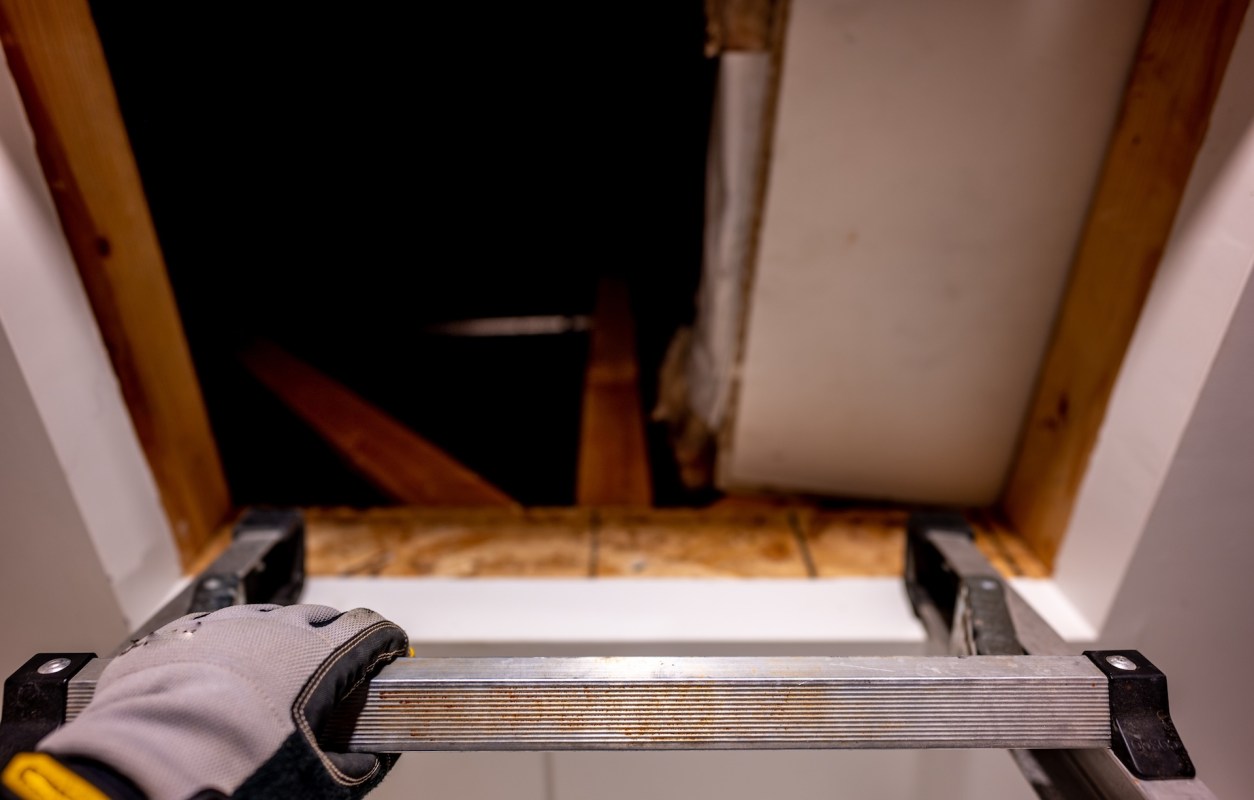
A Texas homeowner, shocked to find their attic temperatures soaring above 150 degrees, turned to the internet for advice on how to keep the oven-like heat from affecting the rest of their home.
Here's what to know
Writing on Reddit's r/HomeImprovement forum, the original poster said they were stunned to discover the extreme heat in their home's attic. They asked fellow Redditors whether adding extra insulation would help keep the heat from affecting the rest of the house.
However, many commenters focused on a different issue altogether.
One commenter described the problem not as a lack of insulation but as "inadequate attic venting."
Others agreed.
"Key thing here is to make sure your 'intake' (soffit venting) is matched to or exceeds the 'exhaust' - (ridge venting, etc.)," chimed in another Redditor.
Once the focus had shifted to the attic's ventilation, the OP shared more information that strongly suggested that airflow was, at the least, a major contributing factor.
"My home has zero soffit venting," the OP explained. "When the house was re-insulated last year, the state-approved contractor that did the work blocked off every single soffit vent, with no explanation."
Save $10,000 on solar panels without even sharing your phone number Want to go solar but not sure who to trust? EnergySage has your back with free and transparent quotes from fully vetted providers in your area. To get started, just answer a few questions about your home — no phone number required. Within a day or two, EnergySage will email you the best options for your needs, and their expert advisers can help you compare quotes and pick a winner. Solar panels can save you more than $50k over their 25-year lifespan, and EnergySage can help you save as much as $10k on installation. Which begs the question — isn't that worth an email or two? |

As the OP has learned the hard way, blocking intake vents can trap hot air in the attic instead of moving it out through exhaust vents higher up.
More background
As for the OP's question about adding additional ventilation, many Redditors opposed the idea. Some commenters even warned that putting insulation directly beneath the roof deck can create new risks.
"Adding spray foam, panels, etc. can cause condensation and moisture issues," cautioned one.
Another user echoed these concerns, saying that large gaps between insulation layers can turn into "a mold farm."
Others warned that, beyond a certain point, adding additional insulation yields diminishing returns.
"Generally once you hit R-50 or thereabouts the actual return you get is so miniscule that it's not worth ever doing," a commenter noted.
Others recommended that, once the insulation is sufficient, taking other steps like sealing air leaks and improving ventilation may do more to increase comfort and lower cooling costs.
Regardless of what steps the homeowner takes next, the situation highlighted how extreme attic heat can force air conditioners to work harder and drive up utility bills, particularly in places like Texas.
Despite the contractor having inexplicably covered up the soffit vents while installing the new insulation, the OP was still pleased with the results overall.
"Even at that, the reinsulation work cut my utility bill in half!" they said.
Where can I learn more?
For more on attic fans, home cooling in Texas, and how extreme heat affects homes and the power grid, check out these articles.
• Many homeowners use attic fans to vent trapped heat and ease summer AC strain.
• In Sebastian, Florida, a powered attic fan helped keep rooms cooler.
• In Texas, an attic fix cut summer power bills with simple thermostat tweaks.
• During a Texas heat wave, an apartment without AC became dangerously unlivable.
• An extraordinary Texas heat wave pushed the power grid toward dangerous summer strain.

Get TCD's free newsletters for easy tips, smart advice, and a chance to earn $5,000 toward home upgrades. To see more stories like this one, change your Google preferences here.






