


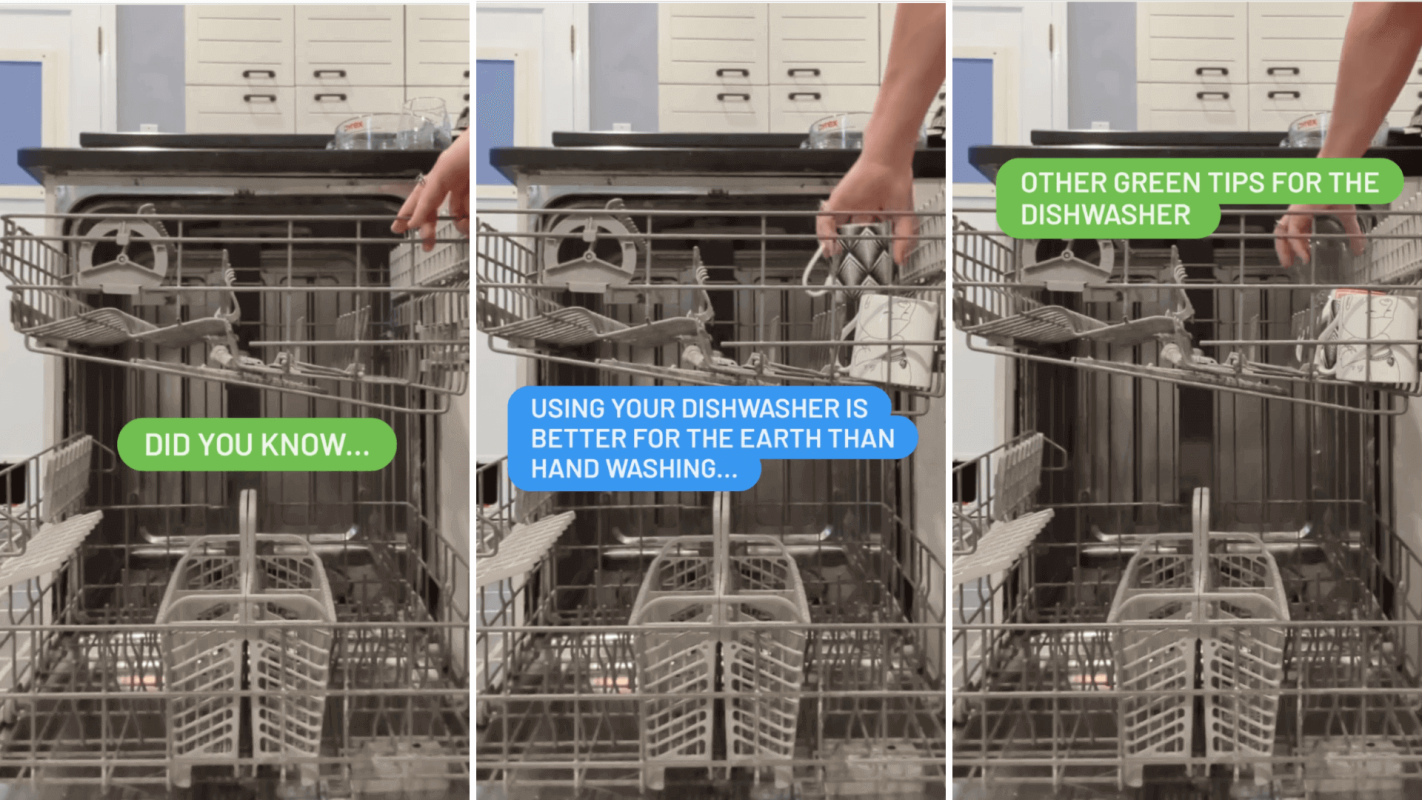
Are dishwashers more water-efficient than washing dishes by hand? A viral video is bringing crucial context to that question.
The Instagram Reel, posted by user Maggy Keet (@PlanetarianLife), claims that an Energy Star-rated dishwasher uses nine times less water than washing dishes by hand.
As it turns out, there's plenty of truth to Keet's claim. Contrary to popular belief, dishwashers use less water than hand-washing does.
The average amount of water used by hand-washing dishes is between nine and 27 gallons, depending on the efficiency of you and your faucet. But there are over 200 Energy Star-certified dishwashers that use less than three gallons of water per cycle.
Energy Star claims that a certified dishwasher can save 3,850 gallons of precious water over its lifetime, compared to hand-washing dishes.
Cost savings
Running a dishwasher instead of washing dishes by hand reduces water and energy usage, saving you money on your monthly utility bills.
Switching from hand-washing dishes to an Energy Star-certified dishwasher can save $210 on your utility bills annually and an estimated $1,565 in lifetime operating costs of the dishwasher.
According to Energy Star, running your dishwasher also saves you 230 hours a year. That's over nine and a half days out of your year solely dedicated to scrubbing and getting pruney fingers.
Cleanliness
Dishwashers don't involve bacteria-ridden sponges and use hotter temperatures, providing the most hygienic clean compared to hand-washing dishes.
Research has shown that sponges used to hand-wash dishes can harbor bacteria, even some disease-causing pathogens. Using a sponge to hand-wash dishes can be counteractive when it's a breeding ground for germs, not to mention how used sponges become trash that pollutes our planet.
TCD Picks » Quince Spotlight
💡These best-sellers from Quince deliver affordable, sustainable luxury for all




Though hand-washing with dish brushes is more hygienic than sponges, you can't beat the high temps of a dishwasher.
Most people can tolerate water that's about 110 degrees Fahrenheit warm, whereas newer dishwashers heat the water to 140 degrees Fahrenheit. Hot water is critical because it activates the detergent that lifts grime and germs off your dishes.
No dishwasher? No problem
For those of us that don't have the option to use a dishwasher, try these tips from the United States Geological Survey to make hand-washing dishes more efficient:
Invest in an aerator in your faucet head, which uses air to increase water pressure rather than more water.
Soak dishes in a basin of soapy water before getting started.
Scrape food off dishes rather than rinse them off.
Don't let the water run while you wash each dish.
If you can, try using two basins to work in — one filled with hot, soapy water, the other with warm water for a rinse.

Join our free newsletter for easy tips to save more, waste less, and help yourself while helping the planet.
Cool Picks






