


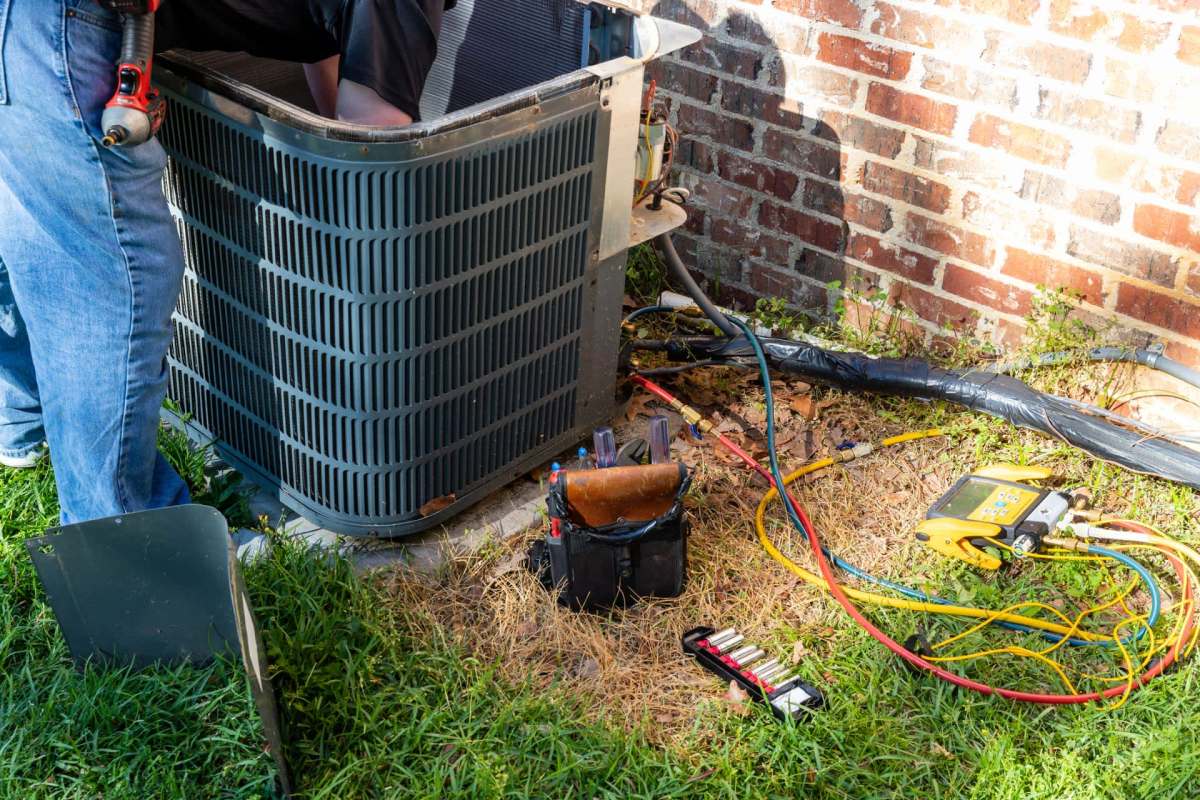
An air conditioner that had still been keeping a Michigan home cool failed completely just 48 hours after a homeowner called for precautionary service due to an odd sound near the refrigerant line and received a small repair and a refrigerant top-off.
That kind of turnaround can turn a routine service call into a much bigger question: repair the old equipment or replace it before the next heat wave arrives?
Here's what to know
In a post on Reddit, the original poster said, "He said there was a small leak, and he tightened it and added a pound of refridgerant. Said we need to get it fixed long term, but we should easily be good through this summer. Well, 2 days later it completely stopped working."
After that, another HVAC company checked the system, found the refrigerant fully depleted, and said the leak could be around the evaporator coil.
The technicians also told the homeowner they would need to open the unit up further before they could say for sure.
Because the air conditioner was already 13 years old, the situation immediately raised the costlier question of whether to replace it.
The homeowner also had a furnace more than 15 years old and was quoted $8,500 to replace both systems, with $4,000 of that for the furnace.
Palmetto can help homeowners understand their HVAC options and slash their energy bills with new, efficient HVACs and heat pumps. Palmetto's Comfort Plan network can help you find efficient heating and cooling solutions for your home and connect you with vetted installers.
Crushed by your bills? See instant solar savings from vetted installers in just a few clicks With energy prices through the roof, there's never been a better time to go solar — and EasyHome can help you find the best prices from the best installers in your area. EasyHome takes the guesswork and headaches out of energy upgrades by showing you estimated savings from a network of vetted local partners. To get started, just enter your ZIP and share a few details about your home — seeing your estimate is really that easy. |

More background
In the thread, HVAC-savvy commenters focused on a small part that can cause a big problem: the Schrader valve core, which technicians use when connecting gauges and charging a system.
One commenter said, "Empty in 2 days will be a very easy leak to find."
Another commenter suggested a more specific possibility: "Could definitely be a leaky Schrader core. Possible stuck after he removed his gauges."
A stuck or damaged valve core may be far less expensive to fix than a major coil failure or a full system replacement.
When a unit loses refrigerant that quickly, the source is often easier to identify than a tiny seasonal leak.
At the same time, replacing aging heating and cooling equipment can still be one of the best ways to cut utility bills and guard against rising energy prices.
What can be done?
If replacement makes more sense, Palmetto may be worth considering before you commit. If you're not ready to spend up front, the Comfort Plan includes $0-down options that can lower your heating and cooling costs by up to 50%, and Palmetto Comfort Plans include 12 years of free maintenance.
You can also drive your utility costs even lower by pairing solar panels with electric appliances, such as efficient HVAC systems and heat pumps. EnergySage makes it easy to find the best solar system and installer for your home and budget, saving you up to $10,000 on installations.
As the original poster put it, "At that point we're almost halfway to a new unit. Does that sound about right?"
One commenter offered the simplest reality check: "There is no way beyond a leak check to know."
Where can I learn more?
Plenty of AC problems start small and get expensive fast when the root cause gets missed. These examples focus more on airflow, drainage, and day-to-day performance than refrigerant leaks, but they point to the same takeaway: get a clear diagnosis before signing off on a major HVAC bill.
• Homeowners near cottonwood trees found that simple condenser cleaning reversed soaring summer cooling bills.
• TikTok users showed that keeping AC drains clear can prevent efficiency losses and repair calls.
• One homeowner turned an AC leak into compost moisture instead of wasted runoff.
If you're stuck choosing between another leak check and a replacement quote, that distinction matters. Knowing which issues are often simple to fix can help you ask sharper questions before the next service call.

Get TCD's free newsletters for easy tips, smart advice, and a chance to earn $5,000 toward home upgrades. To see more stories like this one, change your Google preferences here.






