


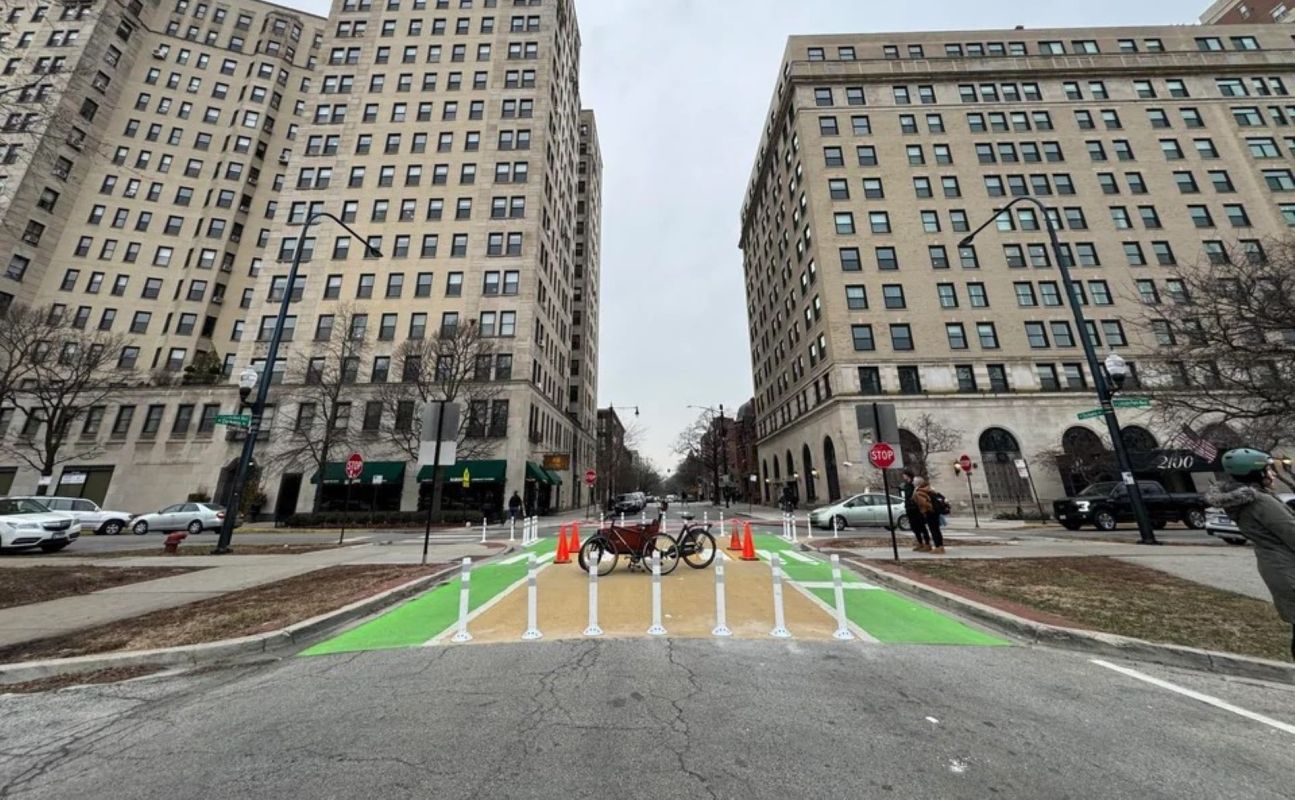
A recent Reddit post steered up debate around an increasingly popular city initiative: traffic diverters that create car-free zones.
The post included photos of bundled-up protesters holding handmade signs. Some of the most inflammatory read (unedited), "Share The Road = Inclusion. Bikers Should Pay to Ride," "Dickens Closure = Rasict Urban Plannig," and "Bike Lanes Are Elitist, Bikers get a Liscense."
"Chicago — Anti-cyclist protesters showed up at the new traffic diverter," the original poster said.
The post was shared in a subreddit that fosters "discussion about the harmful effects of car dominance on communities, environment, safety, and public health."
The photos came shortly after the city of Chicago unveiled new traffic diverters on bustling Dickens Avenue, as covered by Streetsblog Chicago. These barriers reroute cars to reduce cut-through traffic while still allowing access for cyclists and pedestrians.
By preventing cars from cutting through side streets, traffic diverters aim to improve safety and make room for wider sidewalks or bike lanes. Traffic calming measures such as diverters help reduce accidents, according to the Department of Transportation — and it's well established that bikers and walkers are safer when separated from vehicles.
TCD Picks » Quince Spotlight
💡These best-sellers from Quince deliver affordable, sustainable luxury for all




Diverters can also encourage carbon-free choices, as people feel more confident biking and walking when protected from traffic. Even small changes that get more people outdoors and reduce short car trips can improve our planet's health by lowering pollution.
Yet some motorists argue that restrictions foster an unequal burden, especially on non-wealthy commuters.
So how should cities weigh freedom of mobility for all against environmental and financial sustainability? The debate is ongoing.
"Car-specific taxes and fees don't pay for city streets anyway. Those go into federal and state highway funds," one commenter said in support of diverters. "Plus, even those cover less than half of highway spending; bike lanes are about half the size of car lanes, so that would be a fair share of the road."
Another asked who the real "elitists" are, saying: "Of course, the people on the $500 bicycles are the 'elitists' who are oppressing the people in the $50,000 SUVs."
Balancing these perspectives won't be easy. But with good faith on all sides, cities can work toward changes that allow safer, affordable, and joyful movement for every resident.

Join our free newsletter for cool news and actionable info that makes it easy to help yourself while helping the planet.






