


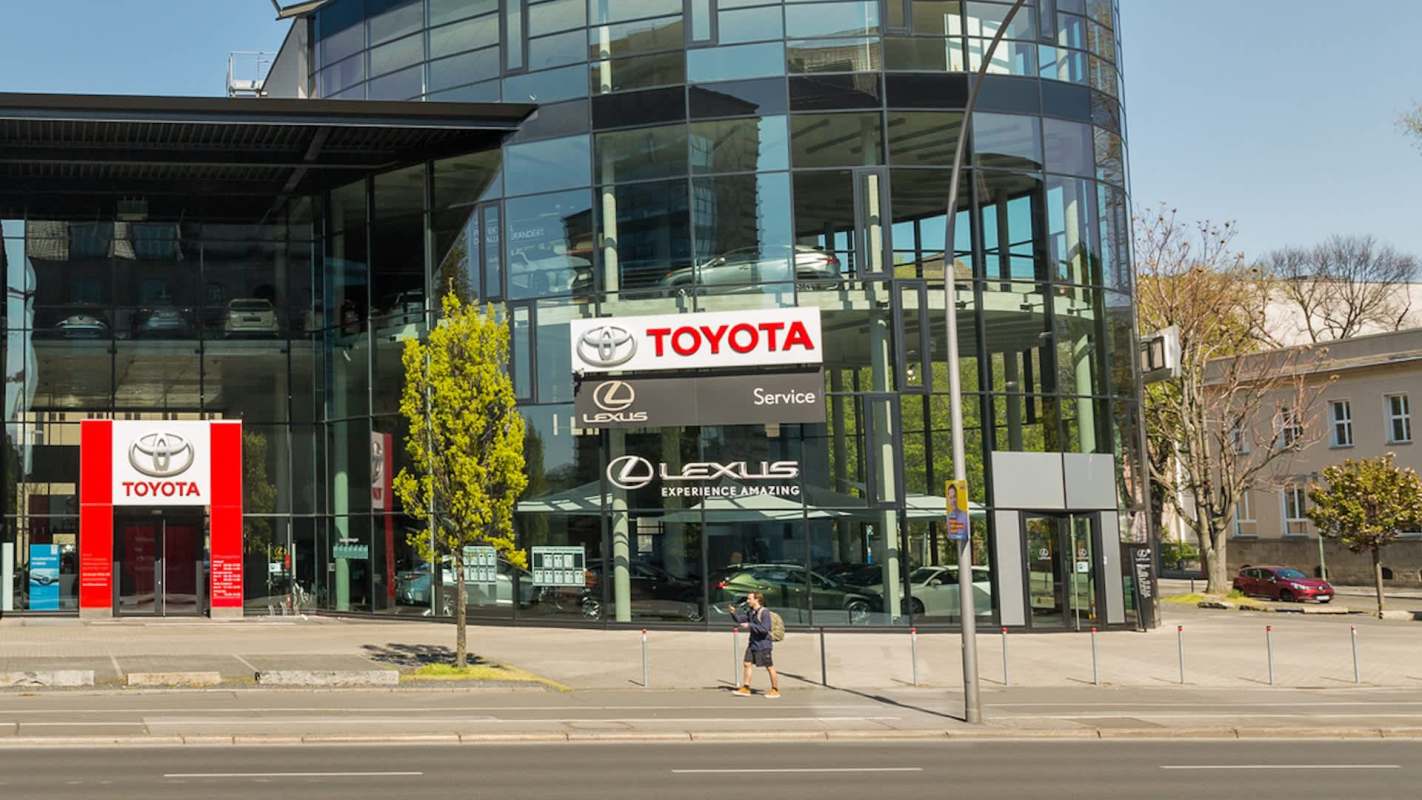
Toyota's sales slump is now stretching into a fourth straight month, and the weakness is no longer confined to a single market. While the world's biggest automaker is still holding up relatively well in North America, the broader global picture looks shakier.
Lexus, a subsidiary of Toyota, is slipping, too — a warning sign for shoppers already dealing with tight supply, inconsistent dealership experiences, and high prices on popular hybrids.
What's happening?
May brought a split picture for Toyota: sales in Japan climbed 11.1%, helped by demand for models including the RAV4 and bZ4X, while markets outside Japan fell 9.6%. That left the company's global total, including Lexus, at 834,279 vehicles, down 7.2% from a year earlier.
In a recent YouTube analysis of Toyota's newly released sales spreadsheet, Kirk Kreifels (@KirkKreifels), a content creator who covers automotive news, summed it up this way: "Toyota just released their global sales, and it is a sign of Toyota's great shrinking."
China remained Toyota's toughest market, with sales there down 31.7%.
Lexus had an even tougher month, falling 12% in May and 10% for the year so far.
TCD Picks » Quince Spotlight
💡These best-sellers from Quince deliver affordable, sustainable luxury for all




Elsewhere, Toyota's regional performance was uneven: North America was roughly flat, with U.S. sales slipping just 0.6%, while Latin America dropped 10%, Oceania fell 26%, and the Middle East tumbled 38%.
Why does it matter?
When production weakens and inventory tightens, shoppers can end up with fewer options, longer wait times, and less negotiating power at dealerships, especially for fuel-saving hybrids and plug-in hybrids.
Output outside Japan fell 9% in May, contributing to a roughly 5.5% decline in Toyota's worldwide production. If supply remains uneven, consumers may continue to encounter inflated prices or limited availability for some of the brand's most in-demand models.
Even with the broader slowdown, Toyota's electrified sales kept rising — hybrids were up 4%, plug-in hybrids rose 35%, and battery-electric vehicles jumped sharply from a small base.
But critics have long argued that the company has moved too cautiously, and slow rollouts or production bottlenecks can leave buyers stuck with limited access to cleaner, lower-cost alternatives.
What's being done?
Not every part of Toyota's business is weakening. Japan is recovering, India remains a growth market, and North America has been supported by models such as the 4Runner, Tacoma, Camry, Corolla, and Grand Highlander. The company is also seeing continued growth in electrified vehicles, which could help if it can scale production more smoothly.
One commenter on the video pointed to that tradeoff, writing that relatives skipped a Lexus and bought "a maxed out top of the line hybrid Highlander so they could spend all the money they saved on more travel."
Dealer behavior is part of the picture, too. Another commenter wrote: "I was going to purchase a Toyota earlier in the year. Unfortunately the dealership experience sealed the deal in me never buying a brand new Toyota for a while."
That kind of friction can push some shoppers away from efficient vehicles altogether.
"Toyota just released their global sales, and it is a sign of Toyota's great shrinking," the content creator said.
One commenter put it even more bluntly: "I just don't think Toyota is stepping up to the plate like before. They lost their mojo."

Get TCD's free newsletters for easy tips, smart advice, and a chance to earn $5,000 toward home upgrades. To see more stories like this one, change your Google preferences here.






