


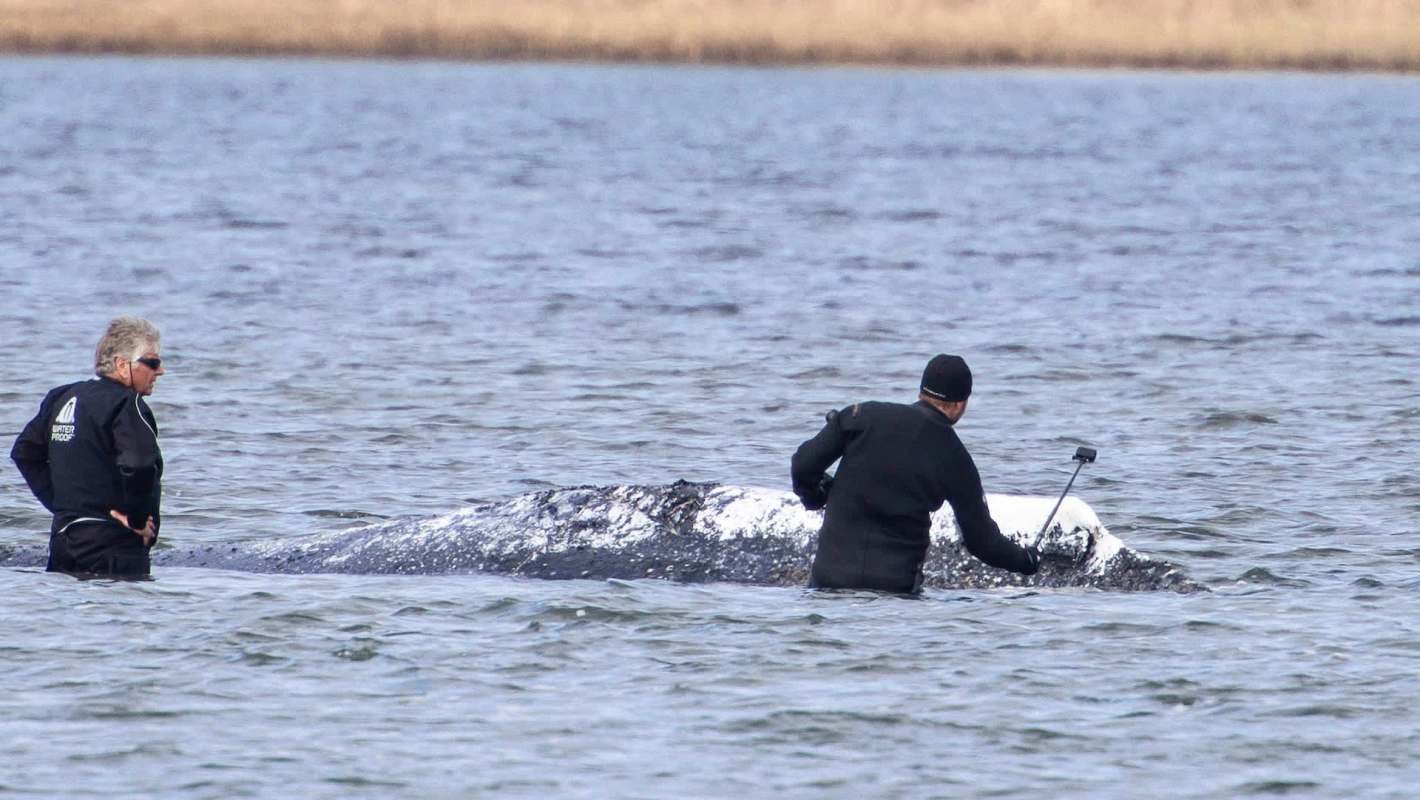
In a small corner of the Baltic coast, a stranded whale known as Timmy, also called Hope, has become a global sensation. As the world watches, a high-stakes rescue effort is racing toward a critical moment.
According to The Guardian, the young humpback whale has spent more than a month trapped in shallow waters along Germany's Baltic coast, repeatedly beaching itself as its condition worsened. This week, in a dramatic attempt to save it, rescuers carefully lifted the 10-meter whale onto a flooded barge and began towing it toward the North Sea.
The mission, backed by two multimillionaires willing to pay "whatever it costs," has sparked a wave of public support. People have baked whale-shaped cakes, written songs, and even gotten tattoos in solidarity with Timmy.
"Something like this has never happened before in Germany, where a life-saving operation of this kind has been carried out," said Till Backhaus, the environment minister for the state of Mecklenburg-Vorpommern, per The Guardian. "And this was an experiment, and the experiment was a success, and that's wonderful."
Still, skepticism remains. Some experts question whether such an intervention truly serves the whale's best interests.
The International Whaling Commission warned that the whale "appeared to be severely compromised" and, even if it reaches deeper waters, it is "unlikely to survive." The organization also noted that interventions like this are generally considered "inadvisable on grounds of animal welfare and human safety."
TCD Picks » Quince Spotlight
💡These best-sellers from Quince deliver affordable, sustainable luxury for all




"In our assessment, these interventions, although well meant, impose very considerable additional stress upon a creature that is already gravely ill, to little ultimate benefit," the IWC said, per The Guardian.
Experts from the Oceanographic Museum echoed those concerns, arguing that continued rescue efforts may now be futile — and could even cross into "pure animal cruelty."
The situation highlights a broader dilemma: when to intervene in nature, and when to step back.
As ocean conditions shift due to warming waters and human activity, whales and other marine animals are increasingly ending up in unfamiliar or dangerous environments. In some cases, that leads to strandings like this one.

Get TCD's free newsletters for easy tips, smart advice, and a chance to earn $5,000 toward home upgrades. To see more stories like this one, change your Google preferences here.






