


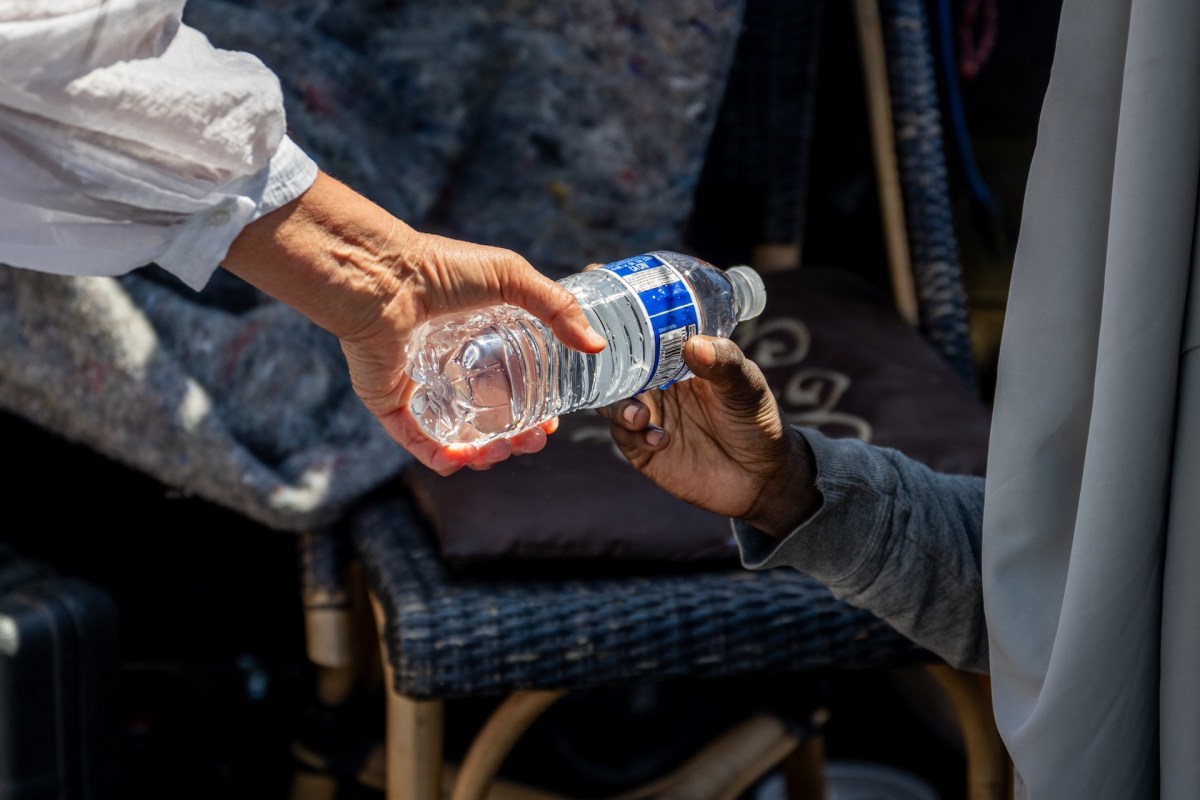
A letter from a neighborhood development group set off anger across St. Louis' South Grand business district by urging businesses not to hand out food or water to unhoused people, despite temperatures climbing into the 90s.
For many workers and customers, the message crossed a moral line.
Here's what to know
According to St. Louis Public Radio, a Sept. 11 letter from the South Grand Community Improvement District told owners to call 911 about people sleeping, defecating, or urinating in entryways.
The same letter said, "We understand that, especially during periods of extreme weather, providing water, coffee, and food may feel like the compassionate and appropriate way to help," but "these efforts can unintentionally encourage individuals to remain and panhandle in front of local businesses."
The dispute erupted after workers at MoKaBe's Coffeehouse shared the letter online.
"We are extremely disappointed and quite frankly, angry that some of our fellow South Grand businesses have signed off and support this," the post said.
TCD Picks » Quince Spotlight
💡These best-sellers from Quince deliver affordable, sustainable luxury for all




As St. Louis hit 94 degrees, Kenny Marks, owner of Kenny's Upstairs bar, taped a "free water" sign to coolers outside his business and said the letter filled him with "pure disgust," according to St. Louis Public Radio.
"That's just not how you treat humans during any time, but especially during a heat wave," he said.
After the backlash, Natasha Bahrami — board president of the South Grand CID and owner of the Gin Room — said she had not reviewed the letter before it went out.
"A letter went out that did not go through the proper channels to communicate this effectively and I take responsibility for that," Bahrami said.
More background
South Grand has long been associated with restaurants, nightlife, and independent shops.
Businesses moved quickly to separate themselves from the letter. The owners of Terror Tacos and Tree House restaurant apologized and said it did not match their values, while Terror Tacos co-owner Bradley Roach said the restaurant does not refuse water or restroom access to people who ask.
At the same time, some owners said the anger over the letter should not erase the conditions workers are confronting. Bahrami cited threats against staff, overdoses, and human waste in the area as part of the larger problem.
Danni Eickenhorst, co-owner of Steve's Hot Dogs, said restaurant employees are being pushed into impossible roles.
"Unfortunately, our frontline restaurant workers up and down South Grand are being asked to act as social workers and as crisis responders without training or support to do so," she said.
What's being done?
Bahrami said the board had been talking about these issues for years and added, "I hope we are able to come together with this momentum and push for real social work and real sustainable solutions for what is happening." Eickenhorst, meanwhile, said vandalism at her restaurant prompted her to ask the city's Department of Human Services to assess what help had actually reached the neighborhood.
What she found, she said, was limited: according to St. Louis Public Radio, over 13 months there were only a few site visits and meetings, along with water, hygiene kits, and resource lists.
The city, however, said outreach is ongoing. Ryan Sheehan, a spokesman for the St. Louis Department of Human Services, said workers go to neighborhoods around the city every day and "do on occasion offer water and snacks, especially in extreme heat, because everyone deserves hydration."
MoKaBe's owner Mo Costello summed it up this way: "There's always enough solutions, but there's never enough resources."
Where can I learn more?
These stories look at water disputes and development pressures in Sausalito, Phoenix, Johannesburg, Utah, and Pennsylvania.
• In Sausalito, business owners rebelled against a plan to sacrifice downtown to the sea.
• In Utah, critics warned new data centers could suck water away during drought.
• In Pennsylvania, a retiree demanded answers after losing water at home near a data center.

Get TCD's free newsletters for easy tips, smart advice, and a chance to earn $5,000 toward home upgrades. To see more stories like this one, change your Google preferences here.






