


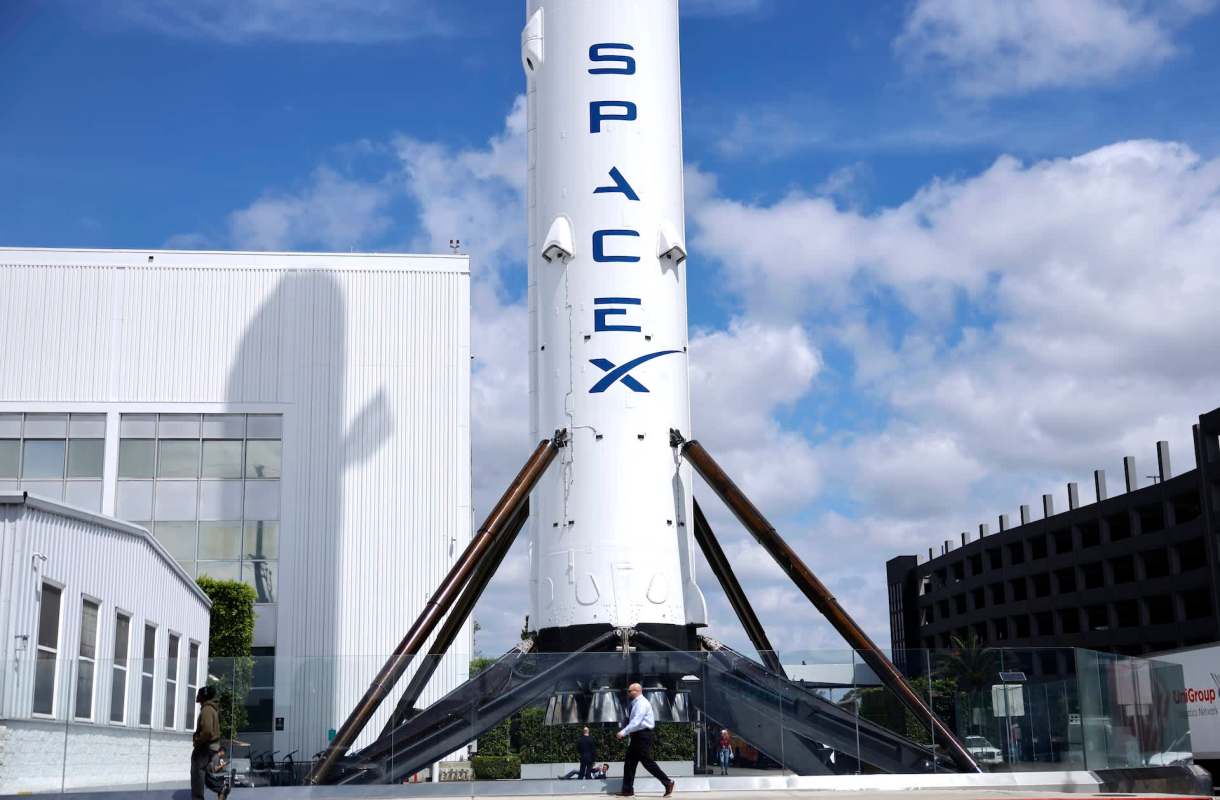
Everyday investors may soon get their first chance to buy into SpaceX — and with that comes both a huge opportunity and plenty of risk. A Nasdaq debut would open the door to one of the world's most closely watched private companies, but it would also ask the public to bet on steep losses, a massive valuation, and Elon Musk's tight control.
SpaceX, the rocket and satellite company Musk founded in 2002, is reportedly lining up a Nasdaq debut as SPCX, with media reports pointing to as early as June for the IPO. An IPO is the first sale of a private company's shares to public investors, after which the stock can trade on an exchange.
This deal is expected to be enormous, according to Al Jazeera. Reports say SpaceX wants to raise more than $80 billion at a valuation of roughly $1.75 trillion to $2 trillion, which would put it ahead of past IPO giants such as Saudi Aramco, Alibaba, Facebook, and Uber. Twenty-three financial institutions are backing the offering, including Goldman Sachs, Morgan Stanley, Citigroup, JPMorgan, and BofA Securities.
The company's SEC filing also offered the clearest look yet at its finances. SpaceX said it took in $18.6 billion in 2025 versus $14 billion the year before, while still recording a $4.9 billion net loss. In the first quarter of this year, it generated $4.7 billion in revenue and posted a $4.3 billion loss. The filing also reiterated Musk's goal of helping build a human settlement on Mars.
The biggest immediate impact is access. People who were previously shut out of SpaceX's private ownership structure may soon be able to invest directly. Public company reporting could also give investors and customers greater visibility into a business spanning launches, spacecraft, and Starlink internet service.
The offering also comes with some unusual risks. SpaceX's dual-class setup would keep roughly 85% of the voting power with Musk after the IPO, limiting the influence ordinary shareholders would actually have. The company is also still losing billions, even as revenue continues to grow.
TCD Picks » Quince Spotlight
💡These best-sellers from Quince deliver affordable, sustainable luxury for all




SpaceX has become a central player in reusable rockets and satellite internet, and its success or failure could influence costs, competition, and confidence across the private space sector. The usual IPO cautions apply: losses, the voting structure, and volatility. Big headlines do not eliminate business risk.
"The SpaceX IPO is a landmark deal for the uncharted space economy," Gary Ng of Natixis told Al Jazeera. He added that "it is a hot topic that can pull their liquidity from other investments."

Get TCD's free newsletters for easy tips, smart advice, and a chance to earn $5,000 toward home upgrades. To see more stories like this one, change your Google preferences here.






