


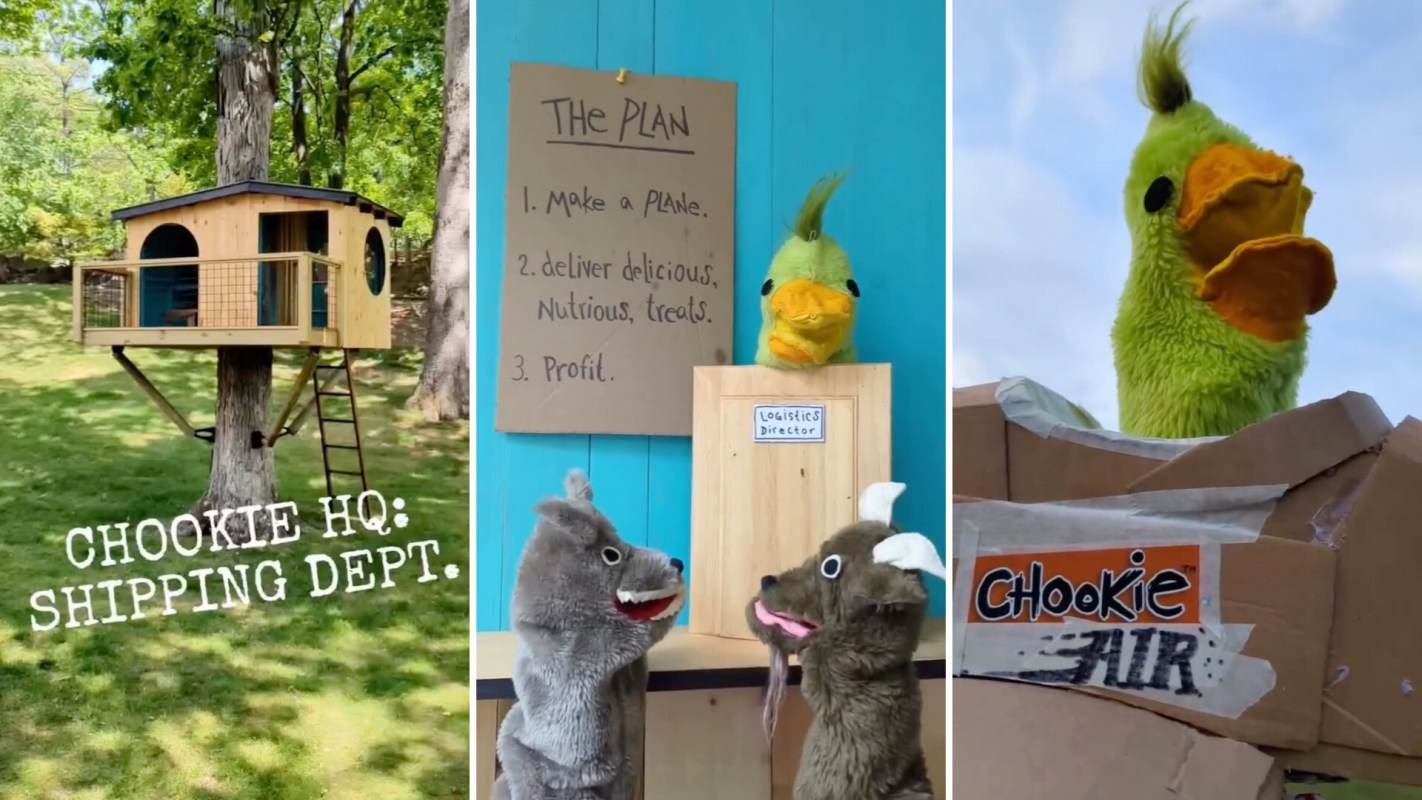
A snack brand's unusual cardboard airline campaign is gaining traction online for a simple reason: It looks like it was made by actual people.
Chookie says the mock-airline campaign brought in roughly 12 times as many new followers after its glitchy, AI-generated ads drew little enthusiasm, prompting the brand to pivot to hand puppets, DIY sets, and a fake in-flight operation.
What happened?
According to Futurism, the New Jersey snack company moved away from AI-heavy advertising and toward "Chookie Air," a fictional airline concept created to highlight its real partnership with delivery service Gopuff.
The shift came after the brand's earlier AI ads reportedly featured bizarre visuals, including misspellings, unsettling chocolate bars, and a lab-like production scene that failed to connect with viewers.
Rather than continue with synthetic-looking ads, the brand leaned into obviously handmade props, including cardboard planes, a treehouse headquarters, and vintage hand puppets.
In one Instagram clip, the puppets scramble to build a plane while a homemade camera setup — made from a painter's pole — helps create the illusion of flight.
TCD Picks » Quince Spotlight
💡These best-sellers from Quince deliver affordable, sustainable luxury for all




As founder Zev Ziegler said in a press release, "We started noticing consumers weren't rewarding polish the way brands thought they were."
Why does it matter?
Chookie's turnaround reflects a broader backlash against AI-made advertising, especially after high-profile campaigns from major brands such as Coca-Cola were criticized online as "AI slop."
While the technology can help optimize clean energy systems, improve grid forecasting, and support more efficient use of renewable power, it requires large amounts of electricity and water to train and operate.
The rapid expansion of data centers can also put added pressure on the energy grid. That can contribute to higher costs, resource strain, and unintended social impacts even as companies promote AI as the future.
Chookie said the handmade campaign required about the same time and investment as its AI-generated efforts but performed dramatically better.
What are people saying?
Ziegler said the difference between the two approaches "wasn't subtle," adding: "They were rewarding effort. Humor. Tiny human decisions."
He also explained the thinking behind the new direction: "At some point every startup brand in [consumer packaged goods] started using the exact same aesthetics to signal authenticity. We thought building a cardboard airline in a treehouse sounded more honest."
Freelance creative director Kevin Murray was similarly enthusiastic. He told Ad Age the project was "genuinely a lot of fun to make" and added, "It's hard to take yourself too seriously when your actors are vintage hand puppets."

Get TCD's free newsletters for easy tips, smart advice, and a chance to earn $5,000 toward home upgrades. To see more stories like this one, change your Google preferences here.






