


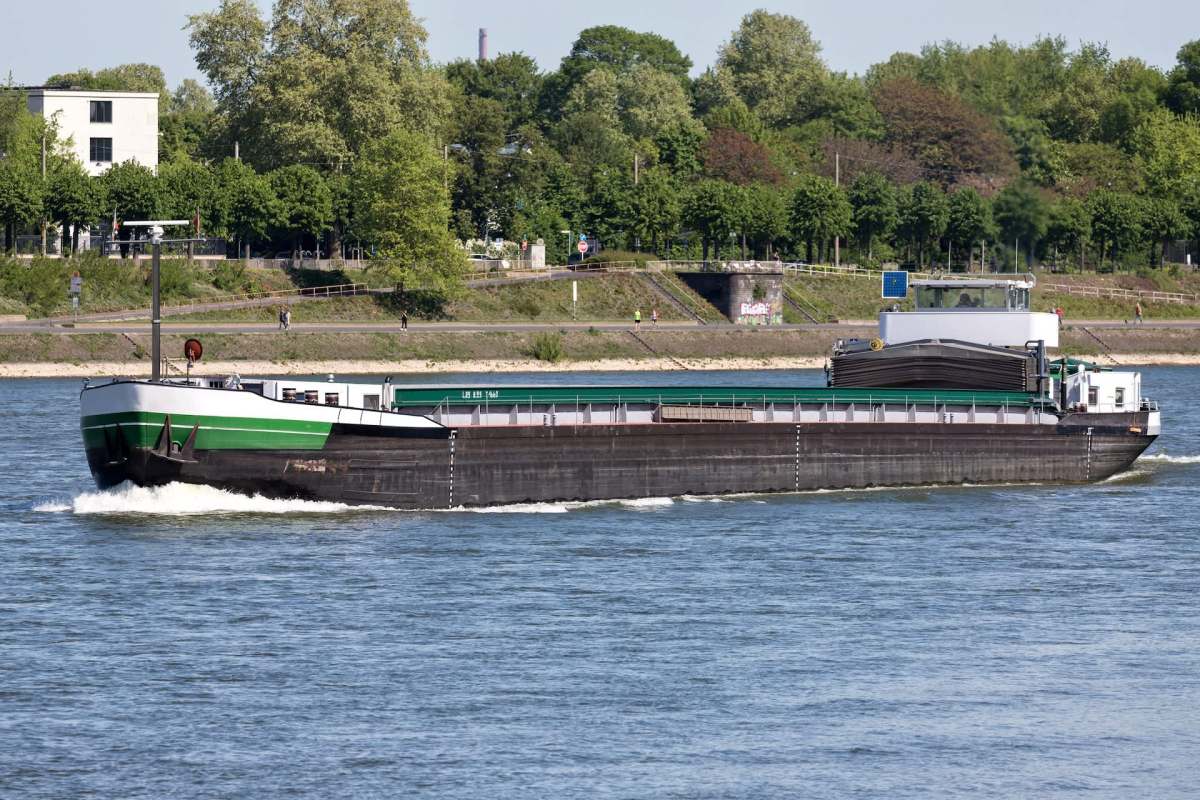
Severe droughts across Europe are debilitating major shipping routes and pushing up costs for everyday goods as water levels plummet on critical waterways, according to reporting in The Guardian.
What's happening?
Historically low water levels are forcing cargo vessels to sail partially loaded or halt operations entirely, disrupting supply chains as drought conditions reduce water levels across major rivers.
Vessels on Germany's Rhine River — which typically transports nearly 200 million tons of cargo annually — are now operating at around half capacity south of Duisburg and Cologne. Shallow water has prompted ship operators to impose surcharges on freighting to compensate for vessels not sailing fully loaded, increasing costs for cargo owners.
Meanwhile, Hungary's Danube River is experiencing similar issues, with temperatures reaching 95 degrees Fahrenheit (35 degrees Celsius) in Budapest at the end of June, per the article.
Cargo ships must leave behind more than half their loads and can only operate at 30 to 40% capacity as a result, as Attila Bencsik, deputy president of the Hungarian Shipping Association, told The Guardian.
Poland's Vistula River also hit its lowest ever recorded level in Warsaw this summer.
Why are these drought conditions important?
Rising global temperatures increase evaporation rates and disrupt natural water cycles, depleting the water supplies that rivers depend on — and the shipping disruptions that result directly translate to higher prices for consumers on everything from car parts to food.
Loads normally transported on one vessel are now requiring several barges, multiplying transportation costs that companies pass along to the consumer.
The situation also threatens agricultural supplies and industrial production. Three years ago, German companies faced supply bottlenecks and production problems after similar drought conditions.
French energy supplier EDF had to temporarily reduce its output at nuclear power stations as ongoing heatwaves pushed up river temperatures, restricting their ability to use water for cooling.
TCD Picks » Quince Spotlight
💡These best-sellers from Quince deliver affordable, sustainable luxury for all




|
Should the government be allowed to restrict how much water we use? Click your choice to see results and speak your mind. |
 Definitely 💯
 What's being done about shipping disruptions?
July rainfall in Germany later could raise water levels and provide a measure of temporary relief. However, addressing the underlying causes will require reducing our reliance on dirty energy sources that drive the planet's overheating.
People can support these efforts by supporting companies with sustainable practices and exploring the critical climate issues our world is facing, discovering new ways to get involved and protect our planet's water systems to prevent future shipping disruptions.

Join our free newsletter for good news and useful tips, and don't miss this cool list of easy ways to help yourself while helping the planet.
Cool Picks




