


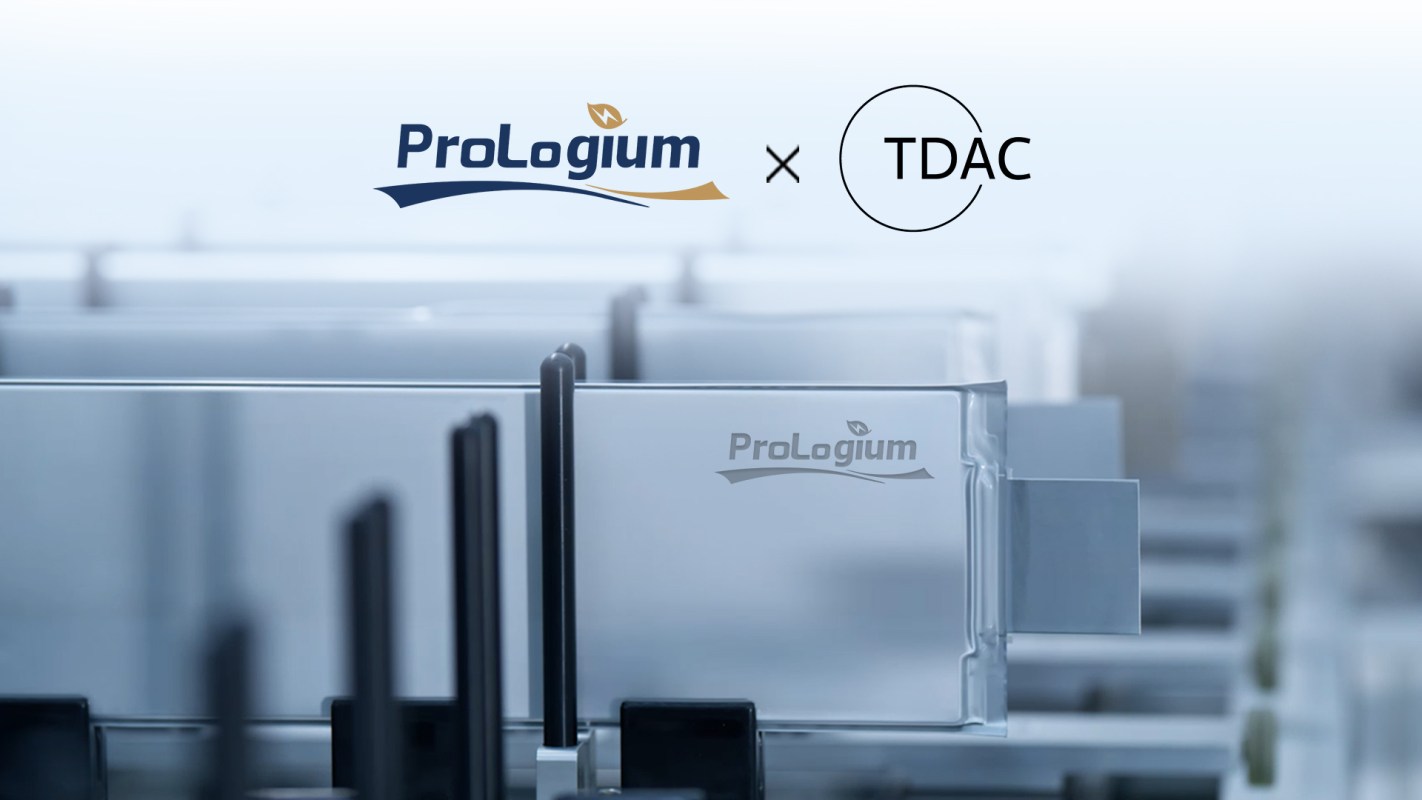
ProLogium, the first company to commercialize solid-state batteries, is preparing to go public in a deal that values the business at about $3.8 billion.
The move could give the longtime battery developer additional funding to expand production of a technology that could one day help make electric vehicles, backup systems, and other power-hungry tools safer and more efficient.
What happened?
According to a report from Electrek, ProLogium said it plans to go public on Nasdaq through a merger with Translational Development Acquisition Corp., a special purpose acquisition company (SPAC). If the deal closes as expected in the second half of 2026, the company's shares will trade under the ticker PRLG.
The battery maker has spent more than 20 years working to bring solid-state batteries from the lab to large-scale production. It says it was first to market with solid-state batteries built around a fully ceramic separator rather than the polymer film used in conventional designs.
More recently, ProLogium said it unveiled the first all-inorganic, superfluidized solid-state lithium ceramic battery. The company also said it is "the only company globally that can publicly demonstrate a solid-state battery mass-production line."
CEO and founder Vincent Yang said the public-market deal is meant to help ProLogium scale its next phase of growth, including higher production and a new factory in Dunkirk, France.
TCD Picks » Quince Spotlight
💡These best-sellers from Quince deliver affordable, sustainable luxury for all




Why does it matter?
Solid-state batteries have attracted major attention because they could improve on conventional lithium-ion batteries in two important ways: higher energy density and better safety performance.
Independent third-party testing put ProLogium's newest batteries at 360 watt-hours per kilogram, roughly 50% above standard lithium-ion batteries, Electrek noted. In practical terms, higher energy density can mean lighter battery packs or more power in the same amount of space, which could benefit EVs, robotics, and other devices people use every day.
The company also said UL Solutions ARC testing showed its batteries avoided thermal runaway under the Heat-Wait-Seek method, a test to determine the risks of chemical degradation and thermal stability.
Better-performing batteries could eventually support longer-range EVs, more compact storage systems, and more dependable power applications in places such as data centers. Those improvements could help save space, reduce downtime, and improve reliability during outages or extreme weather.
What's being done?
ProLogium is already moving beyond the prototype stage toward scaled manufacturing. The company says more than 800,000 cells have shipped since its Taiwan gigafactory opened in May 2024.
It is also expanding overseas. Work on its first gigawatt-hour-scale plant outside Taiwan, in France, is scheduled to begin before the end of 2026. ProLogium plans to ramp up output there from late 2028 into early 2029, with full production and shipments expected in the second quarter of 2029.
The new capital from going public is expected to support that buildout, along with expansion into areas beyond EVs, including data centers, aerospace, and robotics.
ProLogium is among the solid-state battery makers using SPAC deals instead of a conventional IPO to enter public markets.
"This transaction is expected to provide us with the capital to fund our next phase of growth," Yang said.

Get TCD's free newsletters for easy tips, smart advice, and a chance to earn $5,000 toward home upgrades. To see more stories like this one, change your Google preferences here.






