


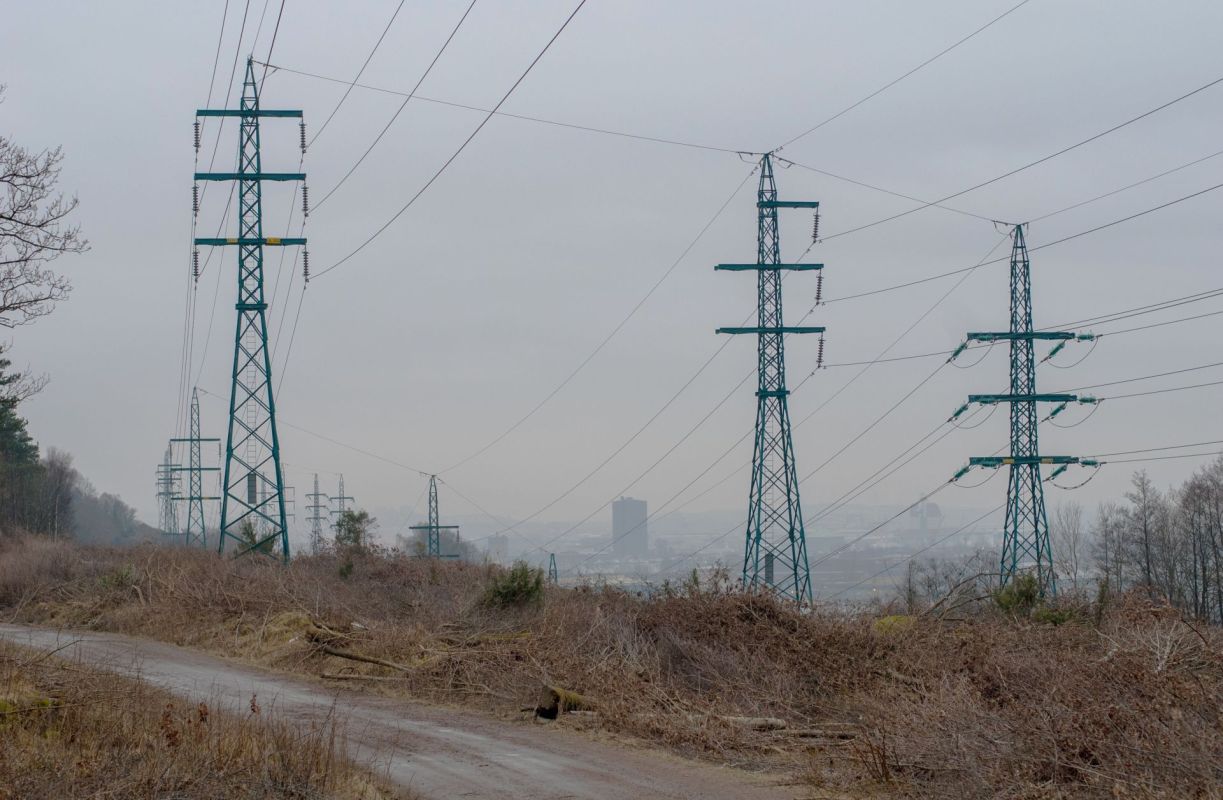
If America's power grid were a professional baseball team, it would be one with aging veterans and a five-year plan that lacks innovation, according to a grid regulator's January analysis.
It's a scenario that highlights the value of stored renewable energy, which is providing relief in parts of the country where the tech is being used.
What's happening?
"We are headed for a reliability crisis, except now the crisis is not over the horizon but across the street," Mark Christie, a former federal regulator, told The New York Times.
Christie's comments were about a long-term assessment from the North American Electric Reliability Corp. In short, the experts fear that the grid's ability to answer surging data center power demand and to weather other strains is waning.
Veteran coal- and gas-fired plants are being retired but without enough new energy sources going online. Worse yet, some coal plants need costly repairs to stay functional.
As a result, large swaths of the country — including the Mid-Atlantic, the Great Lakes region, the Pacific Northwest, and Texas — are at a high risk of suffering electricity shortfalls during the next five years, per the summary.
Meanwhile, rates are widely reported to be increasing faster than inflation.
Why is the summary important?
A renewable solution is being spotlighted as disaster looms.
Save $10,000 on solar panels without even sharing your phone number Want to go solar but not sure who to trust? EnergySage has your back with free and transparent quotes from fully vetted providers in your area. To get started, just answer a few questions about your home — no phone number required. Within a day or two, EnergySage will email you the best options for your needs, and their expert advisers can help you compare quotes and pick a winner. Solar panels can save you more than $50k over their 25-year lifespan, and EnergySage can help you save as much as $10k on installation. Which begs the question — isn't that worth an email or two? |

The Solar Energy Industries Association reported that California leads the nation in solar capacity and faces less electricity risk in the coming years, listed as "normal" by the NERC.
California, Florida, and other states that invested in solar, and in some cases large batteries to store the energy, have protected communities from blackout risks. That's especially pertinent during high summertime demand, the Times reported.
|
What's the most you'd pay per month to put solar panels on your roof if there was no down payment?
Click your choice to see results and earn rewards to spend on home upgrades. |
 $200 or more 💰
 Additionally, renewable energy doesn't spew harmful air pollution. And, unlike other energy sources, solar power with battery backup can be leveraged on a household level, providing independence from the grid's aging infrastructure and evolving government policy.
EnergySage can help you add batteries as a safeguard at home, starting with competitive installation estimates. Its team has partnered with Qmerit's experts to provide even more insight to ratepayers.
On a large scale, the renewable-battery combination can "increase resource diversity and support affordability by minimizing fuel-based price spikes," Heather O'Neill, president of the trade group Advanced Energy United, told The Times.
What's being done to help?
NERC recommended that regulators delay shutting down existing plants as well as speed up adding new energy sources and infrastructure development.
Nationally, the Trump administration is prioritizing coal, oil, and gas to the detriment of quickly deployable renewables. Staying informed about energy policy and how it impacts your budget can help guide your votes and advocacy toward projects and politicians that share your values.
For their part, solar and wind are among the cheapest and fastest energy providers to deploy at scale, New York financial advisory firm Lazard added.
Unique products such as Pila's Mesh Home Battery are making it easier for ratepayers to take control with speed. Mesh works by plugging into a standard outlet, making it a safeguard available to homeowners and renters alike. The plug-and-play pack can charge from an outlet or from solar panels, and it costs a fraction of the price of larger batteries that are hardwired into electric panels.
Fortunately, homeowners have advance notice to protect their homes, thanks to NERC.
"This assessment is not a prediction of failure but an early warning," John Moura, director of reliability assessment and performance analysis, told the Times.

Get TCD's free newsletters for easy tips to save more, waste less, and make smarter choices — and earn up to $5,000 toward clean upgrades in TCD's exclusive Rewards Club.
Cool Picks






