


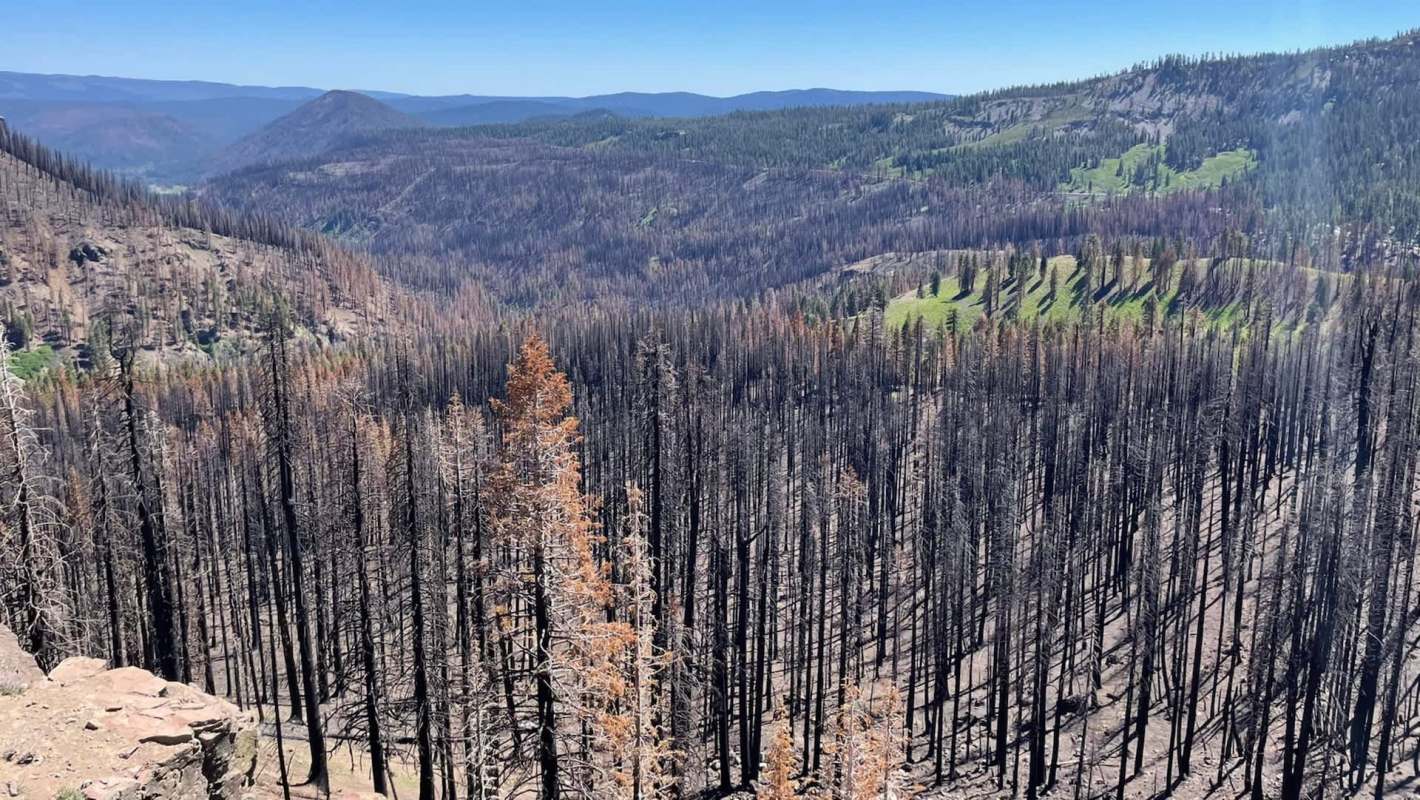
California regulators are considering a PG&E request to charge customers nearly $700 million for costs tied to the Dixie fire — even after investigators verified the utility's equipment sparked the blaze.
To support its argument, PG&E is also pointing to another factor: an unidentified drone that briefly halted firefighting aircraft at a crucial moment in the response.
What happened?
The 2021 Dixie Fire, which SFist called one of California's biggest wildfires, is again at the center of a fight over costs nearly five years later. Citing NBC Bay Area, SFist reported that PG&E wants the California Public Utilities Commission to allow the company to recover more of those expenses through increasing customer bills.
According to SFist, a PG&E technician checking a power outage found flames at the base of a tree that was leaning into a power line near Camp Creek and Dixie roads. Cal Fire's final report later concluded that PG&E equipment started the fire and that the company's response was too slow.
Firefighters were already contending with difficult conditions because the area was steep and remote. Ground crews had to hike roughly two miles from an out-of-service bridge before they could reach the fire. A drone then entered the airspace over the blaze, causing Cal Fire to pause aircraft operations for about 45 minutes.
By the time the airspace was cleared, darkness had set in, ending aircraft operations for the night, SFist reported. The Dixie Fire then burned for 103 days across Butte, Plumas, Lassen, Shasta, and Tehama counties and scorched more than 963,000 acres.
TCD Picks » Quince Spotlight
💡These best-sellers from Quince deliver affordable, sustainable luxury for all




Why does it matter?
The dispute raises a bigger question: who should cover the costs when a utility's equipment helps cause a disaster? If regulators approve PG&E's request, customers could end up paying hundreds of millions more through their monthly utility bills.
The Dixie Fire destroyed people's homes, blanketed the region in smoke, and, as SFist previously reported, became the costliest U.S. wildfire to fight. Families across Northern California were hit with evacuations, property damage, health issues, and years of recovery.
Firefighting aircraft cannot safely operate when drones are in the area. Critics say, however, that this safety problem still does not change the finding that PG&E's equipment ignited the fire.
Corporate responsibility is important when it comes to business decisions that impact everyday people, and when CEOs and those in positions of power lack accountability this can harm communities. For instance, Suncor CEO Rich Kruger faced criticism after environmental groups accused the oil company of prioritizing profits over climate action, producing millions of tons of emissions annually without thinking of the consequences.
What's being done?
As SFist reported, PG&E says insurance and California's wildfire fund have already paid claims totaling hundreds of millions of dollars. The utility is now arguing that state law allows it to recover additional costs because it was a "prudent operator" before the fire and because the drone created a circumstance outside its control.
Butte County District Attorney Mike Ramsey argues that the drone's involvement does not cancel PG&E's responsibility for starting the fire.
That question now sits with the California Public Utilities Commission, which will decide whether PG&E can recover more of those costs through customer rates.
A drone near an active wildfire can ground aircraft, including during the narrow window when crews have the best chance to contain a blaze before environmental factors or low light levels make it more difficult.
"It was getting on towards evening and a drone showed up," Ramsey said. And while PG&E maintains that it had been a "prudent operator," Ramsey's point remains direct: "The policy, appropriately so, of Cal Fire is when there's a drone or something obstructing their flight path, they have to call the flight off."

Get TCD's free newsletters for easy tips, smart advice, and a chance to earn $5,000 toward home upgrades. To see more stories like this one, change your Google preferences here.






