


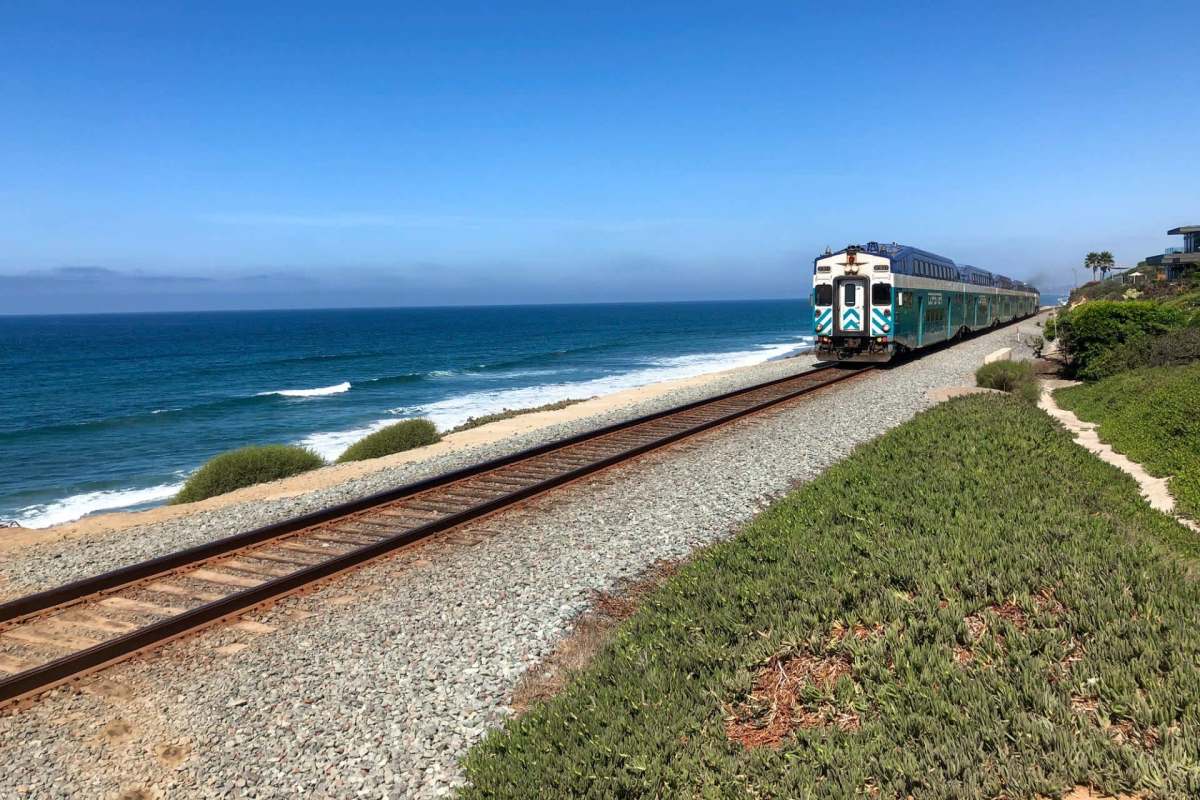
Near-$6 gasoline is prompting more Californians to consider alternatives to driving, and one coastal rail line is seeing the effect.
Data show ridership on the Pacific Surfliner has climbed this summer as travelers weigh train tickets against the rising cost of making regional trips by car.
What's happening?
According to KUSI, from Jan. 1 through March 30, the Pacific Surfliner service between San Diego and San Luis Obispo recorded 600,751 passenger trips, a 38% increase over the same period last year.
Higher fuel prices appear to be changing travel habits across the state. For regional journeys that might otherwise mean a long stint on Interstate 5, more commuters and vacationers seem willing to skip the costs and hassles of driving and ride the train instead.
California State Senator Catherine Blakespear said the increase reflects a broader shift away from car travel.
"Hearing a big number like that means that people are looking to the train to take those trips that they might take in a car. It's a gorgeous ride so nearly anywhere near that 350 mile corridor is well worth the train ticket," Blakespear said, as reported by KUSI.
TCD Picks » Quince Spotlight
💡These best-sellers from Quince deliver affordable, sustainable luxury for all




The line's performance may also be helping attract riders. According to the outlet, 81% of trains reached their destinations within 15 minutes of schedule, a level of reliability that can matter for both commuters and leisure travelers.
Why does it matter?
For many households, transportation costs can take a big bite out of monthly budgets. When gas prices rise, every commute, weekend getaway, or airport trip becomes more expensive, making alternatives such as rail more attractive.
There is also a quality-of-life benefit. Train travel can give riders time to read, work, rest, or simply avoid the stress that often comes with congested freeways. That can be especially valuable on heavily traveled routes where driving conditions are unpredictable.
Blakespear described what rail service needs to offer to keep attracting drivers.
"In order for the people to choose the train, a lot of things need to be going right. The train needs to be reliable, it needs to be timely, it needs to be relatively efficient at least when comparing it to the 5 freeway," she said, as KUSI reported.
For the broader region, a greater shift toward rail can also mean fewer cars on the road, less fuel burned, and a transportation system that gives people another practical option when driving becomes too expensive or frustrating.
What can I do?
Price can draw people to rail, but dependable service may be what keeps them coming back. When trains consistently run on time and fit easily into a schedule, riders are more likely to use them regularly instead of only when gas gets expensive.
Riders interviewed by KUSI pointed to convenience and calm as part of the appeal. "It's super easy I've been taking the train for years and years I really like it," one commuter said. Another highlighted the appeal of "being able to relax and not seeing people road rage and not having to stop for gas."

Get TCD's free newsletters for easy tips, smart advice, and a chance to earn $5,000 toward home upgrades. To see more stories like this one, change your Google preferences here.







