


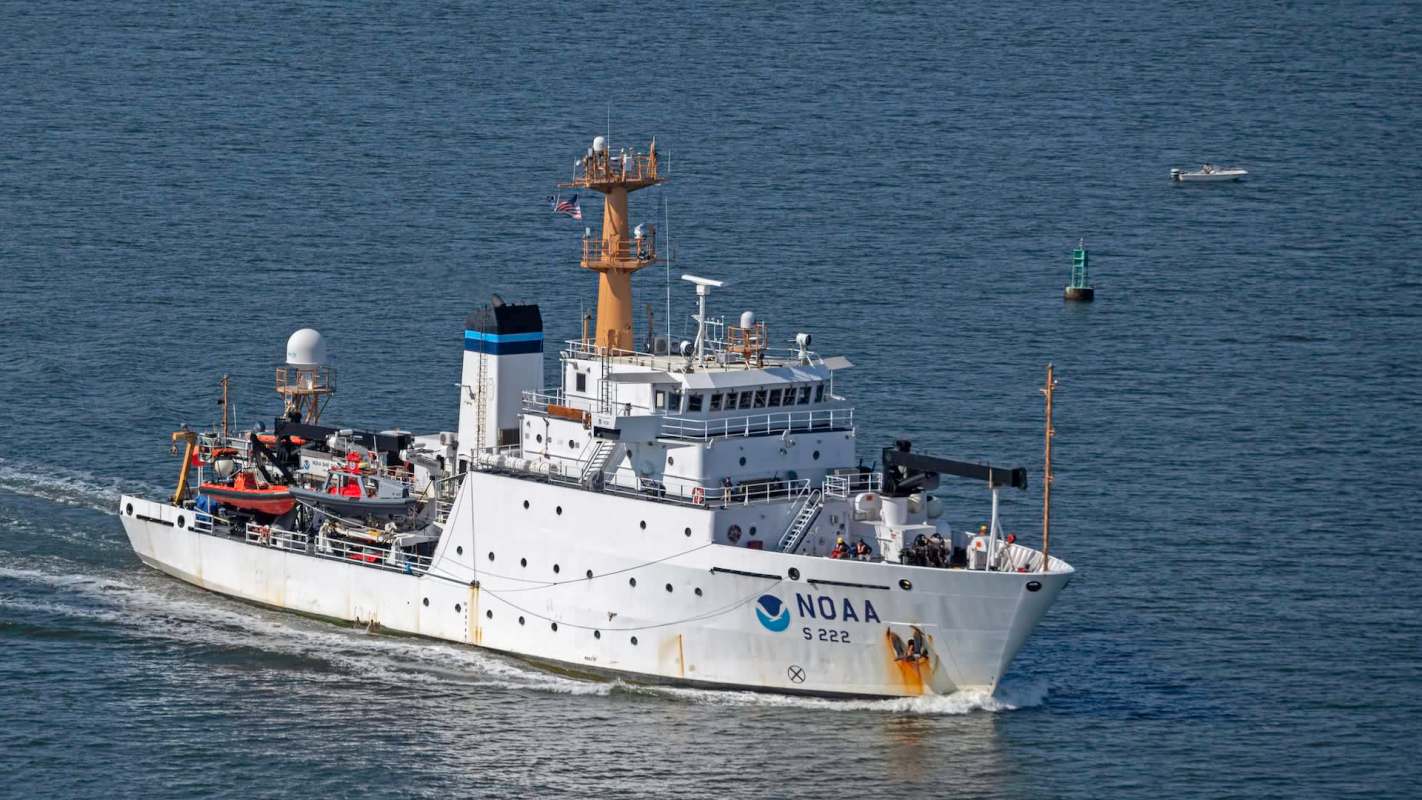
Deep-sea mining is quickly moving from theory to reality, alarming many conservationists while exciting industries that can profit from the new field.
Even with major questions still unresolved about what scraping the ocean floor could do to marine ecosystems, federal officials are making clear that the U.S. does not plan to wait for all the answers before advancing the industry.
Erik Noble, the principal deputy assistant secretary for oceans and atmosphere with the National Oceanic and Atmospheric Administration, told Offshore Technology that, "We don't know everything, but we are not going to wait to try and figure it out."
The NOAA, with support from the Trump administration, is aggressively trying to streamline permitting for the nascent deep-sea mining industry, in an effort to monetize the "polymetallic nodules" abundant on the ocean floor.
Those nodules contain nickel, manganese, and cobalt. These are all valuable materials used in lithium-ion batteries, which are essential for modern electronic devices, including electric vehicles.
One player in the new space, The Metals Company USA, got NOAA approval for a deep-sea mining application, becoming the first operator to reach that point.
TCD Picks » Quince Spotlight
💡These best-sellers from Quince deliver affordable, sustainable luxury for all




The company now expects to obtain a permit to operate by the end of the first quarter of 2027, a significant milestone for an industry that has spent years caught between exploration and commercial recovery.
Despite its approval, the NOAA raised concerns in 2025 that the practice could result in "smothering, bioaccumulation of toxic metals, food supply changes, and marine life damage."
The organization added, "Connections among seafloor, midwater, and surface ecosystem functions (including for commercially important fisheries) need to be better understood before the significance of these impacts on marine ecosystems can be assessed."
Oceanographic Magazine has underscored that the current state of scientific knowledge on the environmental impacts of the industry is not yet comprehensive. In an article titled "Fifty years of science still can't tell us the cost of deep-sea mining," Rob Hutchins, a writer for the magazine, succinctly explained that "until the knowledge gaps are filled, the true cost of mining the deep ocean remains unknown."
Despite the unknown impacts on marine wildlife, ecosystems, and the services they provide to humanity, mining companies, with the government's permission, are quickly racing to extract metal from the ocean floor.

Get TCD's free newsletters for easy tips, smart advice, and a chance to earn $5,000 toward home upgrades. To see more stories like this one, change your Google preferences here.






