


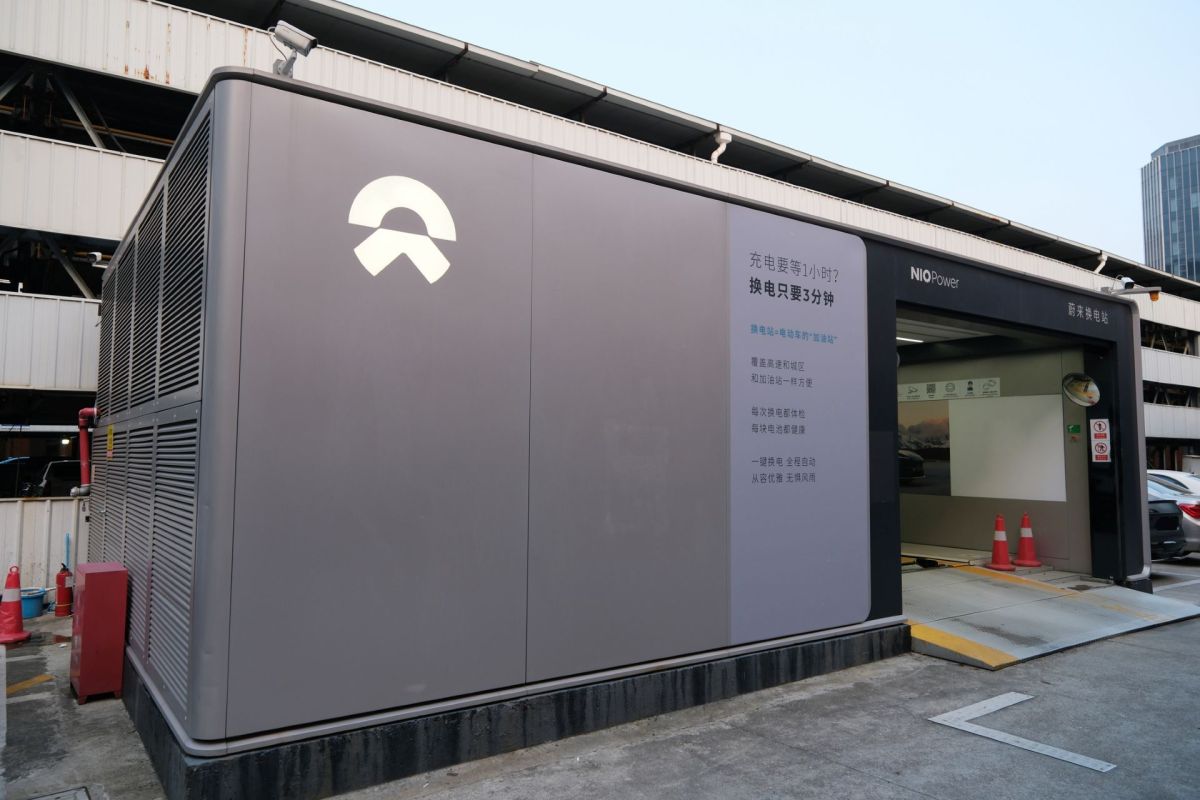
Nio's long-running bet on battery swapping is beginning to look a lot more consequential. During the first five days of May, the company's swap stations in China delivered enough energy to account for 16% of all EV energy supplied in the country, according to InsideEVs, citing Nio data.
As reported by The Motley Fool, the figure comes as the Chinese EV maker tries to turn strong recent results into a bigger advantage in one of the industry's most practical convenience plays.
Nio has spent years building battery-swapping stations where drivers can exchange a depleted battery for a charged one in minutes. Instead of plugging in and waiting, owners pull in, the process is automated, and they drive away with fresh range.
Even fast chargers can take considerably longer than a swap, especially during busy travel periods when stations are crowded. According to InsideEVs, citing Nio data, swaps at Nio's China stations totaled 15.4 gigawatt-hours over May's first five days, or 16% of the EV energy delivered nationwide during that span.
Nio now operates more than 3,800 swap stations, with only 60 in Europe and the rest concentrated in China. The company also recently posted first-quarter results that beat analyst estimates, even as broader concerns about China's EV sector have weighed on its stock.
Battery swapping could make EV ownership feel far more convenient. A stop that takes only minutes is much easier to fit into a commute, a workday, or a holiday road trip than a traditional charging session, especially when chargers are busy.
TCD Picks » Quince Spotlight
💡These best-sellers from Quince deliver affordable, sustainable luxury for all




Faster turnaround can also ease pressure on charging networks during peak demand, giving cities and drivers another way to keep EV traffic moving. Nio's battery-as-a-subscription option adds flexibility as well, offering monthly swaps for users who would rather not fully own the battery upfront.
Nio is not the only company pursuing the idea. Battery giant CATL's Evogo network has grown to more than 1,800 stations. But rather than going head-to-head, the two companies are increasingly working together.
CATL has taken a stake in the Nio subsidiary behind the swap network, and the two companies say upcoming Firefly compact models will use batteries that work at CATL stations. That kind of interoperability could make battery swapping more useful for drivers and less fragmented across the market.
The companies are also seeking a single battery-swapping standard in China, which could help lower costs and simplify adoption. And Nio is still expanding — founder and CEO William Li said the automaker aims to add 1,000 stations next year and 1,000 more in 2028.
Access to a growing swap network could become a meaningful perk for drivers who care about speed, convenience, and flexibility.
Nio's expanding network, its partnership with CATL, and the growing scale of battery swapping all suggest the idea is moving beyond novelty. If the model keeps gaining traction, the biggest benefit may be simple: less waiting and easier EV travel for drivers.

Get TCD's free newsletters for easy tips, smart advice, and a chance to earn $5,000 toward home upgrades. To see more stories like this one, change your Google preferences here.






