


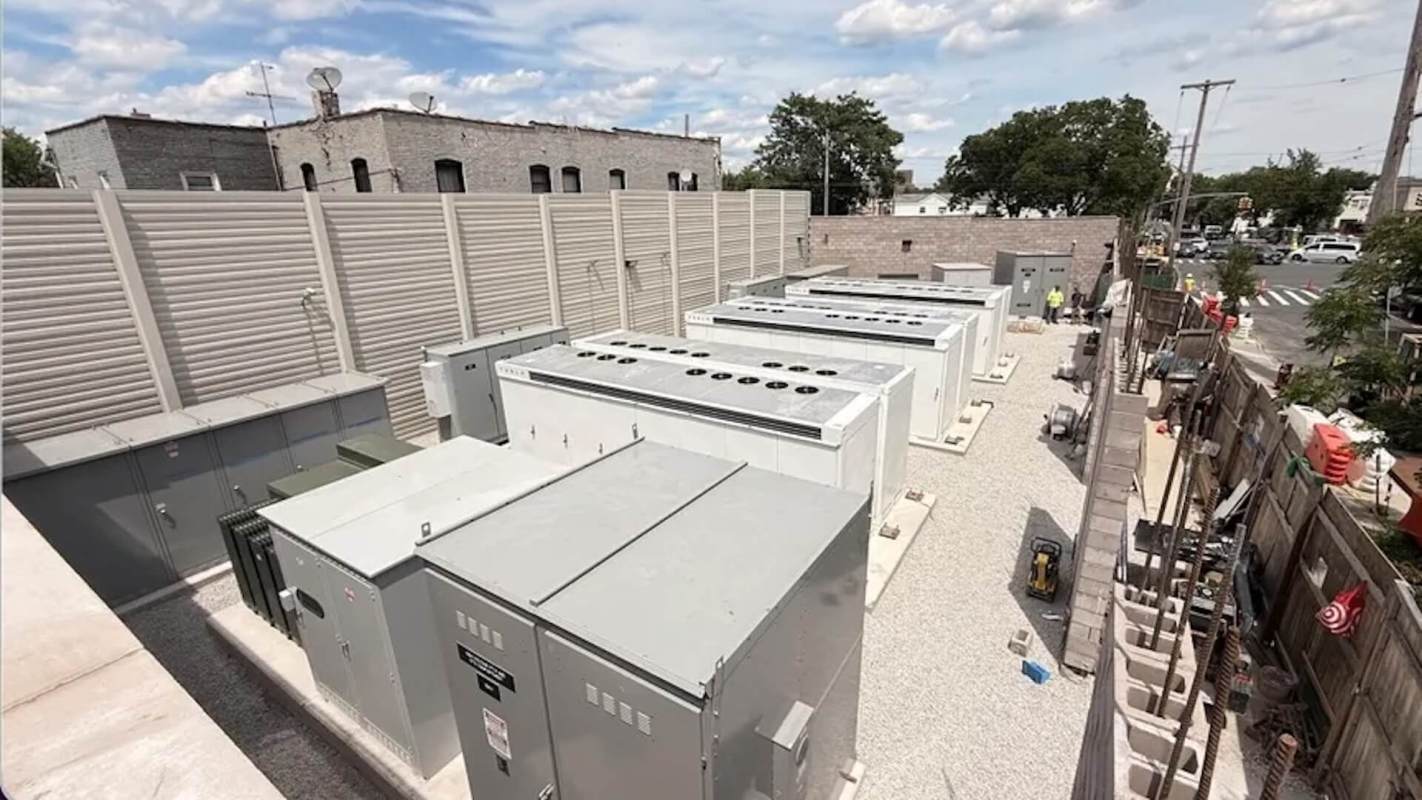
A growing dispute between Con Edison and battery developers has left around $1.5 billion worth of projects in limbo, stalling NYC's battery expansion in the midst of heat waves.
Here's what to know
In March, NY-BEST and NYSEIA petitioned state regulators, saying Con Ed's policy changes have effectively blocked about 600 megawatts of third-party battery projects, according to Canary Media. The groups said the utility's August 2025 rule shift and November 2025 interconnection policy caused costs to surge, with some charges rising to as much as 14 times previous levels.
Developers contend those unilateral changes have all but frozen billions of dollars in planned investment for neighborhood-scale battery systems intended to help manage local demand spikes at lower cost and with less pollution. They want the New York Public Service Commission to force Con Ed to restore its earlier rules.
Con Ed says tighter requirements are necessary to maintain reliability and keep customers from absorbing higher costs if too many batteries charge at the same time. According to Canary Media, Con Ed vice president for distributed resource integration Raghu Sudhakara said, "We think storage is important for the clean energy transition. But it has to be sited in the right location, it has to come online at the right time, and it has to operate under the right operating conditions."
Many believe Con Ed is protecting its pockets above all else and warn it could leave New Yorkers with a less resilient grid, higher expenses, and a slower move toward cleaner energy.
More background
Con Ed's reliability contingency plan, filed in July, identified a need for 125 megawatts of "clean and non-emitting" capacity in the city by 2033. NY-BEST senior director of policy and regulatory affairs Claudia Villar-Leeman said the plan "named energy storage as a primary resource," per Canary Media.
TCD Picks » Quince Spotlight
💡These best-sellers from Quince deliver affordable, sustainable luxury for all




Their role could be especially important during extreme heat, when electricity use climbs and older fossil-fueled peaker plants are often called into service. Environmental justice advocates have long sought cleaner alternatives because of the large amounts of air pollution those plants emit in low-income neighborhoods.
Developers have taken issue with Con Ed's planning assumptions, claiming they misrepresent how batteries can operate. As Canary Media reported, NYSEIA executive director Noah Ginsburg said, "We have utility planners taking our most flexible resource and treating them as if they're completely inflexible. If your starting point is false assumptions about the flexibility of the resource you're dealing with, you're not going to get a positive outcome."
NineDot Energy chief technology officer and co-founder Adam Cohen said Con Ed's model "assumes batteries will charge in an inflexible manner, from midnight to 8 a.m., with no day-by-day variation, and at a fixed charging rate," per Canary Media.
What's being done?
State regulators are being asked to step in. The petition before the Public Service Commission says Con Ed bypassed the proper process and asked the commission to order the utility back to its prior rules.
Support for that rollback is also coming from public officials and advocacy groups. In a March letter, quoted by Canary Media, environmental groups and city and state elected officials — including New York City Council member James Gennaro, who chairs the council's Committee on Environmental Protection and Waterfronts — called on the commission to "roll back these unilateral and unwarranted changes."
At the same time, Con Ed is seeking approval for a framework that would give it more control over when third-party batteries charge and discharge. The utility argues that this would better match battery operations to local grid conditions and reduce the risk of overloading constrained parts of the system.
What regulators decide could shape whether the city gets cleaner backup power soon enough to cut pollution, ease pressure during heat waves, and possibly avoid expensive grid upgrades that later appear in utility bills.
Gennaro said, "We're looking to get to the bottom of this because we want battery storage to progress. This is good for the grid, it's good to reduce our dependence on peaker plants, it's good for everyone."
Where can I learn more?
Here are some more stories on battery, solar, and grid projects.
• Federal regulators approved a faster grid review process to reduce backlogs for solar and storage projects.
• In Connecticut, lawmakers gave home batteries a major advantage as rooftop solar incentives face new caps.
• In California, regulators adopted a rule that cut compensation for community solar projects.
• In New York, senators pushed to make solar power more accessible with a bill for plug-in panels.
• In Maine, developers warned new legislation could bankrupt community-focused solar businesses and deter investment.

Get TCD's free newsletters for easy tips, smart advice, and a chance to earn $5,000 toward home upgrades. To see more stories like this one, change your Google preferences here.






