


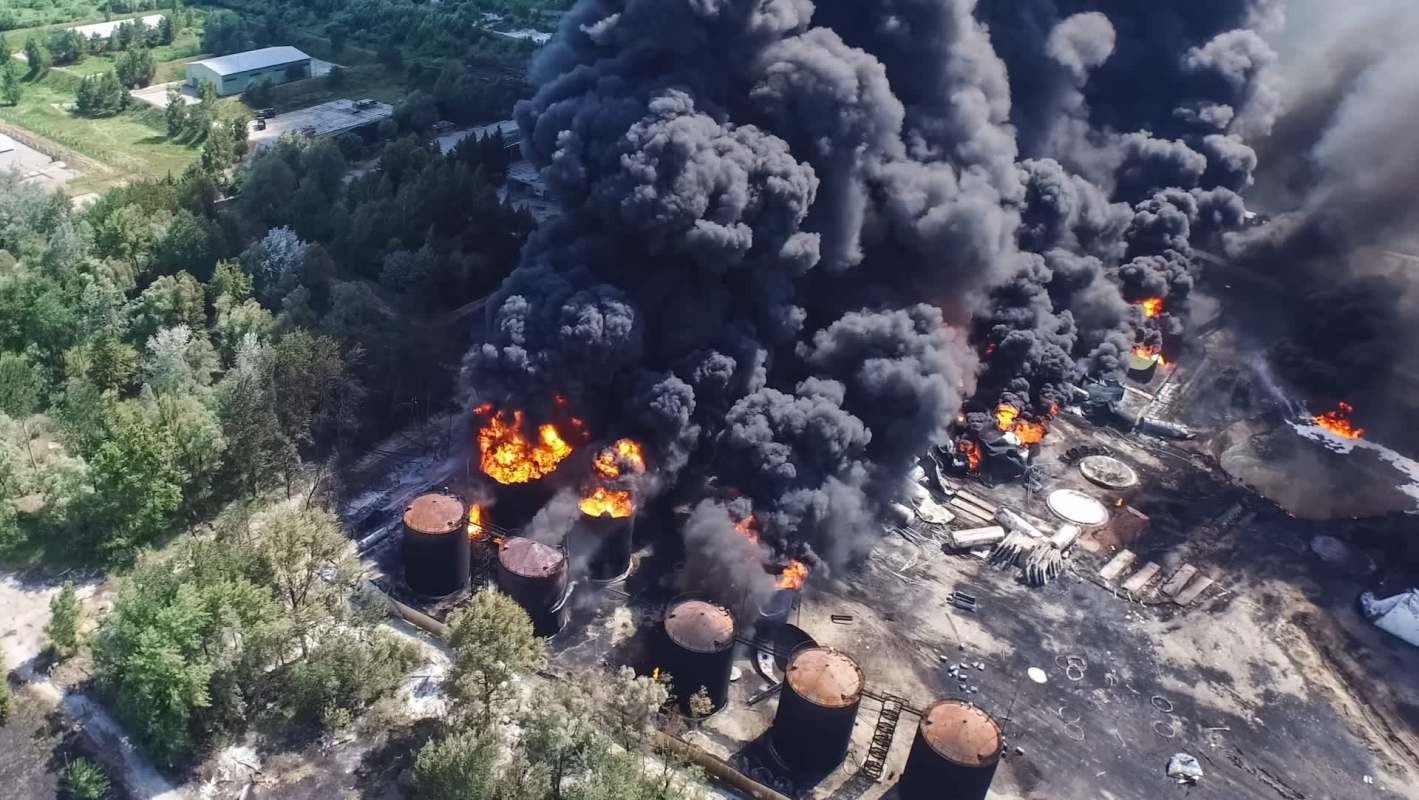
One of Russia's largest oil refineries caught fire after a reported strike, marking another hit to fuel infrastructure tied to the country's war effort.
According to Ukrinform, the latest attack appears to have targeted both a major refinery and an oil pumping station, though officials had not yet confirmed the full extent of the damage.
The General Staff of the Armed Forces of Ukraine said on Facebook that the strike sparked a fire at the Lukoil-Nizhegorodnefteorgsintez plant in Kstovo, in Russia's Nizhny Novgorod region.
The facility is one of Russia's largest refineries, with the capacity to process roughly 17 million tons of oil annually.
Ukrainian officials said the Yaroslavl-3 pumping station near Semibratovo, in Russia's Yaroslavl region, was struck in the same operation.
In both cases, authorities said damage assessments were still underway.
TCD Picks » Quince Spotlight
💡These best-sellers from Quince deliver affordable, sustainable luxury for all




The Kstovo refinery had already faced previous attacks in recent months. Ukrainian Defense Forces reportedly targeted the site during a drone strike on April 5, causing a major fire that temporarily halted refinery operations.
Facilities like this are considered strategically important because they produce gasoline, diesel, and jet fuel that support transportation, industry, and military logistics.
When large refineries are damaged or forced offline, the disruption can spread through fuel distribution networks and industrial systems.
Beyond wartime vulnerability, oil facilities can pose significant environmental and public health concerns through air pollution and contamination risks.
Burning oil and gas contributes to worsening extreme weather events that destroy homes, strain local economies, and threaten public health. The pollution has also been associated with respiratory illness, heart disease, and other serious health impacts.
At the same time, many countries continue grappling with volatile energy prices and concerns over long-term energy security tied to global oil markets.
Ukraine has increasingly targeted Russian fuel and energy infrastructure during the war, arguing that such facilities help sustain military operations.
The earlier April strike on the Kstovo refinery demonstrated how vulnerable major energy sites can be. That attack reportedly caused extensive fire damage and forced the refinery to suspend operations for a period of time.
If the newest attack results in substantial damage, it could again affect output from one of Russia's largest refining complexes.

Get TCD's free newsletters for easy tips, smart advice, and a chance to earn $5,000 toward home upgrades. To see more stories like this one, change your Google preferences here.






