


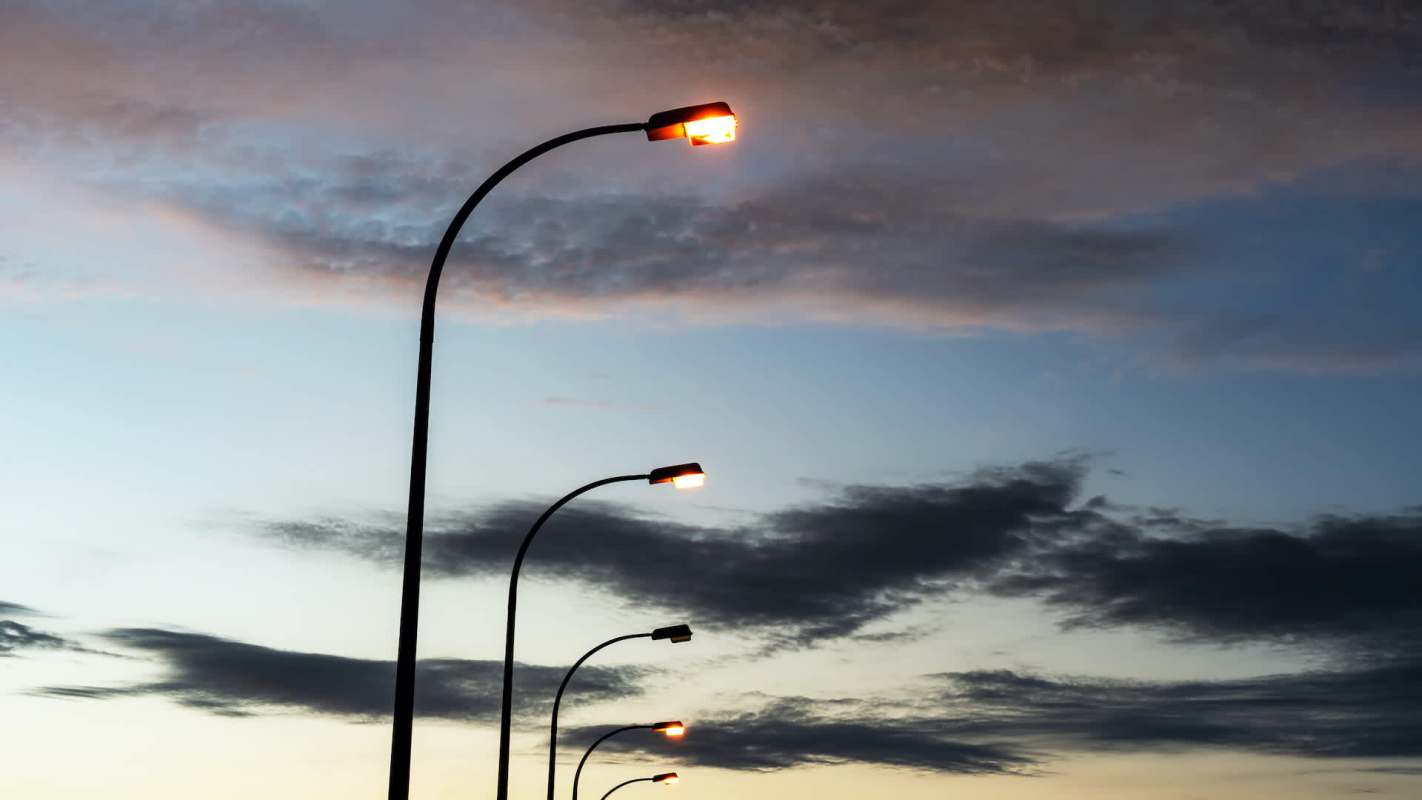
A "Dark Skies" bill moving through the Massachusetts Legislature could affect both the night sky and help balance local budgets.
After winning the state Senate's approval, the measure — An Act to Improve Outdoor Lighting, Conserve Energy, and Increase Dark-Sky Visibility — advanced to the House Committee on Ways and Means for consideration.
Here's what to know
If the bill becomes law, it would impose stricter standards on municipality-owned streetlights.
Supporters say the bill would cut light pollution, improve safety, and keep cities and towns from overpaying for electricity. The Senate on July 1 made two amendments, voted 39-0 to approve it, and sent it on.
As the Athol Daily News reported, the bill would create uniform rules for publicly funded streetlights, including limits on brightness and blue-light output, and require the lights to be directed at roadways.
The proposal also involves how municipalities pay for streetlight power. Instead of continuing under a per-light pricing model, cities and towns would be charged according to metered electricity use, per the Daily News.
TCD Picks » Quince Spotlight
💡These best-sellers from Quince deliver affordable, sustainable luxury for all




James Lowenthal, a Smith College astronomy professor and president of DarkSky Massachusetts, told the outlet that this matters because many LED streetlights use significantly less power than the current billing system effectively assumes.
"The utilities charge cities and towns by the streetlight without actually metering them; they don't actually measure how much electricity gets used," Lowenthal said. "The new LED streetlights are often a good bit less than 25 watts … so [cities and towns are] paying for electricity they're not using. It's unfair, it's a waste of money, and it's an incentive for the cities and towns to actually use more electricity and produce more light than they actually need."
More background
Supporters say too much artificial light can disrupt wildlife and create glare, leaving public places less comfortable and, in some situations, less safe.
The bill cannot advance to Gov. Maura Healey's desk to be signed into law until the state Senate and House reconcile their versions.

Get TCD's free newsletters for easy tips, smart advice, and a chance to earn $5,000 toward home upgrades. To see more stories like this one, change your Google preferences here.







