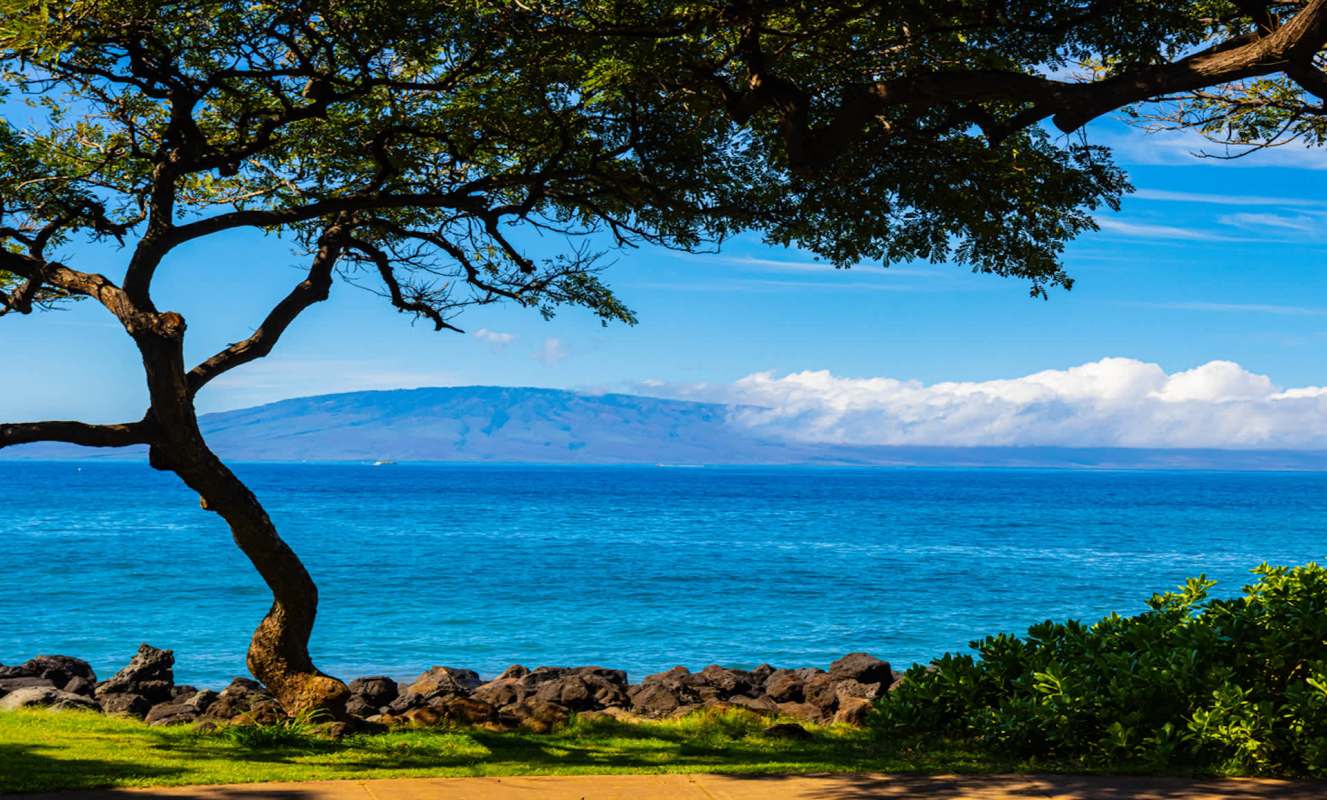
On one Hawaiian island, paradise belongs to one man. Nearly every home, business, and stretch of coastline on the island of Lāna'i falls under the ownership of billionaire tech entrepreneur Larry Ellison.
As a viral Reddit post pointed out, Ellison owns 98% of Hawai'i's sixth-largest island, which he purchased in 2012 for around $300 million. His holdings include two luxury resorts, most of the housing, and nearly all of the island's commercial properties.
"Roughly 4,000 people live there, so their daily life, jobs, development, and even utilities are all dependent on the decisions made by one individual," the post reads.
Ellison cofounded the software company Oracle Corporation, of which he still owns 40% since leaving in 2014. According to Forbes, he is estimated to be worth more than $285 billion.
When Ellison bought Lāna'i, he publicly announced plans to transform the island into a model for environmental sustainability. But that vision has drawn skepticism over the past decade. The idea of a single billionaire owning practically all of a populated island is, to many, inherently at odds with sustainability and community resilience.
With one landowner, land management decisions are completely centralized, meaning environmental and developmental policies depend largely on Ellison's business priorities rather than public or local consensus. This means locals have limited say in how their land and resources are used, which can sideline sustainable, community-driven conservation practices.
TCD Picks » EDF Spotlight
💡EDF's Vital Signs newsletter delivers stories about game-changing solutions close to home and around the world


This prioritization is clear in some of Ellison's attempts at sustainable infrastructure for Lāna'i. Locals argue sustainable developments — like clean energy grids — have been implemented for luxury resorts instead of residential benefit. One of Ellison's most high-profile projects, a $500 million hydroponic lettuce farm, was touted as a breakthrough in sustainable agriculture but has failed to become viable, leaving many locals doubting promises of green transformation.
Still, Ellison's land and resource management company, Pūlama Lānaʻi, said it is creating opportunities in agriculture, resource management, conservation, and more on the island.
"We strive to enhance and perpetuate the island's diverse species and fragile ecosystem through game management, natural species preservation, watershed management, erosion control, coastal resources and fisheries management, invasive species control, and conservation education," the site reads. "Pūlama Lānaʻi brings an integrated and comprehensive approach to protect and manage Lānaʻi's natural resources."
Regardless of these promises, commenters on Reddit remain uneasy about private ownership on such a massive scale — and what it means for democracy, community, and sustainability.
"Disgusting," one commenter wrote.
"No individual should be able to own an entire island where 4000 locals live that is part of a state," another commenter added.
|
Do you think America does a good job of protecting its natural beauty? Click your choice to see results and speak your mind. |
 Definitely 👍
💰Get TCD's free newsletters for easy tips to save more, waste less, and make smarter choices — and earn up to $5,000 toward clean upgrades in TCD's exclusive Rewards Club.
Cool Picks