


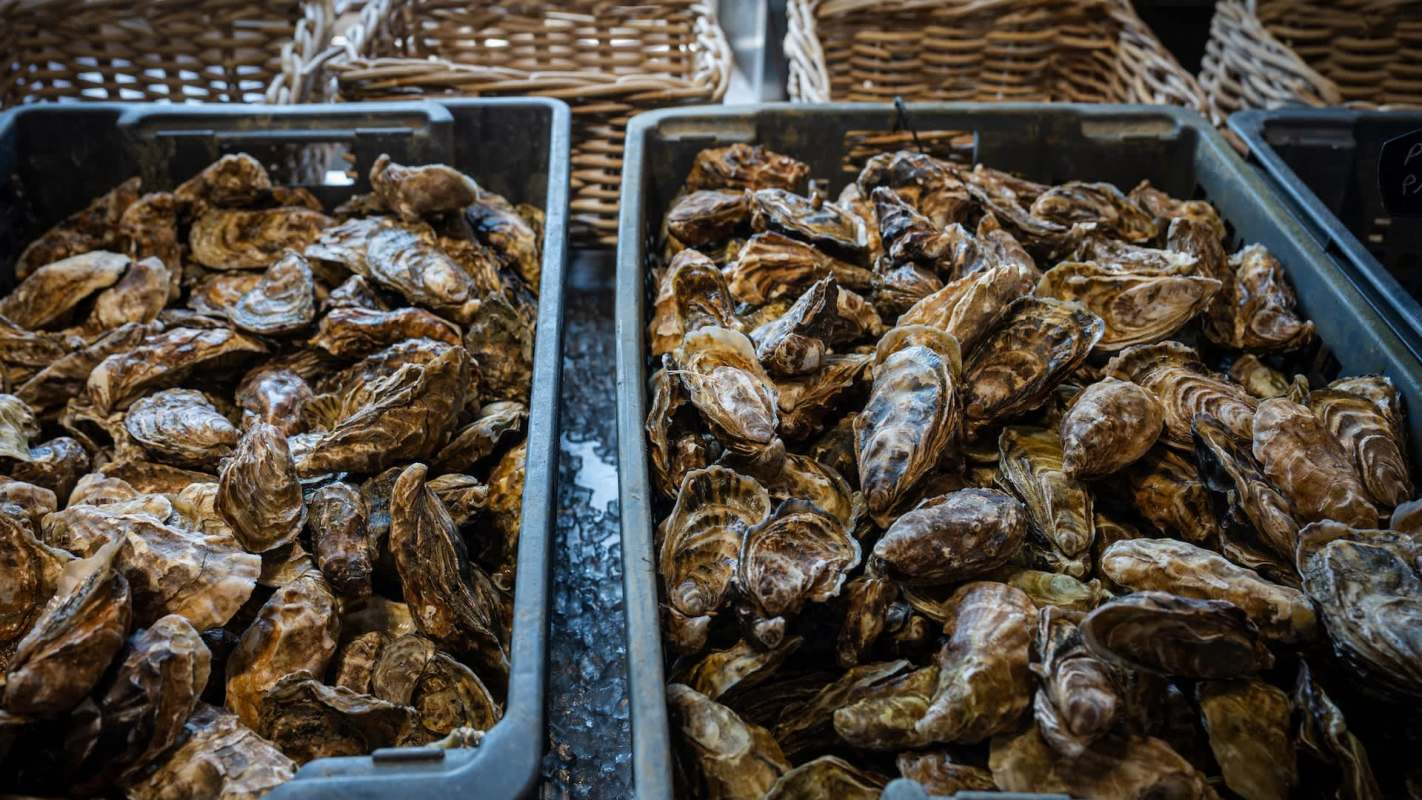
Noticeably smaller oysters at Japan's Kure oyster festival unsettled attendees following an unprecedented oyster die-off that prompted government intervention late last year.
What's happening?
In December, the Fisheries Agency announced a plan to financially support oyster farmers and determine why oysters were dying, according to The Japan Times and the Guardian.
In parts of Hiroshima, which supplies almost two-thirds of Japan's farmed oysters, die-off rates reached 90%.
Several months later, the effects of the mass die-off were seen at the Kure oyster festival in Hiroshima Prefecture, where the shellfish were scarce.
The oysters that were available were small.
"The local oysters were fine until this year. They used to be a lot bigger," Nobuyuki Miyaoka, who attended the festival with his family, told the Guardian.
Why is this concerning?
The mass die-off may signal that a new norm is here.
Summers are becoming hotter and longer as the climate warms, and officials identified Japan's record-breaking summer heat as a factor in the oysters' deaths.
From July to October, a critical period for oyster cultivation, water temperatures along Hiroshima's coast were as much as 1.9 degrees Celsius (3.4 degrees Fahrenheit) higher than the 1991-2020 average, according to government data cited by the Guardian.
If this warming goes unchecked, it would destabilize the local economy and threaten food security.
TCD Picks » Quince Spotlight
💡These best-sellers from Quince deliver affordable, sustainable luxury for all




|
Which of these savings plans for rooftop solar panels would be most appealing for you?
Click your choice to see results and earn rewards to spend on home upgrades. |
 Save $1,000 this year 💸
 "My son decided a couple of years ago that he wants to take over the business after I retire. But this year I've begun to really worry whether there is a future for him," said Taketoshi Niina, an oyster farmer whose father has worked in the industry for 50 years, per the Guardian.
What's being done about this?
Hiroshima University's Kazuhiko Koike, a professor in integrated sciences, acknowledged that "it's difficult to put the brakes on climate change."
However, understanding critical climate issues is the first step toward finding solutions.
In the long term, reducing reliance on polluting fuels and unsustainable products would go a long way toward restoring balance. In the short term, adaptation measures are helping communities worldwide overcome climate-related challenges.
As for the oyster deaths, Koike said that suspending farmed oysters at greater depths or moving them to cooler waters may help them survive.

Get TCD's free newsletters for easy tips to save more, waste less, and make smarter choices — and earn up to $5,000 toward clean upgrades in TCD's exclusive Rewards Club.
Cool Picks




