


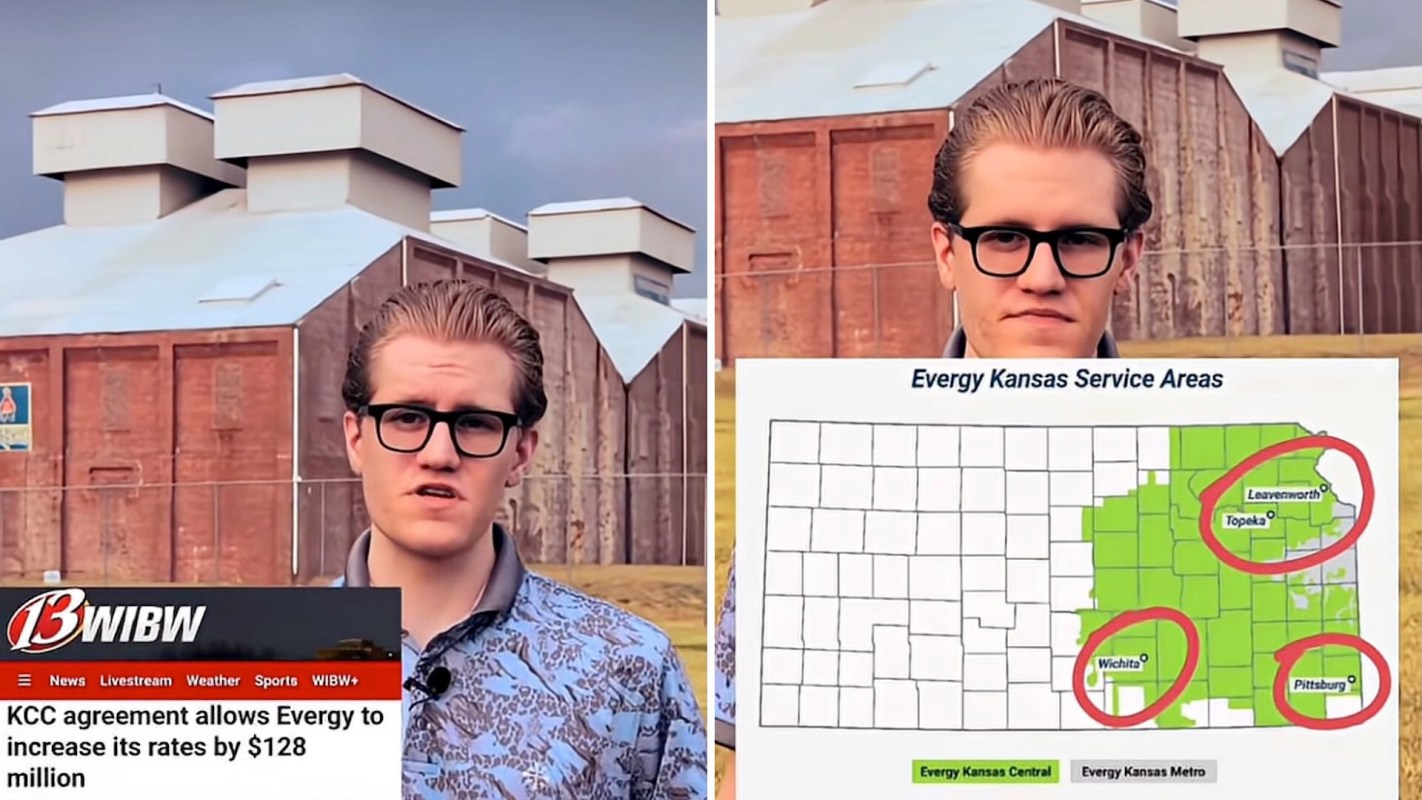
Kansas utility bills and AI's growing energy demand collided pointedly in a video out of Coffeyville, where an activist creator argued that even families served by a municipal utility can still feel the effects when giant data centers put major strain on the regional power grid.
What happened?
In a YouTube video, Parker Thompson (@Parkrone), a content creator in Coffeyville, Kansas, accused utility giant Evergy of chasing AI-driven growth while households absorbed higher energy costs. The creator said, "Why are Kansas families being asked to pay 10% more on their electric bills while tech giants get custom power deals?"
The post argues that electricity pricing in Coffeyville is still tied to the Southwest Power Pool, or SPP, the regional grid operator that manages high-voltage transmission in the area. As the creator explained, the city's municipal utility still purchases wholesale electricity from that broader system.
According to the video's transcript, Evergy's September $196 million rate increase added more than $8 per month to the average residential bill. The video contrasts that with regulators' approval of separate rate plans for large power users while the company discussed more than 20 data center projects in Kansas.
One commenter wrote, "ty for doing this king. F*** Evergy."
Why does it matter?
The story taps into a broader national debate over AI and energy use. Advanced AI systems can help improve weather forecasting, streamline industrial operations, and even support cleaner grids by better matching electricity supply with demand. However, the computing infrastructure behind AI — especially hyperscale data centers — can also consume enormous amounts of electricity and water.
TCD Picks » Quince Spotlight
💡These best-sellers from Quince deliver affordable, sustainable luxury for all




Household power costs are the clearest flash point. In the video caption, Thompson argued that when "hyper-scale data centers drop hundreds of megawatts of demand onto the grid," utilities may need costly transmission upgrades and new generation, with those costs ultimately showing up in monthly rates.
The caption also argues that community-run utilities feel that pressure as well. Because those systems are community-funded rather than buffered by investor-owned profit margins, the creator said, "Every single dollar of increased regional transmission and wholesale power cost gets passed directly down to local ratepayers."
The effects of AI expansion may not stay confined to tech campuses or utility boardrooms. They can ripple outward to renters, homeowners, and small businesses already trying to manage tight budgets.
What's being done?
Beyond describing the issue, the video is also part of an organizing effort. The creator described it as "Day 11 of exposing AI data centers until my new hometown of Coffeyville passes a legal moratorium" and urged neighbors to share the message and sign a petition.
A moratorium would temporarily pause development approvals, giving local leaders more time to study how new data centers could affect electricity demand, water use, infrastructure, and household costs. Communities across the country have increasingly pushed for that kind of review as AI-related projects accelerate.
"Kansas ratepayers should not be forced to subsidize power grid expansions for Silicon Valley," Thompson said.

Get TCD's free newsletters for easy tips, smart advice, and a chance to earn $5,000 toward home upgrades. To see more stories like this one, change your Google preferences here.






