


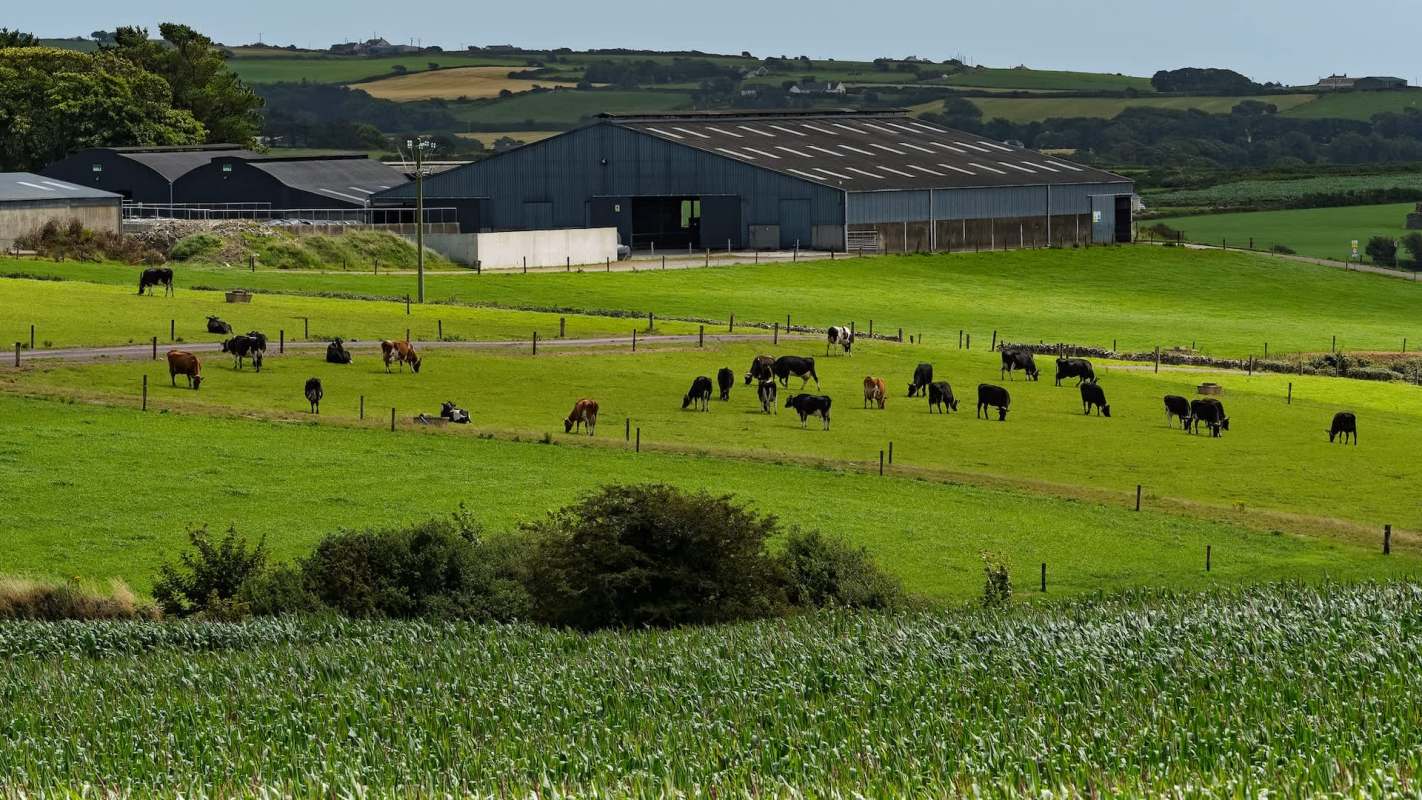
A coalition of 42 climate scientists is urging Ireland not to adopt a methane accounting method they say could weaken climate action while making pollution appear smaller on paper.
At the center of the warning is a proposed shift in how the country measures livestock-related methane, a change researchers say could lock in today's high harmful carbon pollution rather than drive it down, Inside Climate News reported.
What's happening?
The 42 scientists signed a statement calling on Ireland to reject the use of the Global Warming Potential Star (GWP*) in its carbon budget for 2031 to 2035.
GWP* was originally developed to better reflect how short-lived gases such as methane warm the planet over time. But the researchers say some governments and livestock-heavy industries are now leaning on it as an accounting workaround to justify weaker methane targets.
According to the scientists, if Ireland adopts a "temperature neutrality" goal using GWP*, it could permit about 9 million extra tons of carbon dioxide equivalent, an amount comparable to burning 20 million barrels of oil.
The concern stretches beyond Ireland. The United States and the European Union, along with cattle-heavy countries like Brazil and Argentina, are also backing GWP* to encourage "no additional warming" targets.
TCD Picks » Quince Spotlight
💡These best-sellers from Quince deliver affordable, sustainable luxury for all




Why does it matter?
Methane does not remain in the atmosphere as long as carbon dioxide, but in the short term, it is far more powerful. Scientists say cutting methane is one of the fastest ways to slow near-term warming.
That has real-world consequences for people already facing hotter summers, worsening drought, more destructive flooding, and rising food costs linked to climate-fueled disruptions. Policies that preserve current methane output could make it harder for communities everywhere to avoid those harms.
The researchers also said that the proposal raises fairness concerns. They say using a recent baseline can effectively give wealthier countries with large existing cattle and dairy herds a pass while penalizing lower-emitting countries if their livestock sectors grow from a smaller starting point.
Methane concentrations are now around 2.5 times preindustrial levels, and the gas accounts for roughly one-third of global warming. Scientists say that means this is not simply a technical debate; it is a decision that could also shape whether governments pursue real pollution cuts or merely redefine success.
What's being done?
Environmental scientist Paul Behrens of the University of Oxford warned that if one country adopts the framework, others could follow.
"What worries us as scientists is that other countries are now seriously weighing these targets. The danger is that one country adopts them, then the next, and the next," said Behrens, per Inside Climate News. "... A 'no additional warming' target does the opposite: It freezes today's high emissions in place and throws away the fastest cooling lever we have."
For now, scientists are trying to stop that redefinition from taking hold. Their statement urges Ireland to stick with established climate accounting approaches, such as GWP 100, a metric used by the Intergovernmental Panel on Climate Change and by governments that signed the Paris Agreement.
Researchers say the priority should be deep cuts in methane levels, especially from the beef and dairy industries, which account for much of the world's methane pollution.
They also point to New Zealand as a warning sign. After the country adopted a "no additional warming" target in 2025 with GWP*, its methane reduction goal was weakened.

Get TCD's free newsletters for easy tips, smart advice, and a chance to earn $5,000 toward home upgrades. To see more stories like this one, change your Google preferences here.






