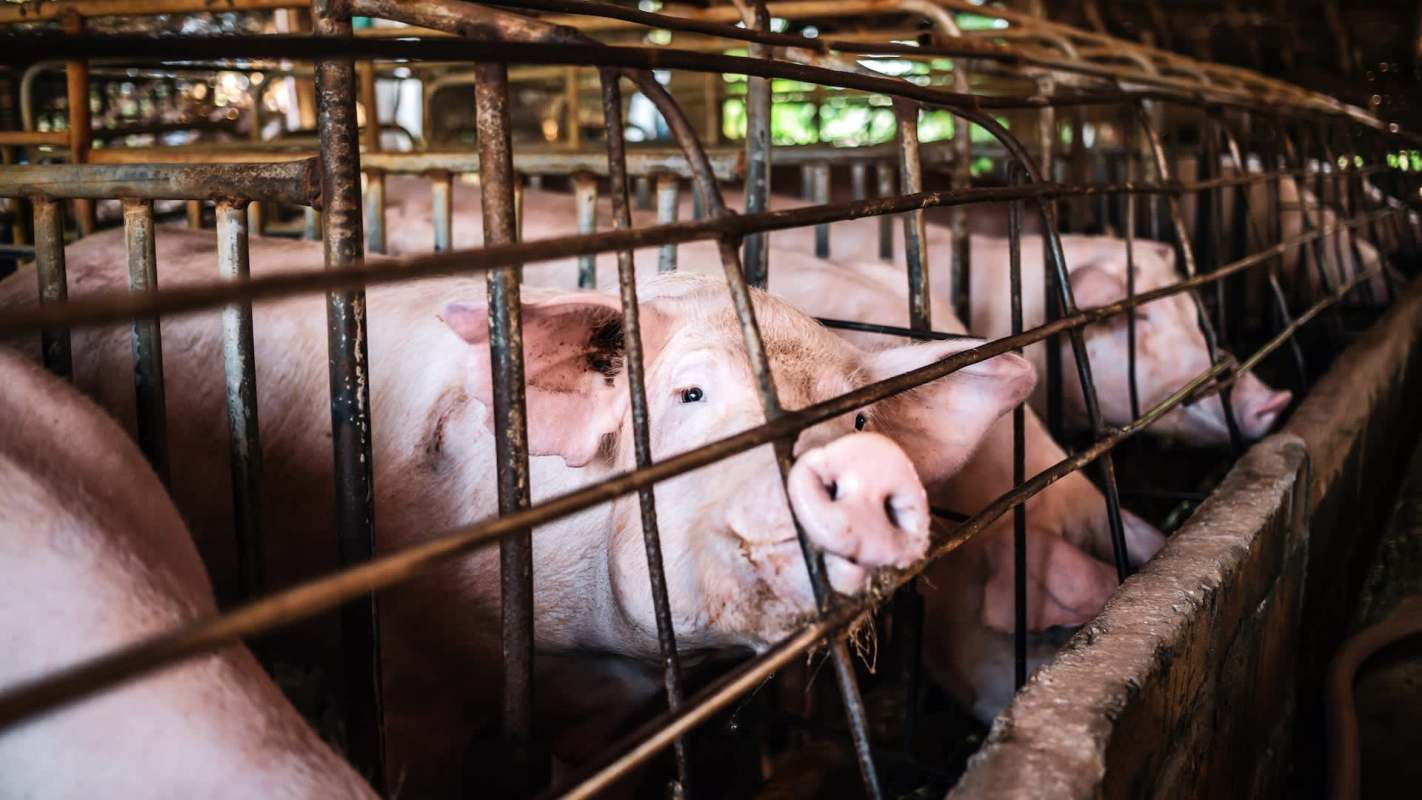
An overlooked provision tucked into the House's latest Farm Bill could undo years of state-level progress on farm animal welfare.
Critics warn that the measure would override bans on some of the most inhumane and restrictive cages used for pigs, calves, and egg-laying hens. This would include states where voters and lawmakers have already approved stronger protections for farm animals.
What's happening?
Colorado became the first state to ban gestation crates for pregnant pigs and veal crates for calves in 2008. In 2020, the state also banned battery cages for egg-laying hens. Today, 15 states prohibit at least one of those confinement practices.
California and Massachusetts later took things a step further, passing laws that set minimum space standards tied to meat and egg sales in those states, not just to animals raised there. In doing so, they broadened the reach of humane standards and increased pressure on producers across the country to adapt.
Factory farms challenged California's law in court, arguing that it placed an unfair burden on out-of-state producers. But in 2023, the U.S. Supreme Court let the law stand in National Pork Producers Council v. Ross, and affirmed that states may regulate goods sold within their own borders, as reported in The Denver Post.
Opponents of those laws appear to be trying a different strategy. The House recently added Farm Bill language that would nullify state humane farming laws covering gestation crates, veal crates, and battery cages.
TCD Picks » Quince Spotlight
💡These best-sellers from Quince deliver affordable, sustainable luxury for all




Why does it matter?
This fight is about more than animal welfare. It is also about whether states and communities get to keep standards they have already worked to pass, or whether Congress can erase them at the request of powerful industries.
These confinement systems are built to maximize production, but critics say they do so by heavily limiting the animals' movement for most of their lives. Gestation crates can keep sows in spaces so small they cannot even turn around. Veal crates and battery cages impose similar restrictions on calves and hens.
For consumers, that means food choices are shaped less by local values and more by the lowest bidder. For states that passed humane laws, it means losing the ability to set the rules that reflect what residents want to support with their purchases.
It could also hurt farmers and brands that have already invested in more humane practices. Many companies in these states have effectively adapted their farming practices and demonstrated that meat production does not have to depend on extreme confinement, and weakening state standards could undercut that progress.
What's being done?
The Farm Bill is not final. The added measure still has to go through the Senate, where opponents of the House provision are pushing lawmakers to remove it before any final package advances. The increase in state bans shows that voters and lawmakers in many parts of the country have already concluded that these confinement practices have gone too far.
For people who want to preserve progress, the best thing to do is to follow the Farm Bill negotiations and contact your senators about protecting state authority over animal welfare standards. State-level reforms helped move the industry forward; supporters say federal action should not reverse that progress.
As Colorado State University animal sciences professor Temple Grandin put it: "We've got to treat animals right, and gestation stalls have got to go. Confining an animal for most of its life in a box in which it is not able to turn around does not provide a decent life."

Get TCD's free newsletters for easy tips, smart advice, and a chance to earn $5,000 toward home upgrades. To see more stories like this one, change your Google preferences here.