


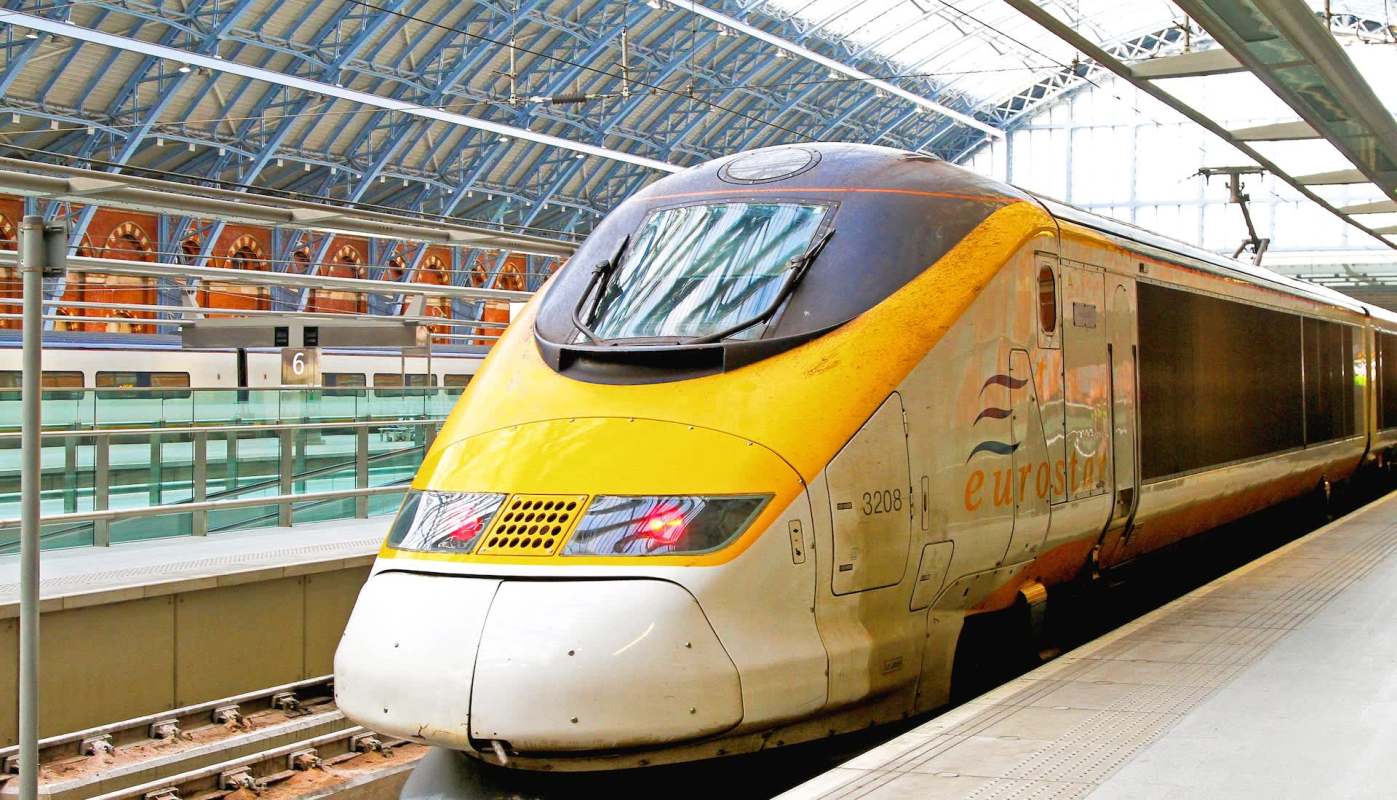
Europe's heat waves are no longer only a public health threat — they are also beginning to reshape the infrastructure people rely on every day, with Eurostar building trains intended to keep running in temperatures as high as 131 degrees Fahrenheit (55 degrees Celsius).
What's happening?
According to CNBC, rising temperatures across Europe are pushing both public officials and private operators to reconsider how essential services such as rail and air travel are built and managed.
Eurostar said the Celestia trains it expects to introduce in 2031 are being prepared for hotter weather than the company had first anticipated.
"A decision has been taken to equip our new fleet of up to 50 Celestia trains with air conditioning capable of operating in temperatures up to 55 degrees," a Eurostar spokesperson told CNBC.
CNBC reported that the trains were originally meant to withstand 113 degrees Fahrenheit (45 degrees Celsius), but worsening heat pushed the company to raise that threshold.
Other systems are feeling the pressure. When asphalt at Norway's Oslo Airport, operated by Avinor, approached 126 degrees Fahrenheit (52 degrees Celsius), crews used about 3,434 gallons (13,000 liters) of water in each cooling round to bring down the temperature.
TCD Picks » Quince Spotlight
💡These best-sellers from Quince deliver affordable, sustainable luxury for all




CNBC reported that in Sweden, Stockholm transit operator SL has been painting tracks white to help prevent warping and buckling in high heat.
France and Spain were also dealing with the wider fallout, CNBC reported, with wildfires prompting more than 330,000 evacuations as both countries prepared for a fourth heat wave.
Why does it matter?
Heat on this scale can deform rails, weaken airport pavement, disrupt supply chains, put added pressure on power systems, and increase upkeep expenses. Those effects can then ripple outward into fares, reliability, insurance, and safety.
Using data from the European Union's Copernicus Climate Change Service, CNBC reported that Europe has been warming at roughly twice the global rate since the 1980s.
Under a high-emissions pathway, Climate X Director of Climate Risk Modeling James Brennan told CNBC that central Europe may experience two to three times as many extreme heat days by 2050. That would mean areas currently seeing five to 10 such days annually could face 20 to 30 within a generation.
Brennan also told CNBC that southern Europe is likely to face the most intense impacts, with parts of the Iberian Peninsula, southern Italy, and Greece projected to reach 40 to 55 extreme heat days each year.
CNBC reported that Jan Rosenow, professor of energy and climate policy at the U.K.'s University of Oxford, said the worsening destruction is tied directly to the fossil-fuel-driven climate crisis.
"For decades climate scientists told us this would happen more frequently and that the severity of extreme weather and its consequences would increase. The world did not listen and we keep burning fossil fuels at record levels," Rosenow said in a LinkedIn post published on July 28. "Adaption alone is not a viable strategy."
What's being done?
A European Commission spokesperson said the EU will introduce a coordinated plan on climate resilience and risk management, with infrastructure, transport, energy, and health policy all needing to reflect actual climate conditions.
Faster preparation is also being encouraged by insurers. CNBC reported that Allianz Risk Consulting resilience and business development head Lena Fuldauer described extreme heat as "a quiet catastrophe" for businesses because it can cause equipment breakdowns, lost operating time, supply-chain problems, and stress on workers without the obvious drama of storms or earthquakes.
"These trains will enter service in 2031 and run into the 2060s, so it's essential to be prepared for the future," the Eurostar spokesperson said.

Get TCD's free newsletters for easy tips, smart advice, and a chance to earn $5,000 toward home upgrades. To see more stories like this one, change your Google preferences here.






