


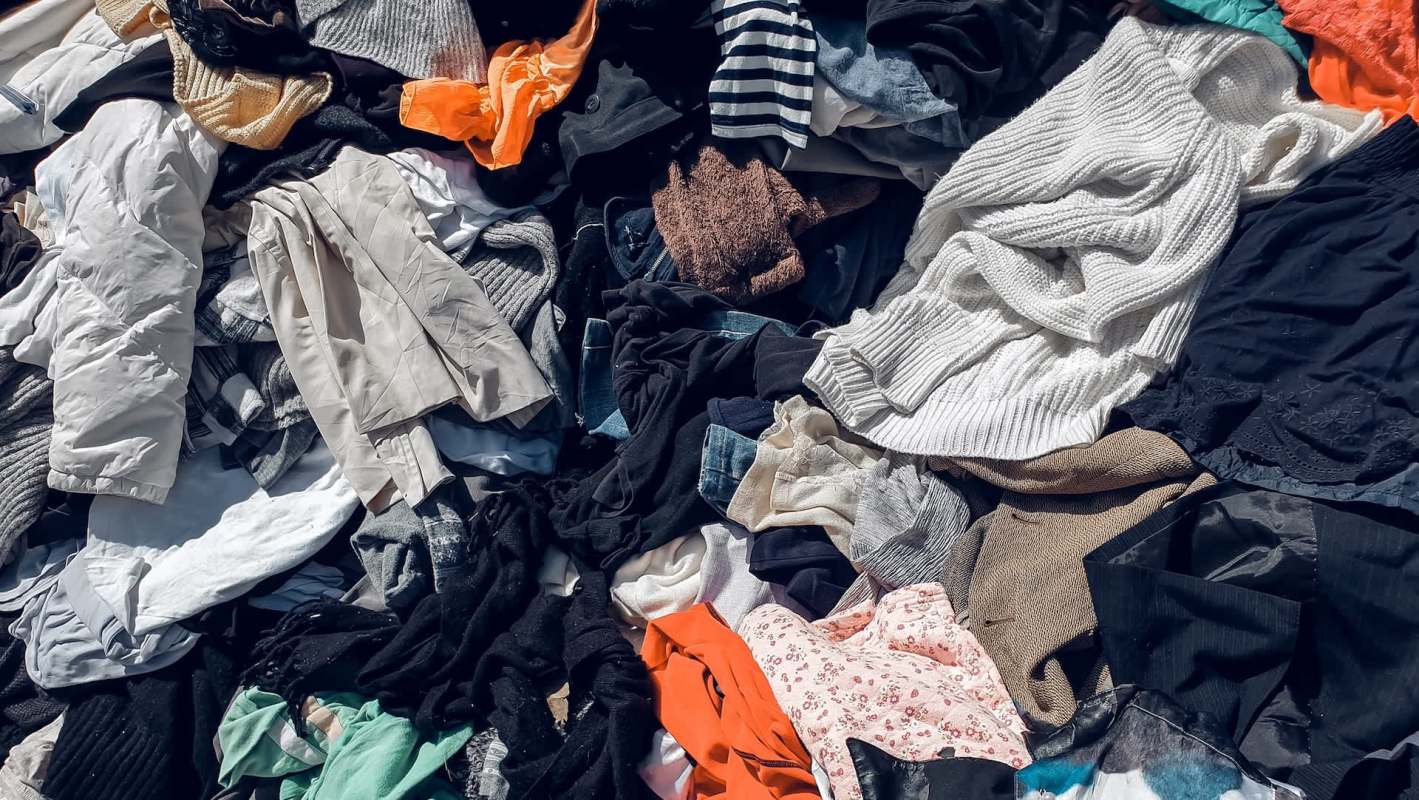
A report has indicated that Europe's grand plans to address textile waste face major roadblocks that will require a truckload of money to solve.
What's happening?
Up to €11 billion (around $12.9 billion) will be needed to make textile-to-textile recycling viable by 2035, according to a report from Boston Consulting Group in collaboration with ReHubs.
Women's Wear Daily summarized the study, titled "Advancing Textile Circularity," which noted that chief among the challenges the continent faces is the rise of clothing consumption, which is up 12% since 2019. When the items are quickly discarded fast fashion, that only exacerbates the issue.
"When we expected during the COVID crisis that consumers would change their behavior, that maybe overall sales would be at a lower level going forward — there's nothing that is showing that change in consumer behavior," said ReHubs CEO Robert van de Kerkhof.
Instead, the growing middle class and higher salaries mean consumers are buying more cheap clothing despite initiatives asking them to pause those behaviors.
The report found that Europe simply hasn't been able to keep up with the waste. Under 1% gets recycled, and a small fraction of that is used for textile-to-textile recycling. Nearly all goes to landfills, the Global South, or incineration.
TCD Picks » Quince Spotlight
💡These best-sellers from Quince deliver affordable, sustainable luxury for all




The report suggested that a large investment will be critical to recycling 15% of the approximate 15.2 million tons of textile waste produced each year into new textile products. Otherwise, the necessary infrastructure to sort materials and support the finished products won't materialize.
Why is the BCG report concerning?
Europe's heart appears to be in the right place, and the continent has big goals to cut down on textile waste. However, the challenges of dealing with the consequences of fast fashion are overwhelming the current system, as Swedish thrift stores have experienced.
Short of real action and investment, some companies are engaging in greenwashing, talking a big game about recycling while failing to deliver.
Textile waste and fast fashion account for a large chunk of global pollution, and when the problem is passed onto the Global South, the consequences are dire for those regions.
What's being done about Europe's lack of textile recycling?
The report urges better coordination, measurement, and government support alongside calls for greater investment. The authors were not convinced that recycled clothing will achieve competitive pricing, so it will be on governments to prop it up.
To amp up recycling, private companies will need to jump on board with funding to make it worth it. If the situation remains unchanged, the report suggested that textile recycling will remain in "deadlock," with economic repercussions for Europe.
"If we don't build this system, others will take that opportunity," Van de Kerkhof told WWD.

Get TCD's free newsletters for easy tips, smart advice, and a chance to earn $5,000 toward home upgrades. To see more stories like this one, change your Google preferences here.






