


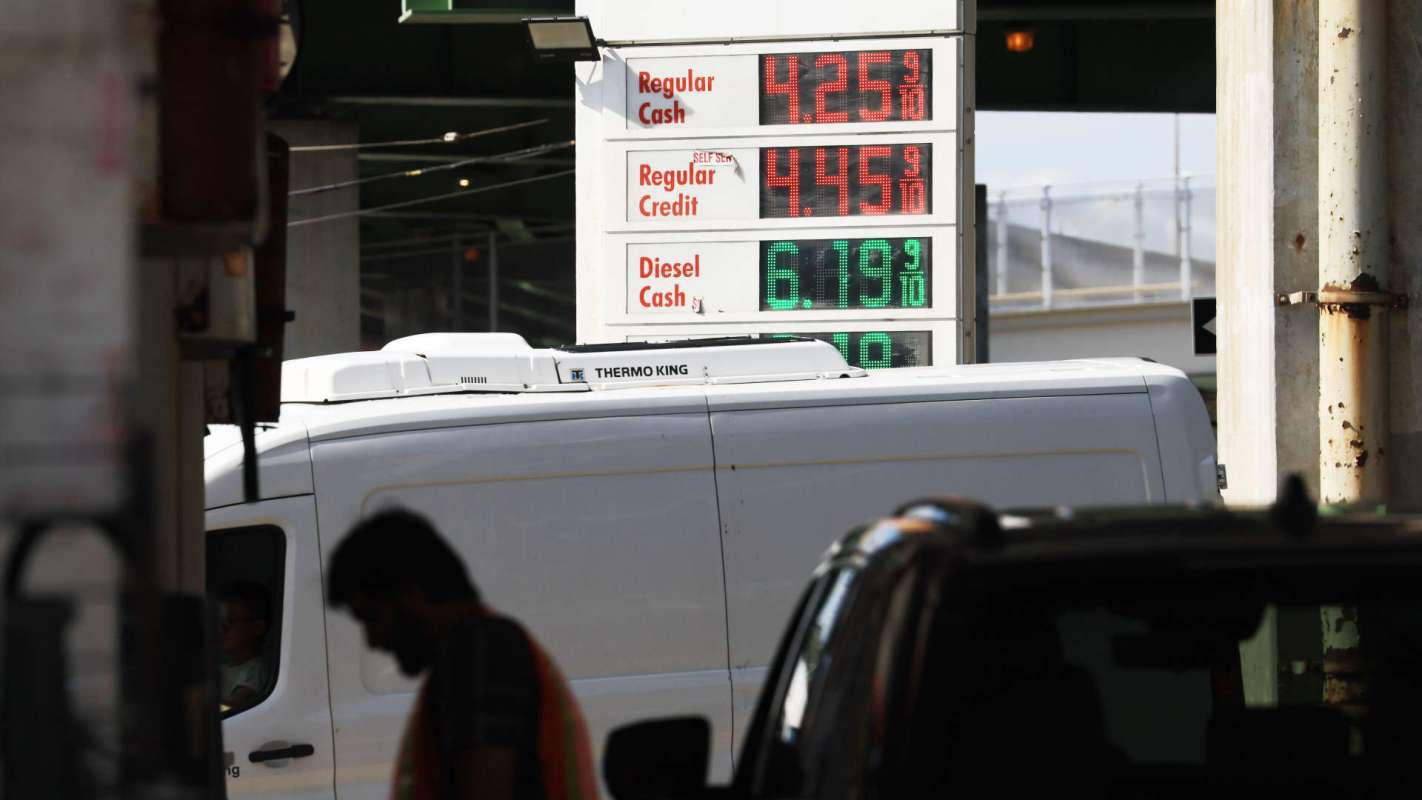
AAA says the national average for diesel reached an unprecedented $5.98 per gallon on September 10, a new high for a fuel whose effects stretch well beyond filling stations.
The increase is likely to reach people who never purchase diesel directly, showing up instead in the cost of everyday items and in higher home-heating expenses.
Here's what to know
More broadly, diesel is a key fuel for trucks and ships, and Grist described how rising diesel costs can feed into the prices of essentials including groceries and lumber.
Compared with late February, when the United States and Israel went to war with Iran, AAA figures show diesel prices are about $2.31 higher. Grist also noted that the last major high point came in 2022, when Russia's invasion of Ukraine helped send diesel to $5.82 per gallon.
David Ortega, a professor of food economics and policy at Michigan State University, explained to the Associated Press how these increases typically move through the economy.
"Early on, much of the cost increase gets absorbed along the supply chain through existing freight contracts and retailer margins," he explained. "But as contracts reprice and fuel surcharges take hold, more of that cost makes its way to the grocery store."
TCD Picks » Quince Spotlight
💡These best-sellers from Quince deliver affordable, sustainable luxury for all




A Brown University tracker estimated that the diesel spike has added $46 billion in costs for U.S. consumers, or roughly $350 per household.
More background
Patrick De Haan, head of petroleum analysis for GasBuddy, told Grist that Ukraine's attacks on Russian oil refineries are also putting upward pressure on prices. Another major factor is the war with Iran, which has largely closed the Strait of Hormuz, a route that once carried 10% of seaborne diesel.
"Diesel right now is caught up in more of a geopolitical turmoil than gasoline," De Haan said.
He added that U.S. refineries were already operating at full capacity, leaving little room to make up the difference. Domestic stockpiles had fallen to their lowest level since 1982, according to Energy Information Administration data.
Heating oil is essentially diesel, so households that still depend on it could face unprecedented bills.
Mark Wolfe, executive director of the National Energy Assistance Directors Association, told Axios the impacts will become regional.
"If you're in the Northeast, then this is much more burdensome than anywhere else in the country," Wolfe theorized. "Families are getting hit by both gasoline and heating oil."
What can be done?
In the short term, support programs can help ease the burden for vulnerable households, especially those facing high heating oil bills.
Grist noted President Donald J. Trump's administration has threatened cuts to the federal Low Income Home Energy Assistance Program, a program that helps households cover fuel bills.
That could hit at the worst time, as it could take a very long time for prices to return to previous levels and provide some much-needed relief for families. That's even under the rosy scenario that both wars in Iran and Ukraine end in the short-term.
"After both of those are solved, then once the flow normalizes, that will start to help global inventories recover," De Haan told Grist. "Only after inventories have recovered do diesel prices really see a full decline."
Where can I learn more?
The run-up in diesel prices is one piece of a bigger fossil-fuel story. Oil, gas, and coal shape everything from public health to utility bills and the shift toward cleaner energy.
• Communities near drilling sites still face oil and gas impacts on health through worsening pollution.
• For liquefied natural gas, some analysts warn its worse-than-coal footprint undercuts climate claims.
• In West Virginia, decades-old generators still impact consumers after 50 years through higher electric bills.
The same fuel system driving the diesel crunch also drives health risks, household costs, and big energy decisions. It's a reminder that a price spike at the pump rarely stays confined to transportation.

Get TCD's free newsletters for easy tips, smart advice, and a chance to earn $5,000 toward home upgrades. To see more stories like this one, change your Google preferences here.






