


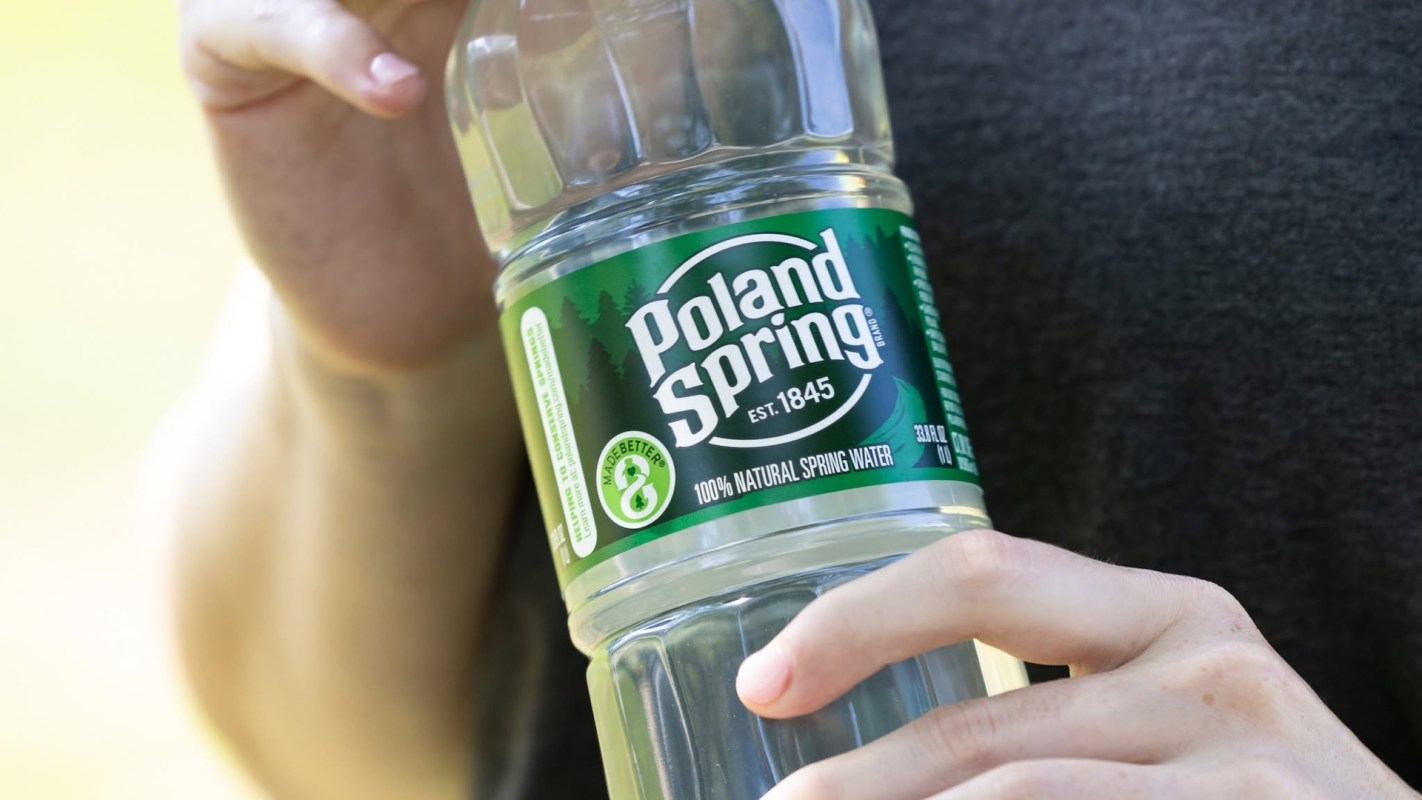
One Maine town is pushing back as bottling company Poland Spring seeks permission to continue extracting up to 432,000 gallons of water per day from a local aquifer for another five years, according to news outlet Maine Public.
Residents say the stakes are immediate as the company's current permit expires at the end of 2026.
Here's what to know
Poland Spring wants to keep using the Cold Spring site in the town of Denmark, Maine, seeking access to as much as 105.1 million gallons of water a year. According to local news reports, the company's permitting for the location dates back to 2005.
But even though the U.S. Drought Monitor no longer classifies Denmark as being in drought or abnormally dry, residents told the Select Board there that the effects can still be felt. According to Maine Public, some local wells are going dry, and the town's Long Pond remains far below its usual level.
Matt Reynolds, a hydrogeologist working for Poland Spring, disputed the idea that the company's nearby pumping is directly to blame for low water levels.
"The groundwater is low, Long Pond is low, and that's due to the drought conditions," Reynolds said, according to Maine Public.
TCD Picks » Quince Spotlight
💡These best-sellers from Quince deliver affordable, sustainable luxury for all




More background
Residents' concerns reflect dissatisfaction over an arrangement in which some say a major bottled water company is profiting from a local resource while the community stands to absorb the potential fallout.
The company's messaging has also become a point of contention. Poland Spring said it voluntarily reduced withdrawals during drought conditions, but Maine Public reported that its review of monthly data found that January-to-September withdrawals in Denmark were up by nearly 23%.
Money is another frustration.
As the outlet reported, Poland Spring's parent company, Primo Brands, made more than $6.6 billion in sales in 2025, while the town of Denmark receives about $34,000 a year in property taxes from the operation.
What's being done?
In late 2024, Denmark voters unanimously approved an ordinance on large-scale extraction that gives the town power to reduce or stop pumping if aquifer levels fall below a set threshold. The measure also requires extractors to apply for a new permit after an ownership change.
Poland Spring says those stricter standards should not apply in this case because the ordinance was adopted after the company's merger with Primo. But resident and former town water ordinance review committee member Audrey Rabinowitz disagreed.
"I suggest the new ordinance applies to them, and that it mandates that we consider them as a new applicant, not a renewal applicant," Rabinowitz said, per Maine Public, which reported that some residents also want a new aquifer assessment.

Get TCD's free newsletters for easy tips, smart advice, and a chance to earn $5,000 toward home upgrades. To see more stories like this one, change your Google preferences here.






