


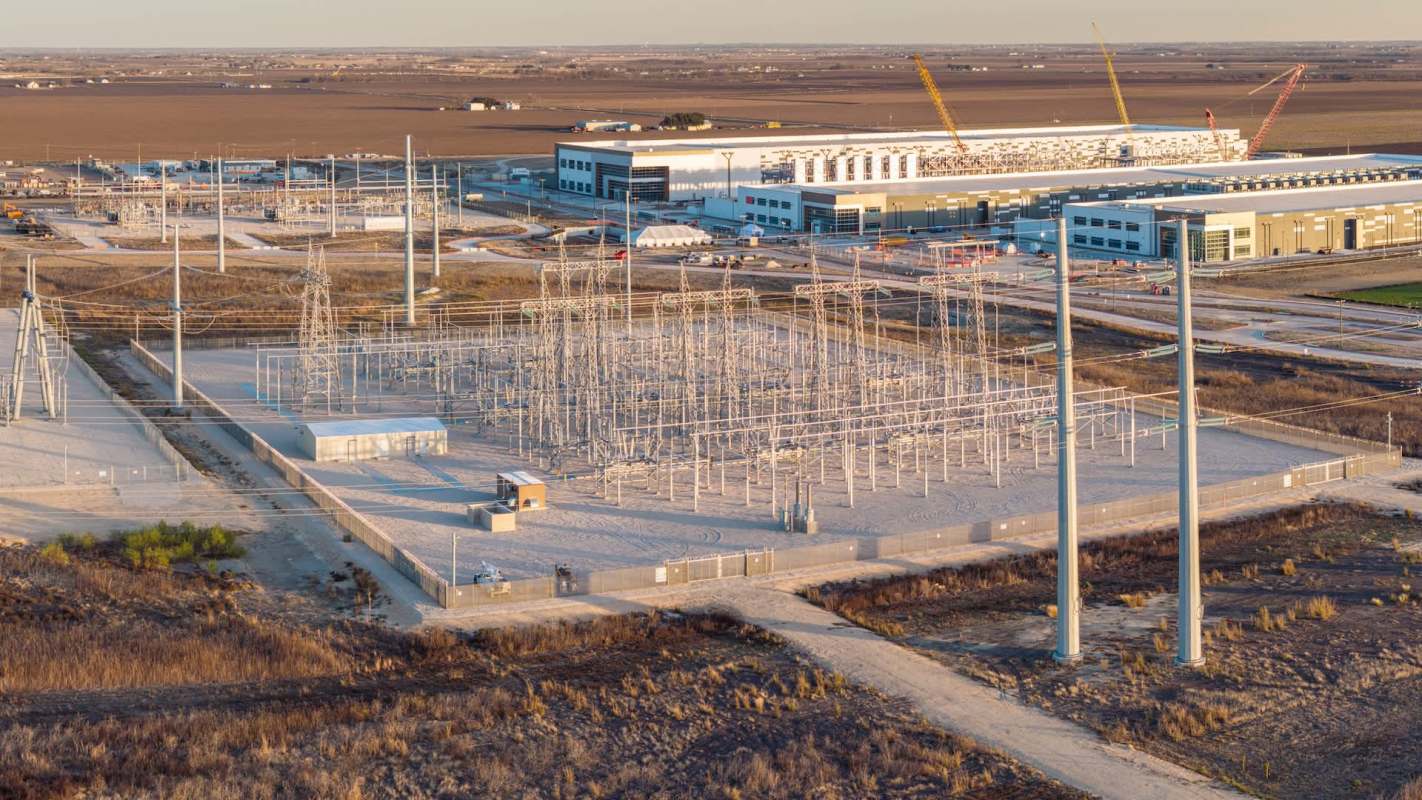
Data centers, the hubs for server processing artificial intelligence-generated content across the internet, have faced pushback from communities in recent years.
What's happening?
Local opposition, which creates awareness among investors, stems from research by Miquel Vila, a supply chain and political risk analyst at 10a Labs. It launched the Data Center Watch initiative, a project designed to track nationwide opposition to data centers.
Vila, who told The New York Times that he has no financial or ideological stake in the development of data centers, monitors local news, government meetings, and social media groups to document and analyze organized resistance.
Vila noted that 48 data center projects, totaling over $156 billion, have encountered opposition, necessitating potential changes to developers' original plans, according to the Times.
The data, posted to the social platform X by More Perfect Union (@MorePerfectUS), received praise.
The latest data shows that at least $156 billion across 48 data center projects was blocked or stalled by local opposition in 2025.
— More Perfect Union (@MorePerfectUS) March 27, 2026
"This is the sliver of hope that I need to see," one commenter said.
From the industry perspective, AI companies are feeling the heat.
"A lot of the commitments and build-out of data centers in easily accessible areas has already occurred, making new developments increasingly challenging," Todd Castagno, managing director at Morgan Stanley, told the Times.
Why is data center opposition important?
Aniket Shah, managing director at the investment bank Jefferies, emphasized the importance of findings from Data Center Watch. He believes the growing number of delayed and canceled projects highlights deeper resistance that could lead to significant political constraints in the future.
Interestingly, in 2023 and 2024, data center developers discreetly acquired land and obtained needed approvals without much public scrutiny, often obscured by nondisclosure agreements. This approach has become harder.
TCD Picks » Quince Spotlight
💡These best-sellers from Quince deliver affordable, sustainable luxury for all




|
Which of these savings plans for rooftop solar panels would be most appealing for you?
Click your choice to see results and earn rewards to spend on home upgrades. |
 Save $1,000 this year 💸
 While grassroots opposition remains fragmented, information spreads quickly through social media, with academic institutions and nonprofits researching the impact of data centers on noise, water, and air quality.
As data centers continue to proliferate, so too will the knowledge available to understand and communicate the associated challenges to developers, investors, and policymakers, ultimately hindering new project developments.
The top AI companies, known as "hyperscalers," predict expenditures of $710 billion on data centers in North America this year. However, if developers cannot devise strategies to meet growing environmental demands from local populations, this influx may begin to diminish.
What actions are being taken for the future?
Beyond local opposition, major data-consuming companies, including Meta, Siemens, and Google, are implementing measures to mitigate the environmental impacts of data centers.
Google has established plans to construct data centers powered by renewable energy by 2029, aiming to deploy at least 1,900 megawatts of energy back to the grid.
While resistance to change persists, it's not the sole concern for developers. Companies are finding it increasingly tough to collaborate with local authorities and are encountering investor opposition, spelling hope for the protection of natural resources in areas initially planned for development.

Get TCD's free newsletters for easy tips to save more, waste less, and make smarter choices — and earn up to $5,000 toward clean upgrades in TCD's exclusive Rewards Club.
Cool Picks




