


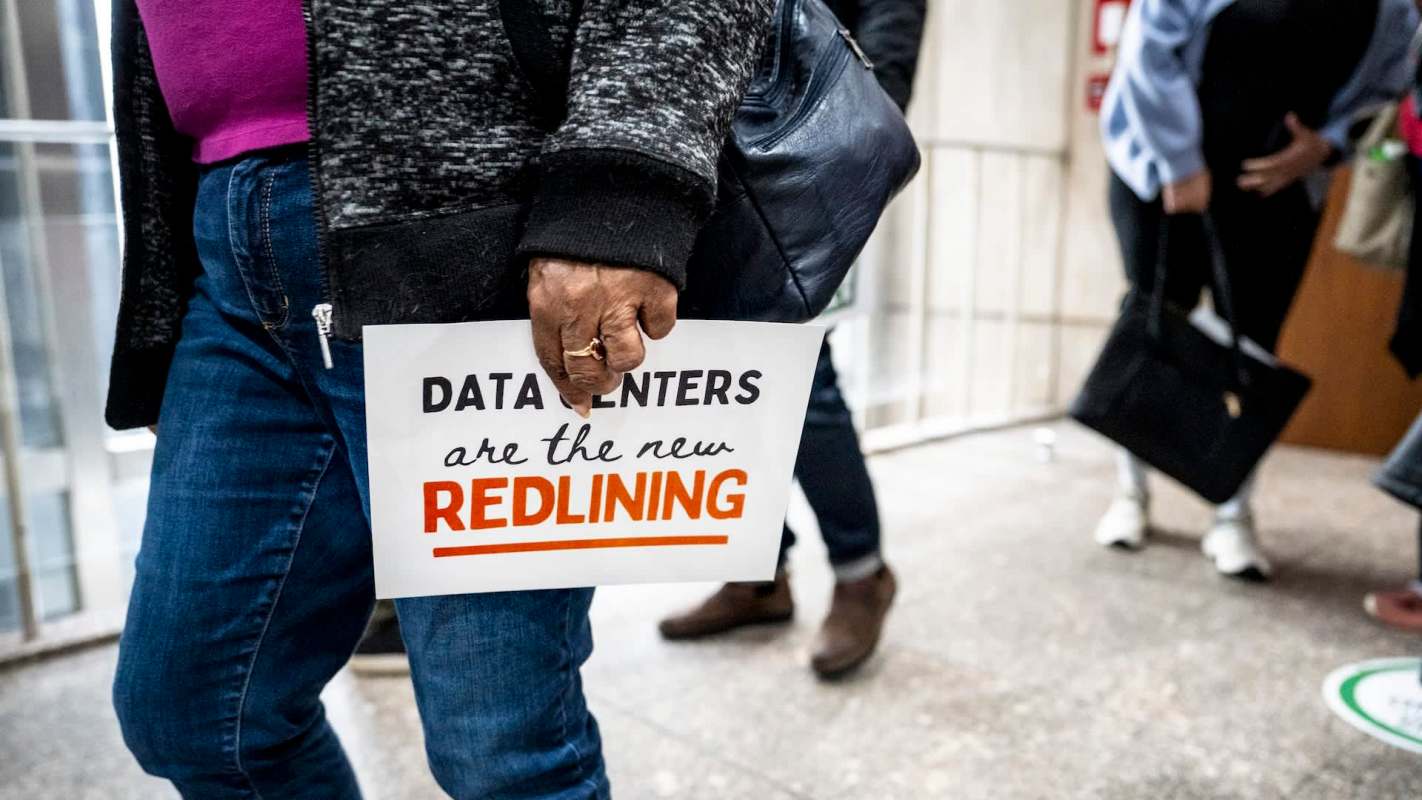
Data center development is turning sleepy town meetings into standing-room-only political events — and, oddly enough, creating rare agreement across America's deepest red-blue divides.
That was on display in Lyon Township, Michigan, where residents packed a recent board meeting and used the public comment period to challenge a proposed hyperscale data center.
According to the New York Times, similar blowback is now spreading across Michigan and other states as people worry about traffic, environmental disruption, noise, water use, and rising electric bills.
In Lyon Township, the main agenda item was an easement for a drain, but the real topic was "Project Flex," a proposed 1.8-million-square-foot facility. Residents arrived with research, recordings, and pointed questions.
In Michigan, as a whole, one tally showed that at least 50 towns have adopted measures to slow or pause data center development.
One speaker compared the project's footprint to roughly 32 NFL football fields. Others asked about endangered bat habitat, nearby schools, groundwater, and whether local officials had been transparent enough from the start.
TCD Picks » Quince Spotlight
💡These best-sellers from Quince deliver affordable, sustainable luxury for all




The backlash is no longer isolated. The Times reported that Maine was the first state to approve a moratorium on data centers before its Democratic governor vetoed it, and that related proposals have since surfaced in more than a dozen other states and many municipalities.
In Wisconsin, Marquette University Law School Poll director Charles Franklin said roughly 70% of respondents now believe the costs outweigh the benefits, per the Times. Residents of Festus, Missouri, ousted four council members who approved a $6 billion data center.
What makes this especially notable is who is showing up. Trump voters are working alongside Never Trumpers. In Mason, Michigan, one conservative activist teamed up with a former city council member to oppose rules they believed favored data centers.
The examples go on, but the message is clear. The issue is scrambling familiar alliances because the concerns feel immediate, local, and deeply personal.
"This is the most bipartisan issue since beer," said Charlie Berens, a Milwaukee-based comedian, according to the Times.
The data centers also aim to power artificial intelligence, a technology that similarly brings opposition and concern.
Data center development matters for consumers and the climate because AI and the electric grid are tightly linked. The computing behind AI tools that runs through data centers can put new pressure on power systems and water supplies.
AI can also potentially help improve forecasting, medical procedures, and even clean energy operations. The tension is whether this potential outweighs the serious concerns about cost, resource use, security, and broader social consequences.
Supporters of these projects point to these potential benefits, along with construction jobs and tax revenue. The Times noted that some lawmakers and residents do not want data centers banned outright so much as regulated more carefully.
However, many communities say the projects are arriving too quickly, under vague code names, with limited public clarity about who is behind them and what the full tradeoffs will be.
"I don't care if you're a Democrat or Republican, we're all coming together to fight this," said Michigan resident Starlet Peedle, per the Times.
"We've been foes for a long time," said Ryan Wagner, who used to think of himself as a strong MAGA supporter, of Democrats, "but when it comes down to our backyards, we realized we are really just the same people."

Get TCD's free newsletters for easy tips, smart advice, and a chance to earn $5,000 toward home upgrades. To see more stories like this one, change your Google preferences here.






