


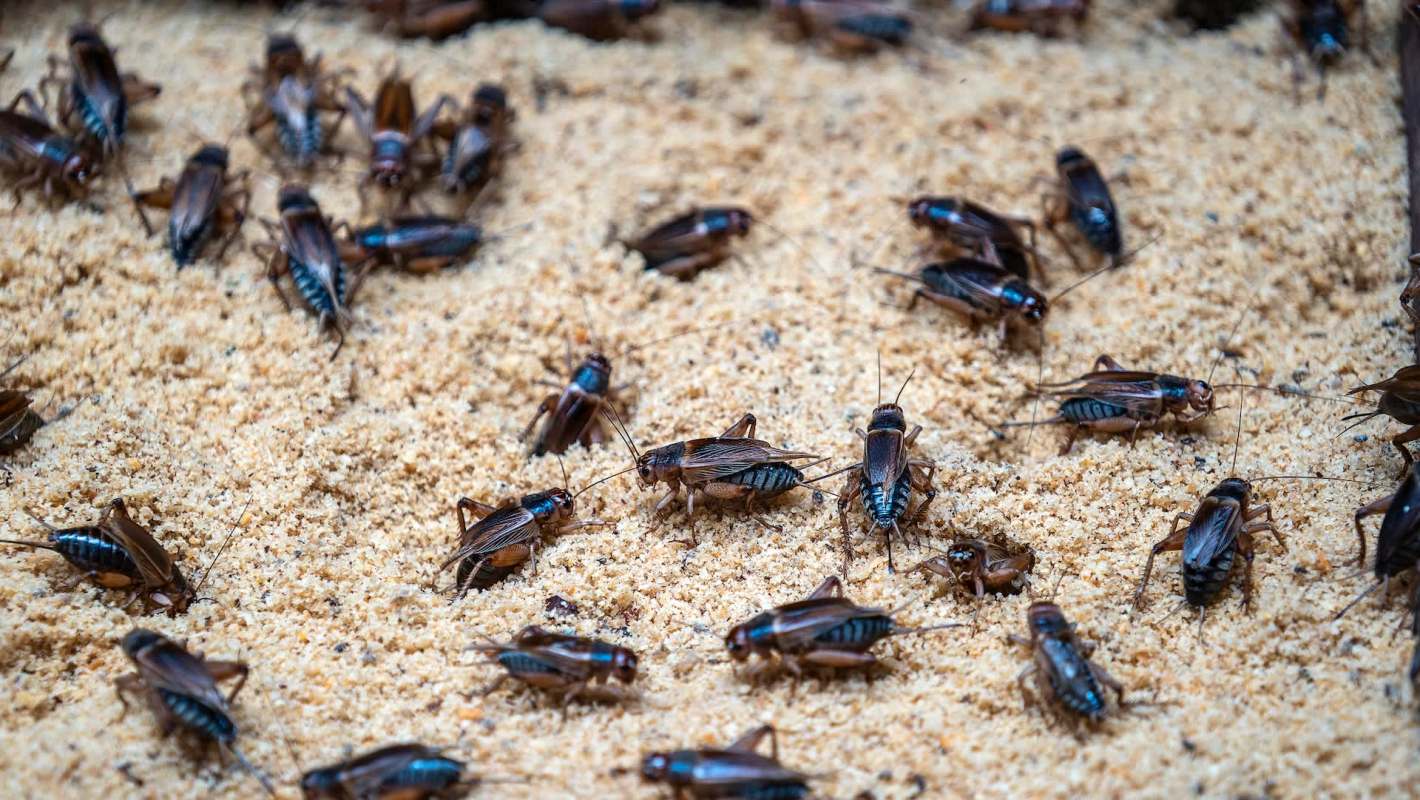
A hyped cricket farming operation once expected to make insect protein a mainstream sensation has fallen apart, the Canadian Broadcasting Corporation reported, with one primary reason cited for the operation's protracted downfall.
Aspire Food Group Canada's cricket farm was purportedly the world's largest, "a 150,000-square-foot, fully automated facility designed to house billions of insects and produce millions of kilograms of protein each year," according to the CBC.
In August 2017, Fast Company published a glowing profile of the startup, noting that Aspire planned to open a facility 10 times larger than the first one, a scale its founders deemed necessary to establish cricket as a viable protein option.
At the time, the outlet observed that to unseat primary animal-sourced proteins like beef and "fulfill its sustainable promise," cricket protein would have to be more affordable and more widely available in North American markets.
Price was an early challenge, Aspire CEO Mohammed Ashour explained.
"It's very expensive. A pound of cricket protein powder right now at wholesale sells for approximately $20. That's not because of an artificial, significantly inflated gross margin — that's simply because the cost of production is very high," Ashour said, per Fast Company.
As the CBC's reporting revealed, cricket protein's high cost was a trade-off: It had a lower environmental cost than chicken or beef.
Raising cattle for beef takes an immense toll on the planet in terms of both carbon pollution and deforestation, and beef has become prohibitively expensive in recent years.
But cost didn't seem to be what brought down the once-promising startup, which was awarded the prestigious Hult Prize in 2013 and then received "tens of millions of dollars in federal loans and grants," per the CBC.
University of Guelph assistant professor Sadaf Mollaei is an expert on sustainable food systems, and she spoke to the CBC about the surprisingly simple reason the project fell apart: The idea of eating crickets, even in powdered form, failed to catch on.
TCD Picks » Quince Spotlight
💡These best-sellers from Quince deliver affordable, sustainable luxury for all




|
Which of these savings plans for rooftop solar panels would be most appealing for you?
Click your choice to see results and earn rewards to spend on home upgrades. |
 Save $1,000 this year 💸
 "The biggest barrier is the yuck factor or the disgust," Mollaei said of a product that can retail for up to 49.99 Canadian dollars ($35.89) per pound.
"It's a premium product. It's not cheaper. The selling point has never been a lower price; it's the fact it's better for the environment, and it's a healthy product," Mollaei added.
Aspire's facility, which opened in 2022, entered receivership in 2025, with roughly 41.5 million Canadian dollars in debt ($29.8 million). Insect farmer Darren Goldin told the CBC that Aspire faced an uphill battle with scale and cost from the outset.
"What they were trying to accomplish was a very, very challenging task," Goldin acknowledged.

Get TCD's free newsletters for easy tips to save more, waste less, and make smarter choices — and earn up to $5,000 toward clean upgrades in TCD's exclusive Rewards Club.
Cool Picks




