


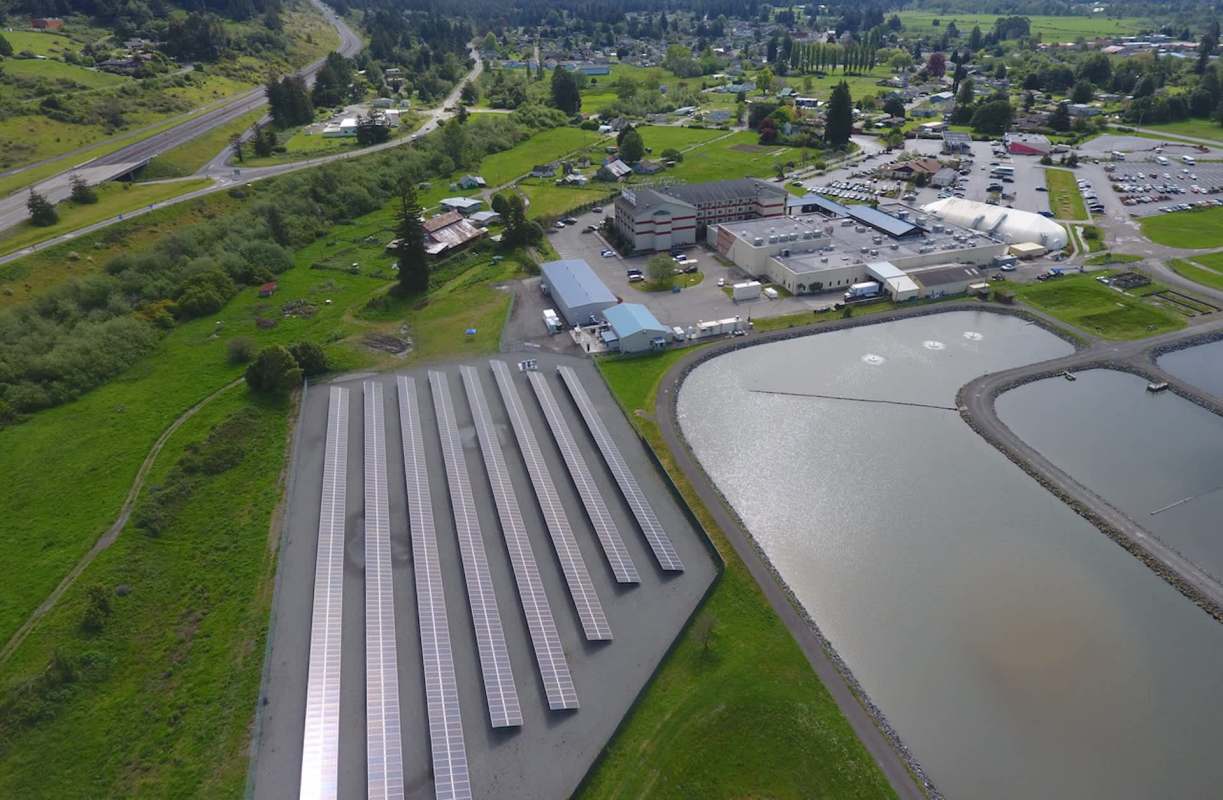
In the United States, community solar is expanding, but most of that momentum is coming from a relatively small number of states with supportive rules.
For renters and for homeowners whose roofs are shaded or otherwise not a good fit, those policies can determine whether community solar is even an option for lowering power bills.
Here's what to know
A new snapshot of the U.S. non-utility community solar market shows that the second-quarter 2026 growth was not broadly shared nationwide.
Community solar is an option that lets households sign up for a shared project and receive bill credits, which can be especially valuable for renters and for people whose homes are not a good match for rooftop solar.
For households that are able to install their own system, adding rooftop panels remains one of the best ways to save money on home energy. Homeowners can explore EnergySage to get free solar installation estimates and compare quotes.
But community solar is an excellent alternative when that's not an option. Many states that are promoting community solar use it to help lower-income families decrease their utility bills and cut pollution at the same time.
Unfortunately, though, there is not uniform access to these programs across the U.S. Instead, according to PV Magazine and the latest Institute for Local Self-Reliance Community Solar Tracker, most of the recent community solar expansion came from just a few states.
Only New Jersey, New York, and Oregon topped 1% quarter-over-quarter capacity growth, and they have done so for three straight quarters, per PV Magazine.
Save $10,000 on solar panels without even sharing your phone number Want to go solar but not sure who to trust? EnergySage has your back with free and transparent quotes from fully vetted providers that can help you save as much as $10k on installation. To get started, just answer a few questions about your home — no phone number required. Within a day or two, EnergySage will email you the best local options for your needs, and their expert advisers can help you compare quotes and pick a winner. |

Of that group, New York was the clear outlier. It added 202 megawatts of community solar capacity in the second quarter of 2026, equal to 7% growth, and it was the lone state to pick up speed versus the first quarter, per the Institute for Local Self-Reliance.
The snapshot of community solar across the U.S. suggests that most solar panels are lumped together in a few places, not spread out across the country. Figures from the National Renewable Energy Laboratory indicate that roughly 91% of all community solar capacity in the country is found in just 10 states, per PV Magazine.
And, as the Institute for Local Self-Reliance reported, only 18 states, alongside Washington, D.C., actually allow community solar.
More background
In places without established programs, development has been held back by interconnection queues, regulatory holdups, and bill-credit structures that offer limited value.
More From EnergySage
💡Go deep on the latest news and trends shaping the residential solar landscape




As community solar growth becomes increasingly concentrated in a small number of states, the strength and stability of programs can determine how widely lower-cost clean energy is shared. When those policies are weak or unreliable, many households, especially renters and low-income families, can be left with fewer chances to benefit.
Still, many households across these 18 states may be able to subscribe to a community solar project, slashing their energy costs, while others may find that rooftop panels make more sense.
EnergySage's free tools, including its solar map, show the average cost of a home solar panel system on a state-by-state level, along with details on solar incentives in each state. Homeowners who take advantage of these services can save up to $10,000 on an installation.
By adding a battery backup, you can save even more over time in day to day energy costs, as well as going off-grid or becoming more resilient in an outage. EnergySage offers information on battery backups as well.
Where can I learn more?
These stories add useful context on why some states are moving faster than others on solar access. They look at how policy choices, permitting rules, and rapid build-outs can affect whether cheaper clean power reaches more households.
• In Connecticut and Virginia, new advocates target cheaper power by speeding home solar approvals.
• Across the country, states leading the U.S. solar race are reshaping energy markets.
• In Florida, installing more solar panels than any other state in recent years is testing the grid.
These stories also underscore why policy design and project pipelines matter when solar savings are unevenly distributed.

Get TCD's free newsletters for easy tips, smart advice, and a chance to earn $5,000 toward home upgrades. To see more stories like this one, change your Google preferences here.






