


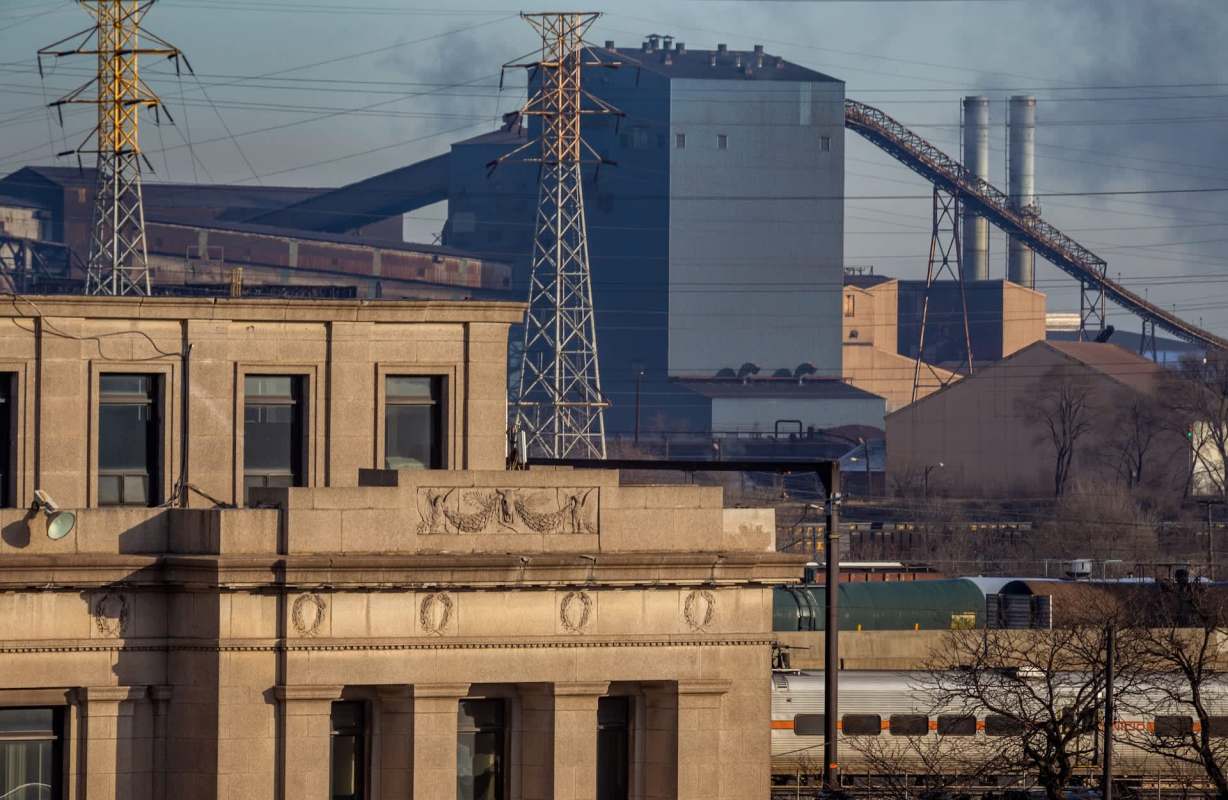
When Natalie Ammons left Chicago for Gary, Indiana, almost 50 years ago, hoping to get her family away from violence, she ended up in a neighborhood near one of the world's largest steel mills.
Years later, that proximity is at the center of a dispute over the Gary Works steel mill. Residents point to concerns over black grime and respiratory problems affecting local children.
What's happening?
When President Donald Trump approved Nippon Steel's takeover of U.S. Steel last year, the company announced a $3.1 billion investment in Gary.
Ammons and Gary Advocates for Responsible Development have sustained a push for cleaner technology at the 118-year-old Gary Works, according to the Chicago Tribune. Meanwhile, U.S. Steel is putting $1.9 billion toward a new cleaner direct reduction facility in Osceola, Arkansas — not Gary, the newspaper reported.
Data from the Environmental Protection Agency shows that Gary Works is a huge source of pollution, ranking sixth in the United States among stationary sources of PM2.5, a fine particulate matter associated with serious health risks.
Lake County, Indiana, where Gary Works is located, was also one of only 20 counties in the country to receive failing grades this year from the American Lung Association for ozone and both short- and long-term particle pollution, according to the Tribune.
TCD Picks » Quince Spotlight
💡These best-sellers from Quince deliver affordable, sustainable luxury for all




Why is this concerning?
The newspaper reported that for Ammons, the health dangers became painfully real as her great-grandchildren struggled with asthma attacks.
Doctors in Gary say pediatric asthma is more common there than in nearby towns. More broadly, PM2.5 and ozone are associated with asthma flare-ups, heart and lung disease, and other major health problems.
Residents living closest to the mill are also part of a community facing entrenched inequities. According to the Tribune, 97% of people within three miles of Gary Works are people of color, and 62% are low-income families.
The steel company won approval for a major merger and touted large investments, yet apparently declined to bring its cleanest technology to one of its dirtiest facilities, leaving residents wondering whether they are being asked to shoulder the health consequences while the business reaps financial benefits.
Ammons and other activists think the area's environmental and public health statistics are enough reason for cleaner steelmaking in the city.
"When I look at this mill, and what they're doing down in Arkansas, I think it's a travesty," Ammons told the Tribune. "They don't want to give us clean air."
What's being done?
A lawsuit filed by the Chicago-based Environmental Law and Policy Center, joined by Ammons' group and others, argues that pollution from Gary Works contributes to ground-level ozone above EPA standards, according to the Tribune. That court action is part of a broader organizing push by community advocates.
Their preferred upgrade is direct reduction technology, which removes impurities from iron ore at lower temperatures and uses natural gas instead of coke. That can slash carbon pollution by about half while reducing PM2.5 and other harmful pollutants by an even greater percentage.
U.S. Steel's current position is that installing the technology in Gary would pose significant risks and entail substantial expense, according to the Tribune.
Meanwhile, Ammons, whose husband John worked in the Gary blast furnaces for five years and died of bladder cancer at 47, plans to stay and call attention to what's happening in her city.
"My husband made me promise. He said, 'When I go, … can you just go back to California with your family?'" Ammons said, according to the newspaper. "But I didn't want to do that. I'm just invested in Gary. And I like Gary."

Get TCD's free newsletters for easy tips, smart advice, and a chance to earn $5,000 toward home upgrades. To see more stories like this one, change your Google preferences here.






