


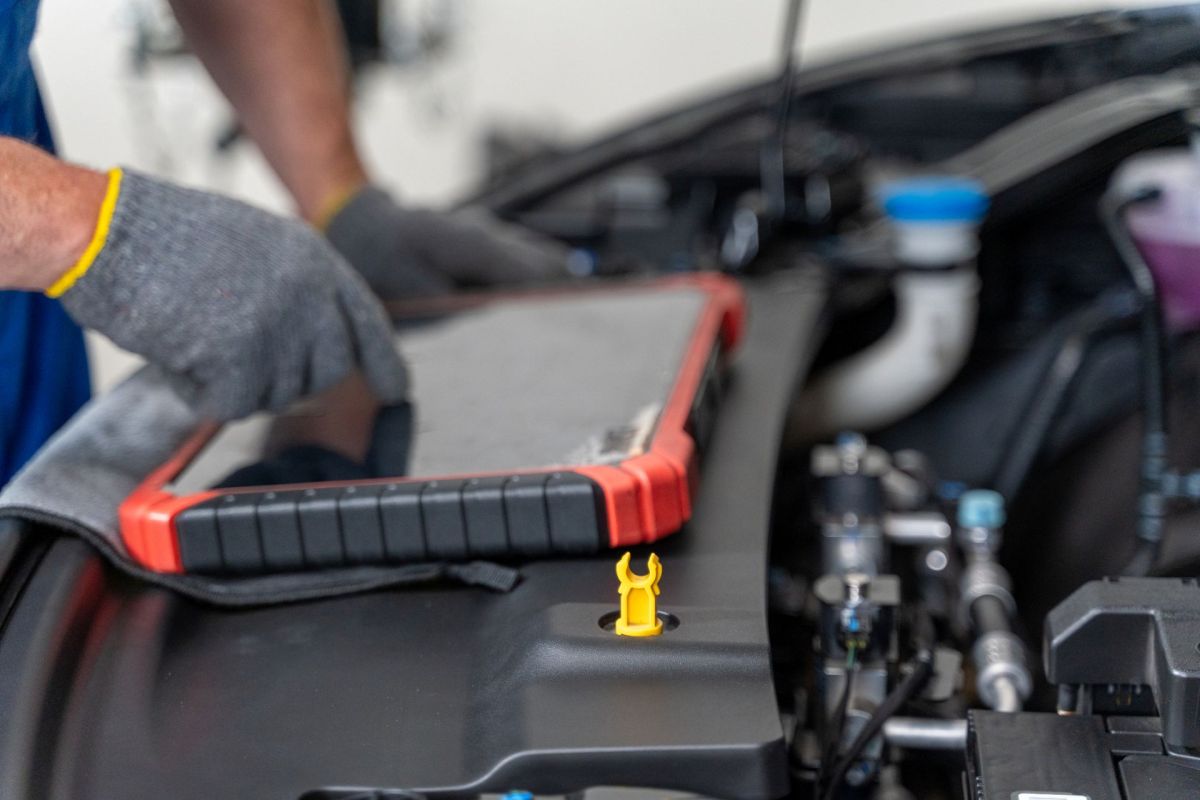
Car owners across the U.S. are becoming frustrated as vehicles that should be repairable are sitting for weeks or even months because replacement parts are unavailable.
While electric vehicles are not alone in that mess, data suggests that EV drivers may be feeling the pain most acutely.
What's happening?
On YouTube, Transport Evolved (@transportevolved) said these repair delays now reach well beyond a few troublesome models or any single automaker.
"The parts shortage is industry-wide — EVs are just feeling it the worst," the caption read.
Among the cases highlighted were Hyundai Ioniq 5 and Kia EV6 models with integrated charging control unit, or ICCU, failures, as well as Ford F-150 Lightning trucks waiting on back-ordered coolant-related parts. In situations where there has been no clear repair timeline, some automakers have reportedly offered buybacks.
According to Transport Evolved, the mess traces back to 2020, when COVID-19 prompted automakers to cut parts orders and chip manufacturers redirected production capacity. The problem has since been worsened by wars, tariffs, inflation, and semiconductor demand from the AI and data-center sectors.
TCD Picks » Quince Spotlight
💡These best-sellers from Quince deliver affordable, sustainable luxury for all




While EVs have been particularly hard hit, commenters noted that all vehicle types have been impacted.
"It doesn't have to be an EV to have problems with spares availability," said one.
Why does it matter?
A necessary auto repair that stalls for months can disrupt daily life, leading to missed work, higher transportation bills, and plenty of uncertainty.
That burden can be even more acute for EV drivers who switched to electric in part to cut ownership costs, especially fuel spending. If an out-of-service EV is replaced with a gas-powered loaner, those expected savings can disappear quickly. As Transport Evolved observed, enough time in a gasoline vehicle can make "a sizable dent" in a carefully planned budget.
The video also presents the situation as a repair-access problem, not only a supply problem. Dealership rules and automaker-required procedures can add more delay by requiring an inspection before parts can be ordered. That may be especially frustrating for owners of newer or lower-volume EVs, whose components may already be difficult to get.
Many commenters shared their own frustrating experiences.
"It's getting really hard to find swaybar end links for a Chevy Bolt," said one.
"Have an Alfa Romeo Giulia, and the MFG would not sell a radiator to my local independent shop," added another.
What can I do?
Transport Evolved's first recommendation is documentation. Keep records of every service appointment, call, delay, and promised update, because if a repair stretches on, that paper trail may become important, especially in places with lemon-law protections.
Each time a driver contacts a dealer, they can ask whether the part has been back-ordered, or if it can be sourced from another location. Meanwhile, it's worth checking if a rental, fuel reimbursement, or buyback is on the table.
For owners who do their own maintenance, forums and used-parts networks may offer short-term workarounds. Transport Evolved cautioned, though, that salvaged or nonstandard parts can create warranty risks. Keeping commonly replaced consumables, such as filters, on hand may also help prevent smaller delays.
Public pressure and owner groups can sometimes help, but legal threats should be saved for cases where a driver is actually prepared to follow through.

Get TCD's free newsletters for easy tips, smart advice, and a chance to earn $5,000 toward home upgrades. To see more stories like this one, change your Google preferences here.






