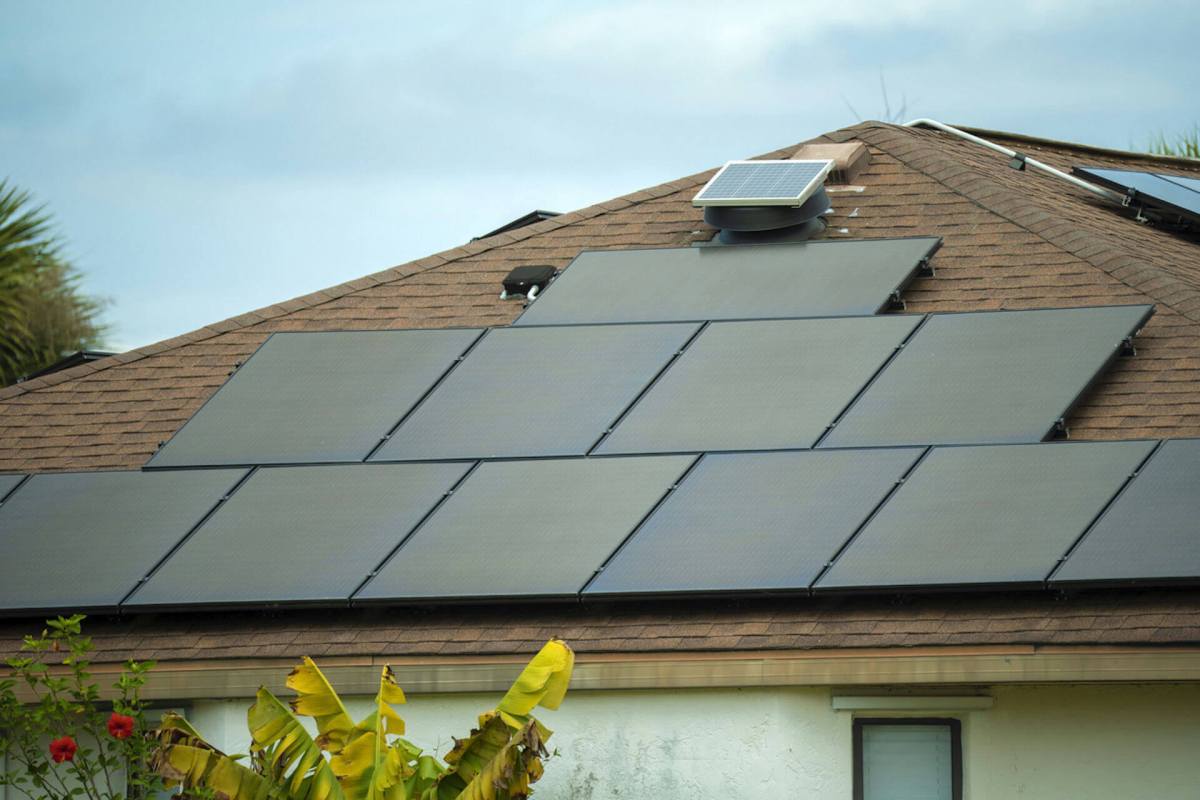
At the beginning of August, the California Supreme Court unanimously ruled that a lower court must rehear the case that set the state's controversial policy for compensating solar panel owners.
As EnergySage reported, the Net Energy Metering 3.0 policy sharply reduced the compensation due to solar panel owners when they send a kilowatt-hour of electricity to the grid.
Instead of paying homeowners the same retail rate that they would be charged if they used the same amount of energy, the California Public Utilities Commission decided that electric providers could instead offer only the amount that they would save by accepting electricity from solar panel owners instead of from another source.
In practice, this reduced the compensation to solar panel owners by about 75%. Instead of "banking" energy during the day and using it during the night at no cost, solar owners saw their utility bills go up by an average of $63 per month. This translates to a loss of about $20,000 over the normal lifespan of a solar array.
"Utilities feel threatened by customer solar and storage because it reduces their profit motive, their ability to rate base grid expansion, which is what drives their profits," Brad Heavner, executive director of the California Solar & Storage Association (CALSSA), told EnergySage.
Prior to this change, going solar was an extreme no-brainer for almost any California resident, and now it's more of a regular no-brainer. Solar panels can reduce your home electrical bills to at or near $0 with the right setup, and prior to NEM 3.0, that didn't need to involve energy storage.
For the maximum savings, EnergySage can help you find vetted installers in your area with its free online tools for comparing quotes.
While sunny California is still an amazing place for solar power production — EnergySage estimates savings of between $40,000 and $100,000 over the lifetime of your solar panels — the deal isn't quite so sweet when you have to add in the additional cost of battery installation, or cope with the reduced rate for the energy you send to the grid.
Save $10,000 on solar panels without even sharing your phone number Want to go solar but not sure who to trust? EnergySage has your back with free and transparent quotes from fully vetted providers that can help you save as much as $10k on installation. To get started, just answer a few questions about your home — no phone number required. Within a day or two, EnergySage will email you the best local options for your needs, and their expert advisers can help you compare quotes and pick a winner. |

A reevaluation of NEM 3.0 — one that takes into account California's goal to switch completely to less polluting energy by the year 2045 — could reopen the possibility for homeowners who thought that solar was out of reach.
To see if solar panels are right for you now, or if they might be in the future, check out EnergySage's online tools to discover what's available in your area.
This convenient service even has a handy mapping tool that offers state-by-state specifics. The average user saves $10,000 on their solar installation. You can also combine this with other electric appliances for even more savings — like a heat pump.
|
Which of these factors is the biggest obstacle preventing you from getting solar panels? Click your choice to see results and speak your mind. |
 The upfront cost 💰
Join our free newsletter for good news and useful tips, and don't miss this cool list of easy ways to help yourself while helping the planet.
More From EnergySage
💡Go deep on the latest news and trends shaping the residential solar landscape