


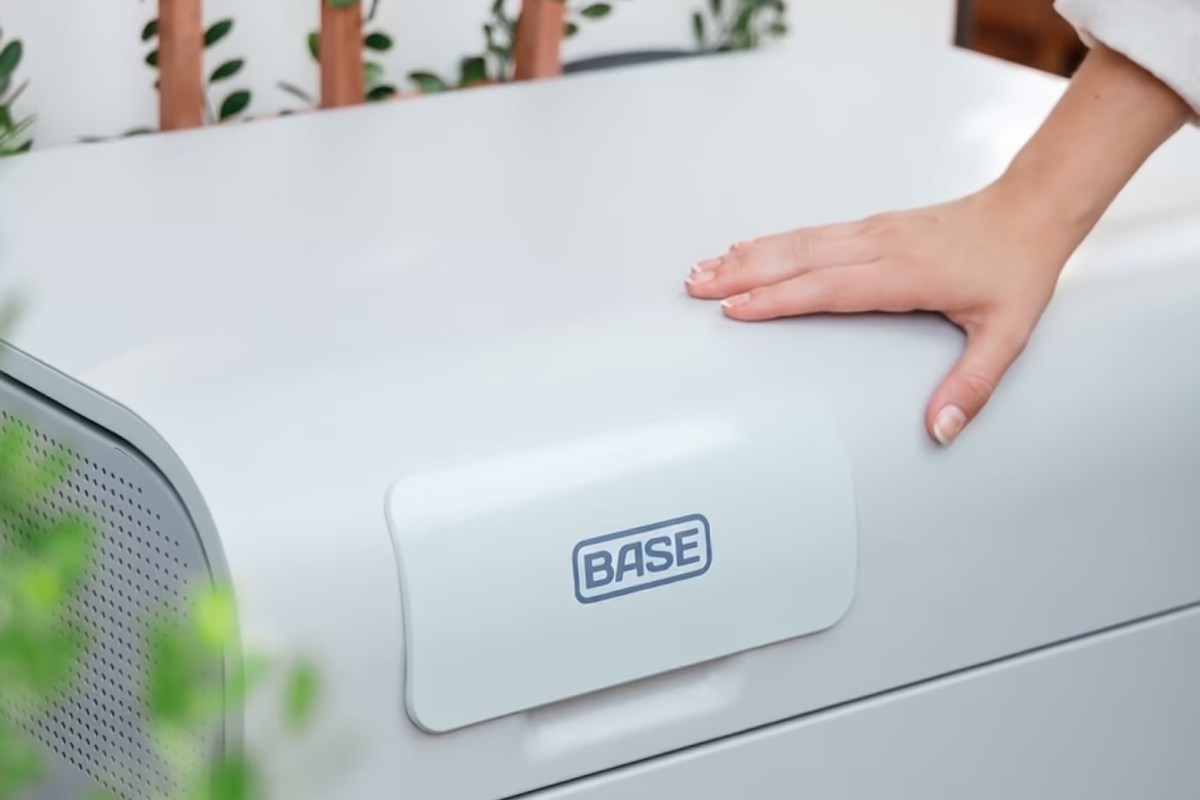
Base Power is drawing significantly more investor money as it expands its role in grid modernization. Canary Media said the home battery company secured another $1 billion, lifting its valuation from $4 billion to $13 billion as backers deepened their commitment to residential energy storage.
Home batteries can do more than keep the lights on during an outage. In large enough numbers, they can support and stabilize the wider power system.
What happened?
The Texas company installs batteries in homes and links them together as a larger grid resource. The investors include Ribbit, Addition, Valor Equity Partners, and JPMorganChase's Strategic Investment Group.
The surge shows investors are placing increasing importance on distributed battery networks as electricity demand climbs.
In less than three years, Base Power has installed batteries in 17,000 homes, mainly in Texas and Illinois. Together, those systems can deliver over 500 megawatt-hours of stored electricity, roughly equivalent to a large utility-scale battery project.
Base Power avoids the typical upfront cost of more than $10,000 by charging customers a one-time fee of $95 to $695, depending on location, along with an electricity subscription. Customers get backup power and cheaper electricity in ordinary conditions, and the company can draw on those batteries to send power to the grid when it is under peak stress.
Why does it matter?
Battery storage is one of the most effective ways to protect a home during power outages. It can also lower energy costs by storing electricity for later use and, in some cases, make it easier for households to go partially or fully off-grid.
Homeowners can gain resilience during blackouts and more control over monthly utility bills. Cities and utilities can tap thousands of small energy devices instead of waiting years for massive power projects to make their way through development and permitting.
Save $10,000 on solar panels without even sharing your phone number Want to go solar but not sure who to trust? EnergySage has your back with free and transparent quotes from fully vetted providers in your area. To get started, just answer a few questions about your home — no phone number required. Within a day or two, EnergySage will email you the best options for your needs, and their expert advisers can help you compare quotes and pick a winner. Solar panels can save you more than $50k over their 25-year lifespan, and EnergySage can help you save as much as $10k on installation. Which begs the question — isn't that worth an email or two? |

If you're curious about whether home battery storage could work for you and your house, it may be worth exploring EnergySage's free tools to compare options and get competitive installation estimates. EnergySage has also teamed up with the electrification brand Qmerit to guarantee you get the best price on home battery storage solutions.
Another option to know about is Pila, which offers battery backup systems that are more accessible for renters or people who do not need whole-home coverage. Its plug-and-play batteries are priced at a fraction of what a whole-home backup system costs.
What's being done?
Business models such as Base Power's are gaining attention because the same home batteries that protect customers during outages can also be used as extra grid capacity in high-stress periods. Clean energy advocates have pushed this idea for years, and rising electricity demand — including that tied to artificial intelligence companies — is making it more appealing to investors.
The company is also expanding rapidly. Because residential batteries can be installed one home at a time, deployment can move much faster than grid-scale storage projects, which often face long development and permitting timelines.
The new funding is expected to help Base Power grow its team and accelerate installations. The company is also working to expand faster by taking greater control of its supply chain, a strategy that could bring batteries to more households.
"There's a real need on the grid for capacity in Illinois and Texas and frankly everywhere else in the U.S. now," Base Power co-founder and COO Justin Lopas said. "Distributed batteries are a way that we can add meaningful capacity to the grid."

Get TCD's free newsletters for easy tips, smart advice, and a chance to earn $5,000 toward home upgrades. To see more stories like this one, change your Google preferences here.






