


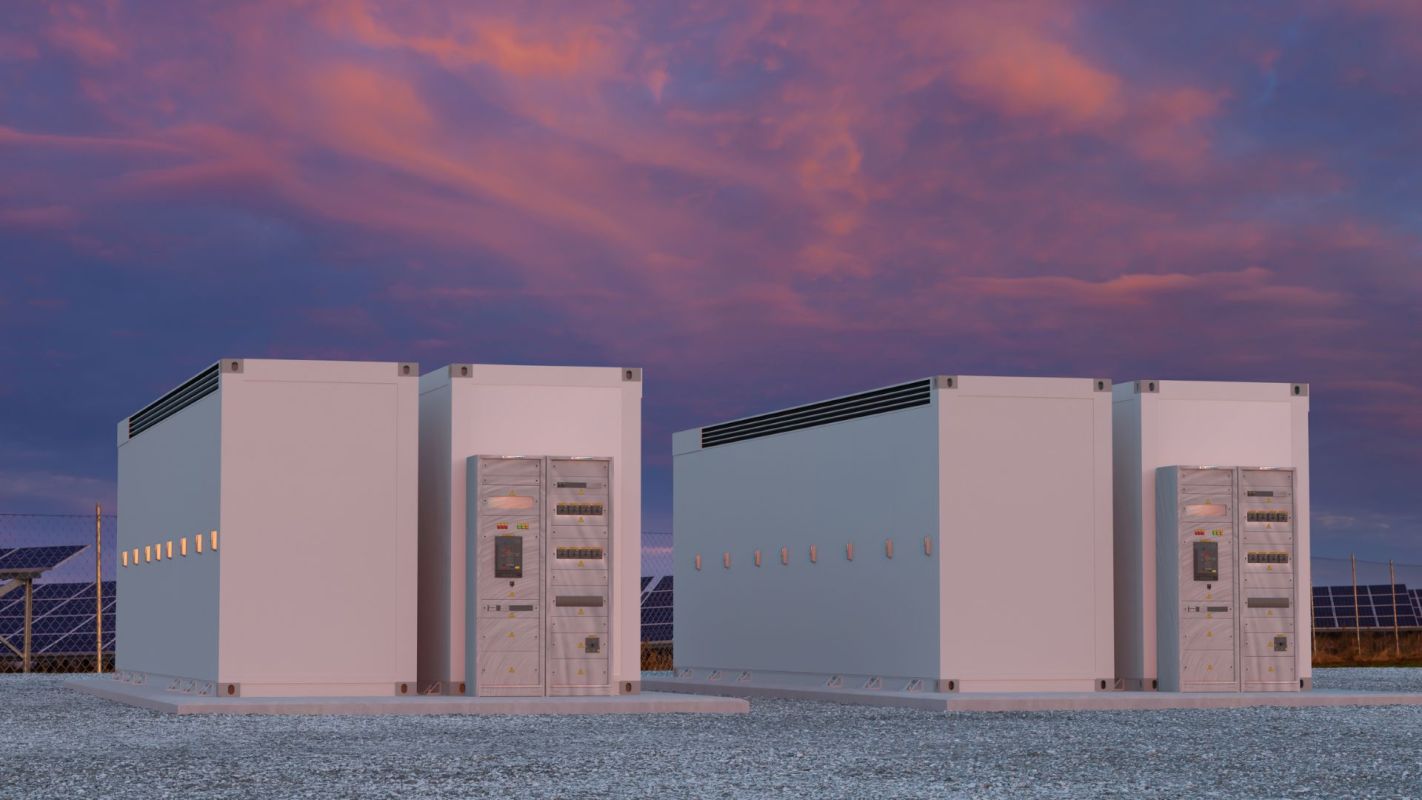
To blunt the cost of buying power during demand spikes, Austin Energy is expanding battery storage at both ends of the scale, from massive installations spread across fields of shipping containers to units placed in customers' homes.
With the brutal Texas heat increasing pressure on the grid, those batteries could limit blackouts and soften abrupt jumps in power prices for the city and individual residents.
What's happening?
The Austin American-Statesman reported that the Austin City Council approved multiple major battery projects as power demand climbed during periods of intense summer heat. In July, the Electric Reliability Council of Texas said that statewide demand could reach roughly 175,000 megawatts by 2032 — nearly twice the existing record.
Austin Energy signed a 20-year deal worth $165 million with OCI Energy in May for a 100-megawatt battery facility. In July, it followed with another 20-year agreement — this one for $320 million — with Jupiter Power for a 200-megawatt system. Once completed, the two projects are expected to supply 300 megawatts to the ERCOT market.
For homeowners, adding battery storage is one of the best ways to protect your home during outages, save money on energy, and go off-grid. If you want to learn more, explore EnergySage's free tools to get information about home battery storage options, including competitive installation estimates.
EnergySage has teamed up with the electrification brand Qmerit to guarantee you get the best price on home battery storage solutions. Another option is Pila, whose plug-and-play batteries are priced at a fraction of what whole-home backup systems cost.
Why does it matter?
The utility is most exposed when electricity use climbs and available supply narrows, a pattern that often shows up on calm, sweltering evenings once the sun goes down.
Pat Sweeney, Austin Energy vice president of energy market operations, said the value of batteries is that the company can buy and hold low-cost electricity ahead of time, then release it to the grid during pricier periods.
Save $10,000 on solar panels without even sharing your phone number Want to go solar but not sure who to trust? EnergySage has your back with free and transparent quotes from fully vetted providers in your area. To get started, just answer a few questions about your home — no phone number required. Within a day or two, EnergySage will email you the best options for your needs, and their expert advisers can help you compare quotes and pick a winner. Solar panels can save you more than $50k over their 25-year lifespan, and EnergySage can help you save as much as $10k on installation. Which begs the question — isn't that worth an email or two? |

"They function effectively like a power plant, except their fuel is energy off the grid," Sweeney said, per the newspaper.
If that strategy works, Austin Energy may be able to smooth out the effects of peak-hour pricing on customer bills while giving Texas' grid another tool as power needs keep growing.
At the household level, battery backup can keep essentials running during blackouts, help families use stored power when rates are high, and make homes with solar panels more self-sufficient.
What's being done?
Austin Energy's battery strategy is split into two tracks. Alongside grid-scale projects, the utility is also lining up home battery systems it can draw on when needed.
Richard Génecé, the utility's vice president of customer energy solutions, said the Power Partner Battery pilot offers $500 toward a new battery system and up to $75 for each kilowatt the battery provides while preserving a 20% minimum charge.
The program has enrolled 150 participants — for about 2 megawatts — and Austin Energy hopes to reach 1,500 before deciding whether to make it permanent. Batteries from FranklinWH, Generac, SolarEdge, and Austin-based Tesla are eligible.
Austin Energy also signed, the Statesman reported, a 10-year, $40.8 million contract with Austin-based Base Power in April for 40 megawatts of distributed battery storage.
Génecé said batteries are a key part of the utility's 2035 goal for 100% carbon-free energy, while Sweeney said that the technology has improved dramatically in terms of cost, storage capacity, and performance.
"Let's face it: 99% of the time, it's not doing anything," Génecé told the paper. "We can offer you a benefit for that if you'll allow us to access the power of that battery."
And when it comes to Austin Energy's broader direction, Sweeney said, "We're pretty well in step with what the trend has been."

Get TCD's free newsletters for easy tips, smart advice, and a chance to earn $5,000 toward home upgrades. To see more stories like this one, change your Google preferences here.






