


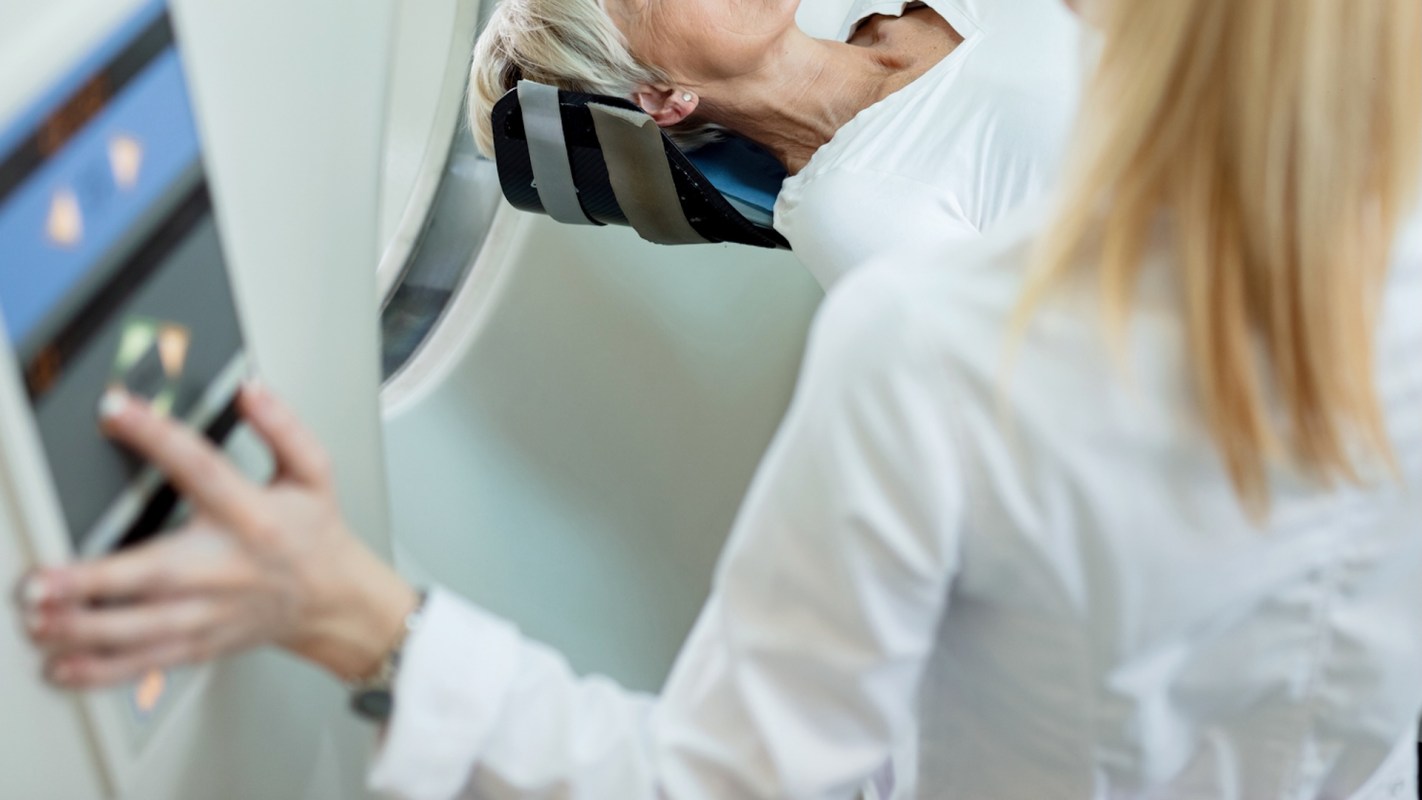
The CEO of the largest public health care system in the U.S. has indicated that artificial intelligence could be the first line of defense in cancer screenings — a concept many seem to think is deserving of a second opinion.
Mitchell H. Katz, MD, President and CEO of New York City Health and Hospitals, remarked during a panel held by Crain's New York Business that AI models could feasibly take the place of human radiologists.
"We could replace a great deal of radiologists with AI at this moment, if we are ready to do the regulatory challenge," Katz said.
Katz claimed that allowing AI to scan images first and then having human radiologists look more closely at any abnormalities could lead to "major savings." Sandra Scott, MD, CEO of One Brooklyn Health, a smaller hospital that could benefit from cost savings, supported the idea of using AI to replace radiologists.
According to Radiology Business, Scott said: "I'm in charge of a safety-net institution. It would be a game-changer."
However, many radiologists with extensive experience disagree with this outlook. Concerns not only center around the potential for misdiagnosis but also on the trend of prioritizing cost savings over necessary human oversight in medical imaging — in that AI could be a great tool, but not at the expense of the number of trained human doctors to use the tool and apply years of judgment.
TCD Picks » Quince Spotlight
💡These best-sellers from Quince deliver affordable, sustainable luxury for all




Mohammed Suhail, a radiologist at North Coast Imaging in San Diego, told Radiology Business that Katz's assertions reflect a lack of informed insight among hospital administrators, which may pose risks to patient care.
"Any attempt to implement AI-only reads would immediately result in patient harm and death," Suhail commented. "Hospitals are happy to cut costs even if it means patient harm, as long as it's legal."
Addressing the complexities introduced by AI in healthcare operations is crucial, but this doesn't mean the technology should be entirely dismissed.
David Lubarsky, MD, MBA, president and CEO of the Westchester Medical Center Health Network, claimed the system they're using for breast cancer screenings is "actually better than human beings."
|
Which of these savings plans for rooftop solar panels would be most appealing for you?
Click your choice to see results and earn rewards to spend on home upgrades. |
 Save $1,000 this year 💸
 "For women who aren't considered high risk, if the test comes back negative, it's wrong only about 3 times out of 10,000," Lubarsky told the Crain's New York Business audience.
As with many industries currently trying to figure out how best to utilize AI, the medical field faces many obstacles.
One recent study published in JAMA Network Open found that AI chatbots' failed miserably, misdiagnosing over 80% of early medical cases. AI has many benefits, the thinking goes, but it should be a tool used by humans, not something to replace them.
Safer development practices and comprehensive training processes are essential. In the meantime, patients should remain aware of AI limitations in healthcare and should approach any diagnosis generated by computers with caution, rather than taking it at face value.

Get TCD's free newsletters for easy tips, smart advice, and a chance to earn $5,000 toward home upgrades. To see more stories like this one, change your Google preferences here.






